Every book you have ever loved was, at some point, just a stack of paper that somebody almost threw away. That is not an exaggeration. Some of the most celebrated novels in modern literature were bounced from publisher to publisher, sometimes dozens of times, before a single editor took a chance on them.
These stories matter because they remind us that taste, timing, and gut instinct in publishing are far from an exact science. The books below went on to sell tens of millions of copies, win major awards, and shape entire genres, yet they were once dismissed as unmarketable, confusing, or simply not good enough. Here are eight of the most striking examples.
1. Carrie by Stephen King
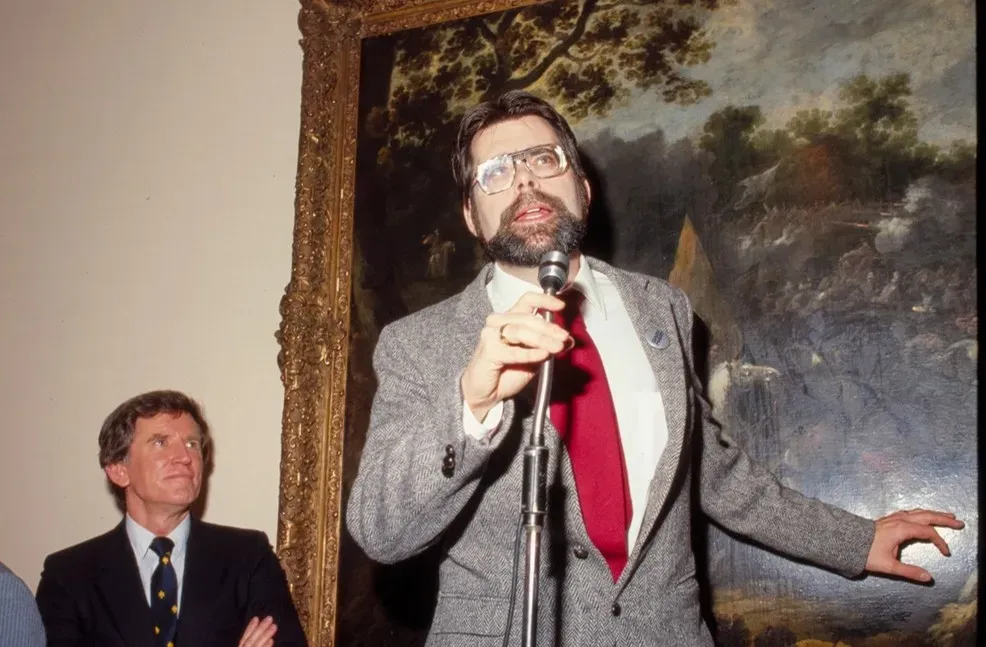
Before Stephen King became one of the best-selling authors in history, he was a broke schoolteacher living in a trailer with his family. He had already written three earlier novels that went nowhere, and when he started drafting Carrie as a short story, he actually crumpled up the first few pages and threw them in the trash. His wife Tabitha fished the pages out of the bin and told him to keep going, a decision that changed the course of his career.
Once finished, the manuscript still had to survive the submission process, and it did not go smoothly. Carrie, the story of a bullied teenage girl with terrifying telekinetic powers, was rejected by publishers a whopping 30 times before it finally found a home. One particularly memorable rejection slip told King, “We are not interested in science fiction which deals with negative utopias. They do not sell.” Doubleday eventually disagreed, and Carrie went on to become a genre-defining horror classic.
2. Harry Potter and the Philosopher’s Stone by J.K. Rowling

J.K. Rowling wrote the first Harry Potter manuscript while dealing with the death of her mother, the end of a short marriage, and serious financial hardship, often writing in cafés while her young daughter slept beside her. She could not even afford to photocopy the manuscript, so she typed out multiple copies by hand to send to publishers. It was a rough road before the boy wizard ever reached bookshelves.
The first Harry Potter novel was rejected by 12 publishers, a fact almost barely comprehensible given its evident status as a global phenomenon. The book only found a home at Bloomsbury because the daughter of the chairman of Bloomsbury, an eight-year-old girl named Alice, was enthralled by the manuscript’s first chapter and kept demanding to see what happened next. Bloomsbury still printed only a modest first run, having no idea they were sitting on what would become a global publishing phenomenon.
3. A Wrinkle in Time by Madeleine L’Engle

Madeleine L’Engle was in her forties, already an established but not particularly successful writer, when she completed A Wrinkle in Time. The book blended science fiction, fantasy, and deep questions about good and evil in a way that made many editors uncomfortable, especially for a story aimed at younger readers. Several publishers felt it was simply too strange to categorize, unsure whether it belonged in the children’s or adult section of a bookstore.
The book was rejected by 26 publishers until John Farrar decided it was worth a chance. L’Engle later recalled the frustration of that period bluntly, noting that after roughly forty rejections her own agent sent the manuscript back to her. Farrar Straus and Cudahy finally published it in 1962, and the novel went on to win the Newbery Medal and become a staple of American childhood reading lists.
4. Lord of the Flies by William Golding

William Golding was a schoolteacher working on his manuscript about a group of boys stranded on a desert island, originally titled Strangers From Within, when he began sending it out to British publishing houses in 1953. It bounced back again and again, rejected by nearly every major publisher of the era before landing in the slush pile at Faber and Faber. According to Golding’s 1993 obituary by the New York Times, the novel was rejected more than 20 times before Faber & Faber gave it a chance.
Even at Faber, the manuscript was almost tossed aside. The in-house reader dismissed it as “Absurd & uninteresting fantasy about the explosion of an atom bomb on the colonies… Rubbish & dull. Pointless.” A young editor named Charles Monteith rescued it from the rejection pile, worked with Golding on substantial revisions, and helped shape it into the novel published in 1954. Golding went on to win the Nobel Prize in Literature in 1983, largely on the strength of this once-discarded manuscript.
Partner offer
5. Gone with the Wind by Margaret Mitchell

Margaret Mitchell spent nearly a decade writing her sprawling Civil War era romance, reportedly keeping the manuscript hidden in various rooms of her Atlanta home rather than actively pursuing publication. When she finally did submit it, the sheer length and scope of the book made many publishers hesitant to take a risk on an unknown author. Gone With the Wind was rejected 38 times before finally finding a publisher.
Macmillan eventually agreed to publish it in 1936, and the novel became an almost immediate sensation, winning the Pulitzer Prize and later inspiring one of the most famous film adaptations in Hollywood history. It remains one of the best-selling novels ever published in the United States, a remarkable outcome for a manuscript that so many editors had turned away.
6. Animal Farm by George Orwell
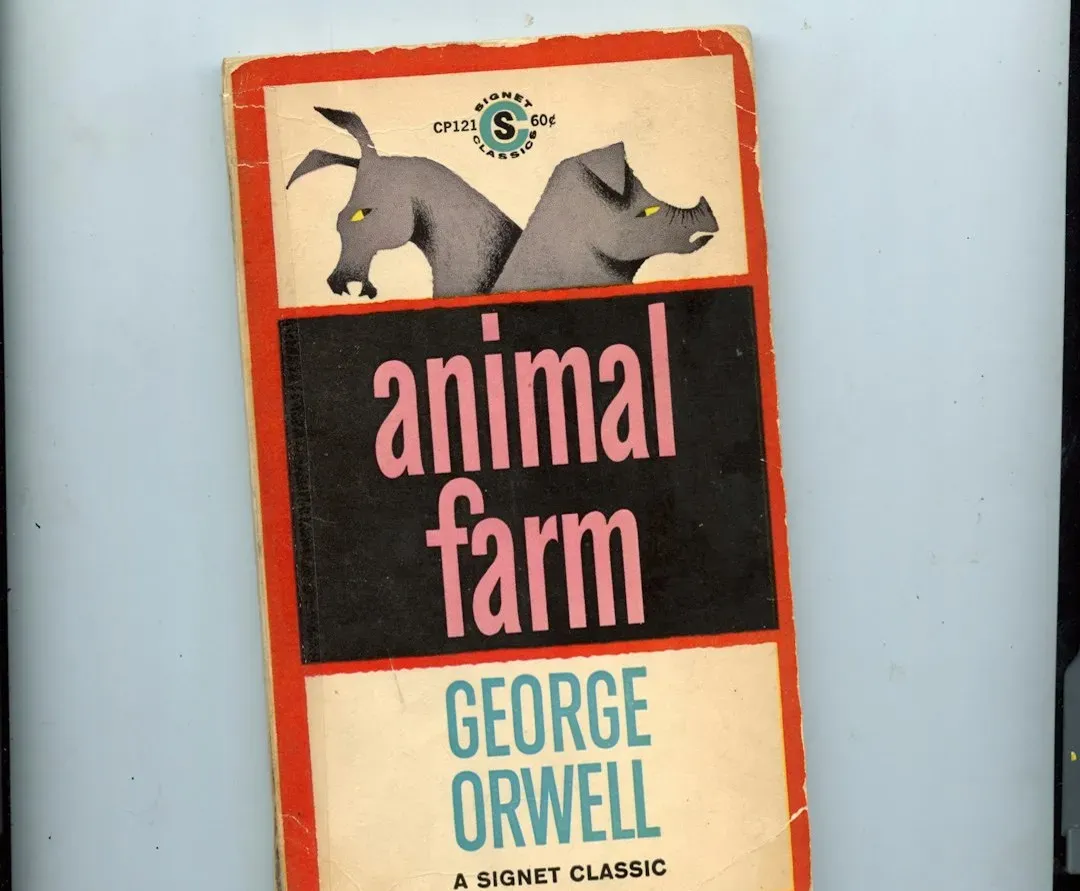
George Orwell wrote Animal Farm as a biting political allegory about the Russian Revolution and the corruption of power, but the timing could hardly have been worse from a commercial standpoint. Britain was allied with the Soviet Union during the final years of World War II, and publishers were wary of releasing anything that might be seen as criticizing a wartime ally. The manuscript was rejected for publication by Gollancz, Cape, Collins, and Faber, the latter in the person of T. S. Eliot.
Eliot’s rejection letter, now held by the British Library, praised Orwell’s writing while explaining that Faber had “no conviction… that this is the right point of view from which to criticise the political situation.” Secker and Warburg finally published Animal Farm in August 1945, and it quickly became one of the defining political satires of the twentieth century, later distributed by the CIA behind the Iron Curtain during the Cold War.
7. Dune by Frank Herbert

Frank Herbert spent roughly six years researching and writing Dune, drawing on his interest in ecology, politics, and religion to build one of the most detailed fictional universes ever put on paper. That ambition and complexity may have been exactly what scared off traditional publishers, who struggled to see how such a dense, unconventional science fiction epic would sell. Dune by Frank Herbert was rejected 23 times before it was published.
The novel finally found a home not with a science fiction imprint but with Chilton Books, a publisher better known at the time for automobile repair manuals. That unlikely gamble paid off spectacularly, as Dune went on to win both the Hugo and Nebula awards and is now widely regarded as one of the best-selling science fiction novels of all time, its legacy reinforced in recent years by major film adaptations that introduced the story to new generations of readers.
8. Zen and the Art of Motorcycle Maintenance by Robert Pirsig

Robert Pirsig’s philosophical road-trip novel, blending a father-son motorcycle journey with deep meditations on values and quality, was such an unusual mix of memoir and philosophy that publishers had no idea how to categorize or sell it. Pirsig kept submitting the manuscript anyway, absorbing rejection after rejection over several years while working other jobs to support his family. Robert Maynard Pirsig is in the Guinness Book of Records for having written the best selling book that received the most rejections, with Zen and the Art of Motorcycle Maintenance rejected 121 times.
William Morrow and Company finally agreed to publish it in 1974, though even then the editor who accepted it reportedly warned Pirsig not to expect much commercial success. The book instead became a surprise cultural phenomenon, selling millions of copies worldwide and remaining a staple of philosophy and literature courses decades later.
What ties these eight stories together is not luck alone but persistence, paired with the fact that great writing does not always look like a safe bet on first read. Publishers are running a business, and business decisions are shaped by market trends, budget constraints, and personal taste, all of which can lead even experienced editors to pass on something extraordinary. The gap between “unpublishable” and “beloved classic” in each of these cases was often just one persistent author, or one editor willing to see past a first impression.
For anyone chasing a creative dream today, these stories are less about guaranteed success and more about the value of not quitting after the tenth, twentieth, or even thirtieth “no.” Sometimes the difference between a rejected manuscript and a masterpiece is simply finding the one reader who gets it.
Partner offer
Planning a trip to Vegas?
Compare hotel rates and show tickets on VEGAS.com.