Every so often a record that once sold a few thousand copies and then disappeared from shelves starts showing up in unexpected places. A stray thirty second clip lands on a video app, a documentary resurfaces on a streaming service, or a reissue label spends months tracking down the original master tapes. Suddenly an album that critics mostly ignored decades ago is getting a second look from listeners who were not even born when it first came out.
What follows is a look at nine albums that spent years, sometimes decades, in relative obscurity before finding a new audience. Some clawed their way back through cult documentaries, others through vinyl reissues or a single song that caught fire online. None of them were commercial hits the first time around, and that is exactly what makes their second life so interesting.
1. Connie Converse, How Sad, How Lovely
Connie Converse recorded her home demos in a New York kitchen in the 1950s, then vanished in 1974 after packing up her car and driving away, never to be heard from again. How Sad, How Lovely collects music she made in the 1950s, and the compilation has received positive critical reception and led to a few other compilations and tribute albums. The BBC once summed her up as an artist who wrote deeply personal songs despite technical limitations, noting she was “not the most gifted vocalist or guitar player” but who sang “with a depth, intimacy and eloquence that were rare for that era.”
The mystery surrounding her disappearance has always added intrigue, but reviewers keep insisting the music stands on its own. One writer for PopMatters argued that closer listening reveals why “the siren-like allure of Connie Converse becomes impossible to resist.” Younger listeners have found her through folk revival playlists and word of mouth passed between fans of quiet, unpolished songwriting, and Bandcamp reissues of additional home recordings have kept the catalog growing well past its original release.
2. Gene Clark, No Other
When former Byrds member Gene Clark released No Other in 1974, it was largely ignored or lambasted by critics and was a commercial failure, with the studio time and cost seen as excessive and indulgent. Asylum Records barely promoted it, and the label did not promote the album, and by 1976 had deleted it from their catalog. Clark reportedly never got over the disappointment.
Decades later the record has been reframed entirely. In the early 2000s it was reissued in its entirety to positive critical reappraisal, with publications calling it a lost masterpiece and one of the greatest albums ever made. A 2019 deluxe reissue through 4AD brought fresh attention, and in 2014 members of Grizzly Bear, Beach House and Fleet Foxes even took part in a tribute tour built around the record’s songs. What once sounded overproduced now reads, to many younger indie folk fans, like an obvious ancestor of their own favorite bands.
3. Karen Dalton, In My Own Time
Karen Dalton was a fixture of the Greenwich Village folk scene alongside Bob Dylan, who once called her his favorite singer in the room, saying “my favorite singer in the place was Karen Dalton” and that “Karen had a voice like Billie Holiday and played the guitar like Jimmy Reed.” Despite that praise, In My Own Time sold modestly after its 1971 release and slipped out of print for years. Dalton herself avoided the spotlight, rarely engaging with audiences and reportedly uncomfortable in the studio.
Interest picked back up through reissues from Light in the Attic, culminating in a fiftieth anniversary edition that features previously unreleased live performance audio, alternate studio takes, and rare photos. A documentary about her life has since become available on multiple streaming platforms, introducing her raspy, unmistakable phrasing to listeners who discovered her secondhand through artists she influenced. Nick Cave has also spoken admiringly of her work, which has helped keep her name circulating well outside folk circles.
4. Judee Sill, Heart Food
Judee Sill was the first artist signed to David Geffen’s Asylum Records, yet her second album Heart Food arrived in 1973 to critical acclaim but minimal sales. She wrote, arranged, and produced nearly all of it herself, blending gospel harmony with baroque orchestration in a way that confused record buyers looking for straightforward folk. She died in 1979, largely forgotten by the industry that once championed her.
A 2022 documentary reintroduced her story to a wider audience, and the film became available for streaming on platforms like Max in April 2024. Reissue labels have kept pace, with Intervention Records repressing both of her studio albums on heavyweight vinyl in recent years. Her song “The Kiss” has become something of a quiet standard among younger songwriters discovering her catalog through algorithmic playlists rather than record store bins.
5. Death, …For the Whole World to See
Three teenage brothers in Detroit recorded a raw, urgent album in 1975 that Columbia Records refused to release after label executives objected to the band’s name. The band was dropped by Clive Davis of Columbia Records, who took offense to the band’s name and their lyrics. The recordings sat untouched for over thirty years until a collector stumbled onto a surviving single.
Partner offer
Drag City eventually released the full sessions in 2009, and a documentary followed in 2012 that told the family’s story to theaters worldwide. In 2016 the band’s contributions were honored in the Smithsonian National Museum of African American History and Culture’s permanent collection, positioning them as pioneers of Black punk. What was once dismissed as unmarketable is now taught as an overlooked chapter of rock history, cited alongside the Stooges and MC5 as a genuine missing link.
6. Linda Perhacs, Parallelograms
Linda Perhacs made her only album in 1970 while working as a dental hygienist in Los Angeles, recording gentle, layered folk songs with production touches that sounded years ahead of their time. The record barely circulated beyond a small pressing, and Perhacs went back to her day job without any expectation that anyone would remember it. For decades copies traded quietly among collectors who treated it almost like a private discovery.
A reissue in the mid 2000s changed that trajectory, drawing praise from a new generation of artists including Julia Holter and Devendra Banhart, both of whom have cited her arrangements as an influence. Perhacs eventually returned to performing live and released new music decades after her debut, something almost no one expected when Parallelograms first came and went unnoticed. Streaming platforms have since exposed the album to listeners who stumbled onto it through psychedelic folk playlists rather than any original marketing push.
7. Vashti Bunyan, Just Another Diamond Day
Vashti Bunyan spent the late 1960s traveling by horse drawn cart to a Scottish commune, recording a hushed folk album along the way that almost nobody bought when it appeared in 1970. Convinced her music career was over, she left the industry entirely and did not perform again for over thirty years. Copies of the original pressing became so rare that they eventually traded for hundreds of dollars among collectors.
The internet changed her fortunes more than any label could have. Musicians including Devendra Banhart and Animal Collective’s members championed the record online, prompting a reissue that introduced her whispery voice to freak folk fans who had no idea the original pressing existed. Bunyan released a follow up album in 2005, decades after her supposed retirement, and has since collaborated with a younger generation of artists who grew up on her rediscovered work.
8. Big Star, Radio City
Big Star built a devoted power pop sound in early 1970s Memphis, but distribution problems tied to Stax Records meant Radio City barely reached stores after its 1974 release. Critics who did hear it were often glowing, yet sales figures stayed embarrassingly low for a band this talented. The group broke up shortly after, convinced the music simply was not going to find listeners.
Cover versions kept the songs alive long after the band itself disappeared, most famously the Bangles recording “September Gurls” in the 1980s. “In the Street” later became widely recognizable after serving as the theme song for the sitcom That ’70s Show, introducing the melody to viewers who had no idea about its origins. Younger power pop and indie rock bands routinely cite Radio City as a formative influence, even when their own fans have never heard the original album in full.
9. Shuggie Otis, Inspiration Information
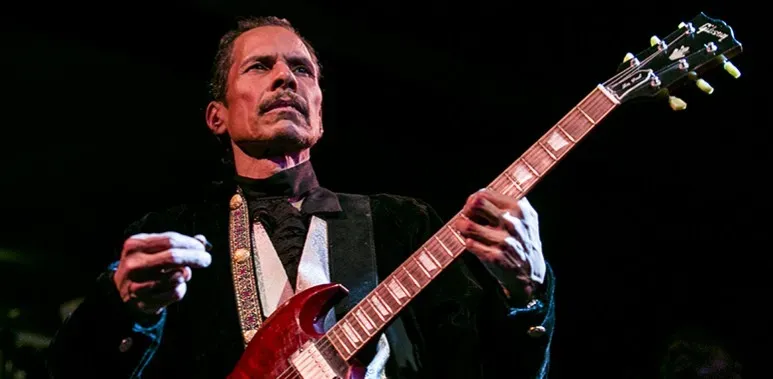
Shuggie Otis was still a teenager when he began building Inspiration Information almost entirely on his own, playing most of the instruments and even programming an early drum machine himself. The 1974 album blended funk, soul, and psychedelic textures years before that combination became fashionable, yet it sold poorly and Otis largely stepped away from the spotlight afterward. For years the record was treated as a curiosity rather than a landmark.
Luaka Bop reissued the album in 2001, expanding it with bonus tracks and reintroducing Otis to critics who had missed it the first time. His song “Strawberry Letter 23” gained even wider recognition after the Brothers Johnson turned it into a hit cover, sending curious listeners back to the original version. Streaming era listeners discovering him through samples and playlists have helped cement Inspiration Information as one of the more quietly influential soul records of its decade.
None of these nine records were built for immediate popularity, and none of their creators could have predicted how streaming, documentaries, or a single viral clip would eventually rewrite their commercial histories. What connects them is simpler than any marketing strategy: the songs held up long enough for someone new to find them. That kind of slow, unplanned rediscovery tends to say more about lasting quality than any chart position ever could.
Partner offer
Planning a trip to Vegas?
Compare hotel rates and show tickets on VEGAS.com.