Military doctrine, across centuries and cultures, has always leaned on a handful of core principles: secure your flanks, concentrate your force, never fight on two fronts at once, and never stake everything on a single improbable gamble. Most commanders who ignored these rules ended up as cautionary footnotes. Military doctrine, both ancient and modern, typically emphasizes principles such as concentrating force, securing flanks, and choosing the right terrain and weather conditions for the task at hand. Yet some of history’s most remarkable successes came from deliberately violating these established rules.
What follows are nine strategies that, by any rational military analysis, had no business succeeding. They survived on audacity, psychological misdirection, sheer engineering will, or a commander’s willingness to exploit the one thing an enemy could never anticipate: the completely unexpected. Military academies still break them apart today, not just to admire them, but to understand why they worked at all.
1. Hannibal Crosses the Alps (218 BCE)
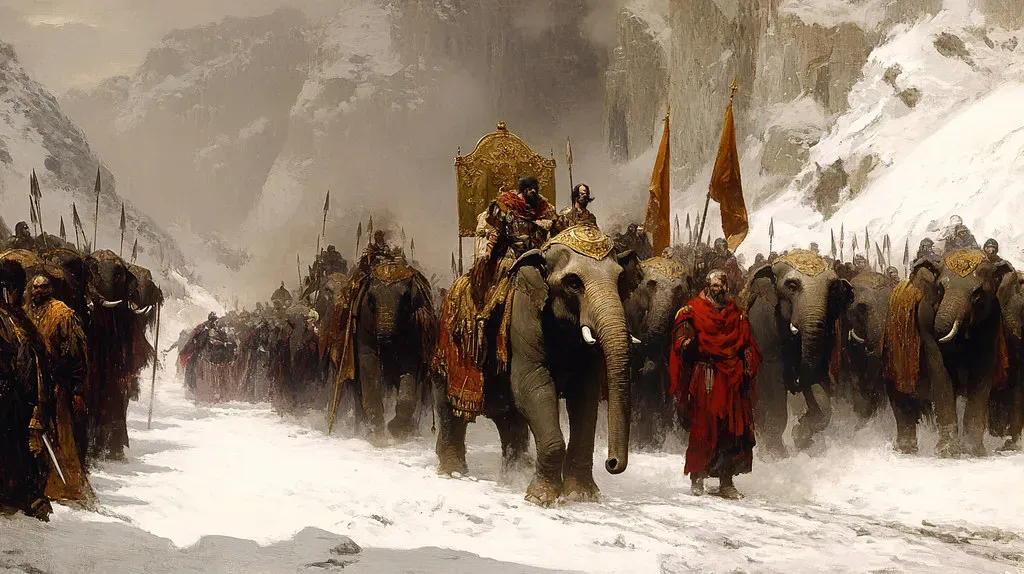
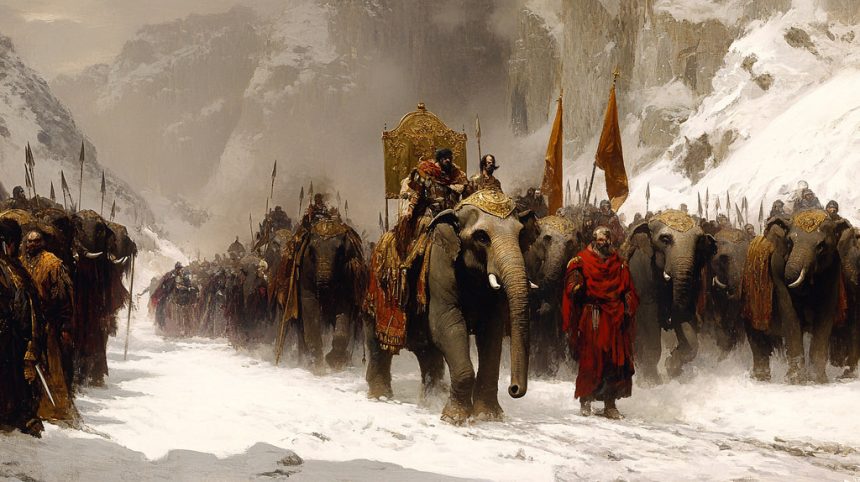
In 218 BCE, during the Second Punic War, the Carthaginian general Hannibal was determined to take the fight directly to the Roman Republic. Defying all conventional military wisdom, he decided to make a surprise attack into Northern Italy by marching his massive army across the Alps. No serious strategist would have endorsed the plan. The mountains offered treacherous passes, sub-zero temperatures, hostile local tribes, and zero reliable supply lines.
Treacherous mountain passes, freezing temperatures, and potential ambushes by local tribes all conspired against Hannibal and his men, hundreds of whom died on the march, and yet the bulk of the force managed to cross the Alps in just 16 days. Rome never expected an attack from the north, and it was the audacity of Hannibal’s strategy that allowed him to establish a foothold in Northern Italy, from which he proceeded to attack the Romans on their own territory for the next 15 years.
2. Caesar’s Double Siege at Alesia (52 BCE)
In 52 BCE, Julius Caesar’s army was vastly outnumbered and trapped between two massive Gallic forces at the city of Alesia. Caesar’s army of around 60,000 men was caught between two massive Gallic forces: the 80,000 warriors defending the fortified town of Alesia, and a relief army of 250,000 approaching from the outside. Facing near-certain annihilation, almost any commander would have retreated. Caesar built walls instead.
The Roman army built dual lines of fortifications, an inner wall to keep the besieged Gauls in, and an outer wall to keep the Gallic relief force out. In total, Caesar’s forces rapidly constructed over 20 miles of ramparts, towers, trenches, and traps around Alesia. The Romans, caught between two threats, managed to hold their position through ingenuity and determination. Caesar’s concentric fortifications created a deadly trap for both enemy forces. The Battle of Alesia is still studied in military academies today.
3. The Mongol Feigned Retreat

A retreat was not considered a sign of weakness by the Mongols under Genghis Khan. It was a tactic to be used like any other tactic. There are many examples of the use of a feigned retreat in the history of the Mongol conquests. For armies trained in the European tradition, an enemy in retreat was an invitation to pursue. The Mongols knew exactly that.
Troops from China to Poland would be locked in a life-or-death struggle against the Mongol hordes when suddenly the Mongols would turn tail and run, their spirit to fight seemingly broken. As a chorus of cheers went up from the exhausted defenders, they would inevitably give chase to the invaders, only to watch as the retreating Mongols turn again, in full force, and on ground that supports them. The enemy’s confidence became the weapon. Executed correctly, it was almost impossible to counter.
4. Washington’s Christmas Crossing of the Delaware (1776)
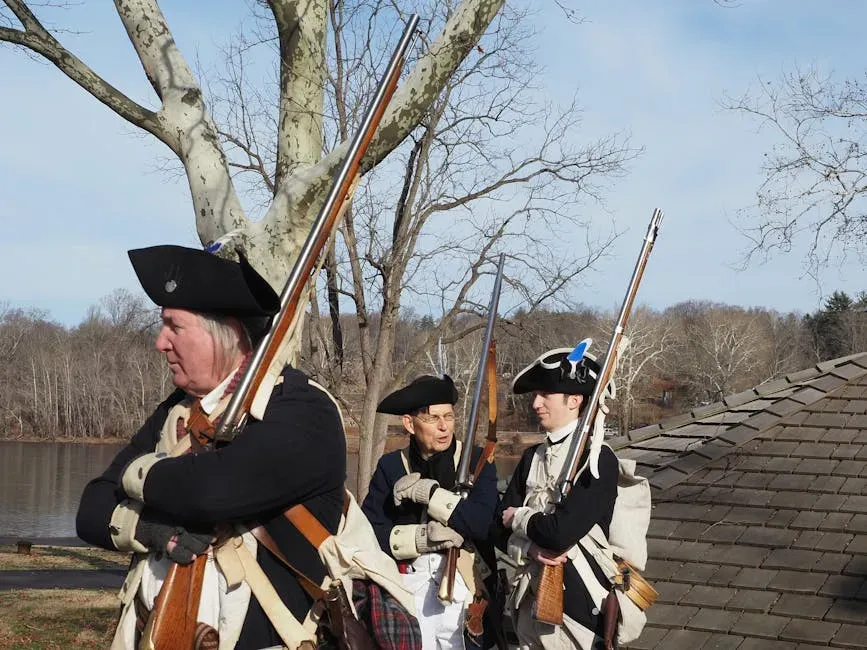
Military convention strongly advised against winter campaigns, night operations, and river crossings in bad conditions, but Washington attempted all three simultaneously. At 11 p.m. on Christmas Day, he led 2,400 soldiers across the icy and freezing river, reaching the New Jersey side just before dawn. Two other divisions failed to cross in time, stripping him of planned artillery support and thousands of troops.
Washington forged on nonetheless, successfully launching a surprise attack and capturing nearly 1,000 Hessians at the cost of four American lives. News of the victory provided a massive morale boost, and Washington’s unusual yet critical strategic decision led to further American victories, including the Battle of Trenton and Battle of Princeton. The Continental Army had been near collapse. One night’s recklessness bought the revolution another year.
5. Operation Mincemeat (1943)
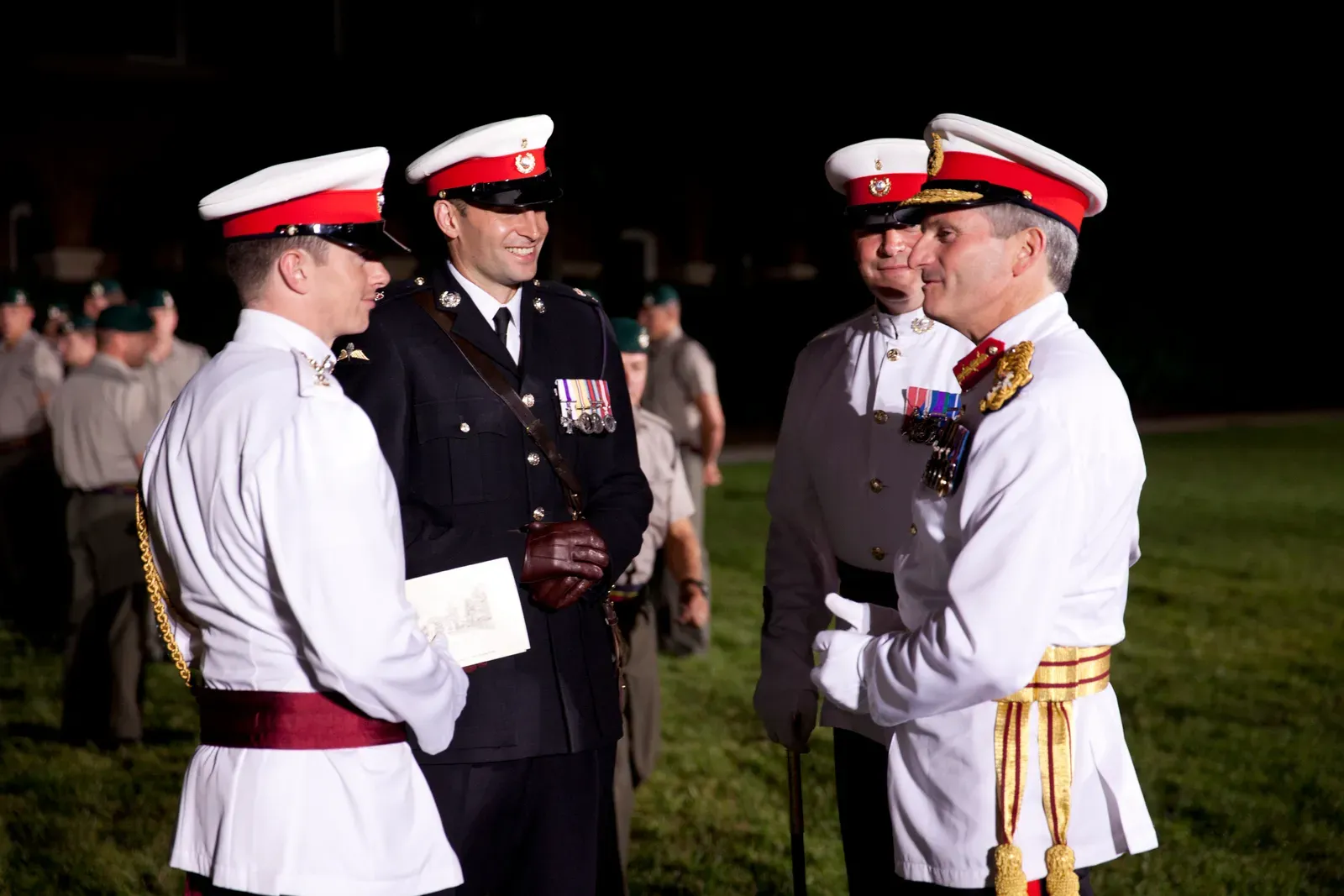
In 1943, British intelligence orchestrated Operation Mincemeat to deceive Nazi forces about Allied invasion plans. They obtained the body of Glyndwr Michael, a homeless man who had died from ingesting rat poison, and dressed him as a Royal Marines officer, creating a fictitious identity. Personal items, including fake documents suggesting an invasion of Greece and Sardinia, were placed on the body. The corpse was then released off the coast of Spain, where it was recovered by Spanish authorities and subsequently passed to German intelligence.
Partner offer
The Germans believed the documents were genuine, leading them to divert troops to Greece and Sardinia. This misdirection facilitated the successful Allied invasion of Sicily. Operation Mincemeat is now considered one of the most successful deceptions in military history. The plan hinged entirely on the enemy being willing to believe the unbelievable, and they were.
6. The Ghost Army’s Inflatable Tanks (1944)

The U.S. Army took deception to new heights during World War II. They gathered a team of artists and audio experts to create an elaborate phantom military unit of inflatable tanks and phony sound effects and radio transmissions to fool the Nazis. The 23rd Headquarters Special Troops, also known as the “Ghost Army,” was made up of around 1,100 soldiers who were tasked with creating lifelike dummy tanks, trucks, and artillery.
The unit used inflatable tanks, fake radio transmissions, and sound effects to create the illusion of large troop movements and deployments. Their efforts successfully misled German forces, allowing Allied operations to proceed with reduced resistance. The Ghost Army’s use of deception and psychological warfare showcased the power of creativity and innovation in military strategy. A handful of artists and sound engineers functionally impersonated entire divisions, and the enemy never figured it out.
7. Napoleon’s Deliberate Withdrawal at Austerlitz (1805)
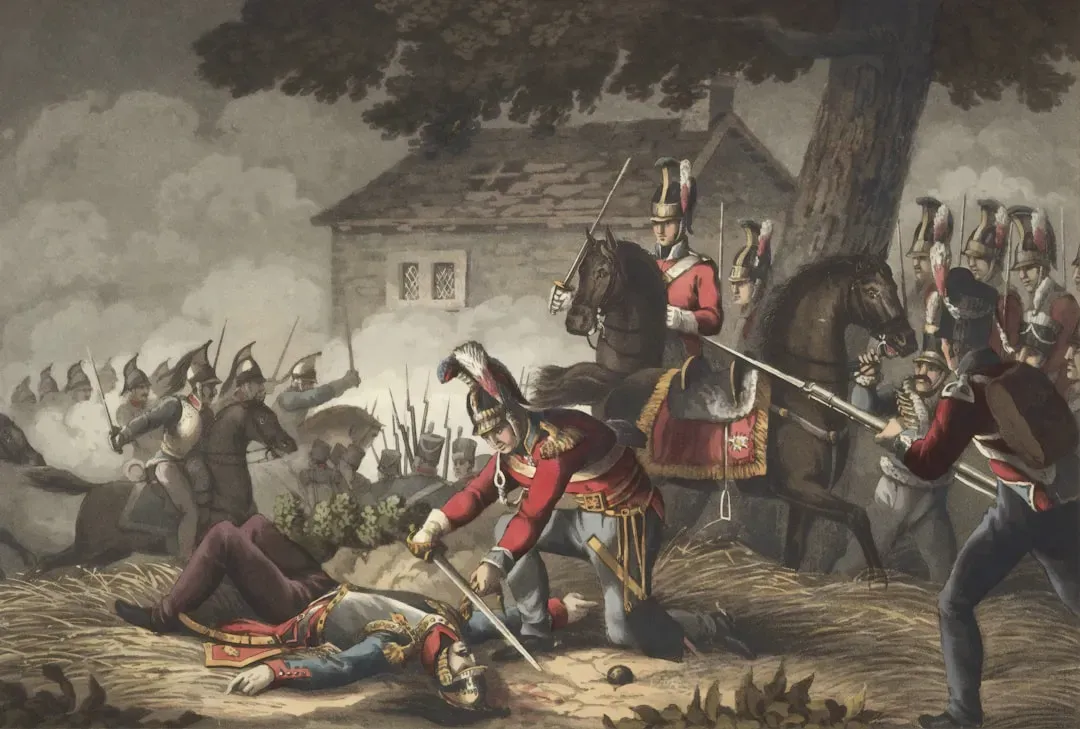
As Napoleon fielded the French to take on a superior Russian-Austrian force outside of Vienna, things looked bleak, and the French were widely expected to lose and be forced to flee Austria. With every passing day, Napoleon’s enemies became stronger. To goad them into a fight in the place of his choosing, he occupied the heights overlooking the town of Austerlitz, basic military strategy since the days of Sun Tzu.
As the combined enemy army approached, they saw the French abandon those heights. The battle was on, and Napoleon used the heights as a psychological maneuver. Once the French took the heights in combat, the battle was over for the Russian-Austrian allies, and Napoleon was master of Europe. Giving up the commanding ground on purpose was almost incomprehensible to the Allied commanders. That incomprehension was precisely the point.
8. Morgan’s Feigned Retreat at Cowpens (1781)
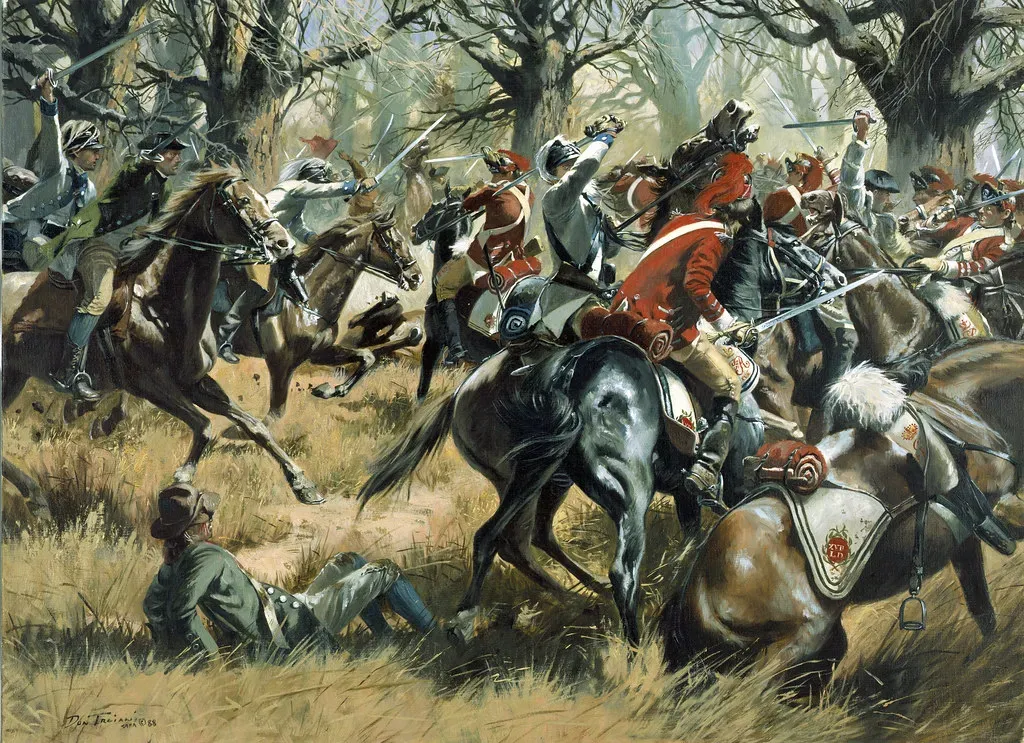
The battle demonstrated that militia, when deployed properly, could defeat experienced regulars, something which American military and political leaders had previously considered impossible. Brigadier General Daniel Morgan arranged his weaker militia troops at the front in three layered lines, an almost offensive disposition that invited British aggression. The second line, consisting of 300 militia under Andrew Pickens, was ordered to fire two volleys and then also fall back in a feigned retreat; the British, assuming that the militia were fleeing, would continue to push forward. Once the British charge made it to the third line, the militia would rejoin the battle and attack the British left flank.
The battle lasted under an hour and was a total victory for the Americans. Over 110 British soldiers, more than 40 of whom were officers, had been killed, another 200 were wounded, and 500 taken prisoner, nearly eighty percent of Tarleton’s force. In sharp contrast, only 12 of Morgan’s men were killed and just 60 had been injured. Morgan proposed “to turn a weakness into a strength” by feigning a retreat of his militia, and his plan is studied to this day.
9. The Japanese Bicycle Invasion of Malaya (1941–42)
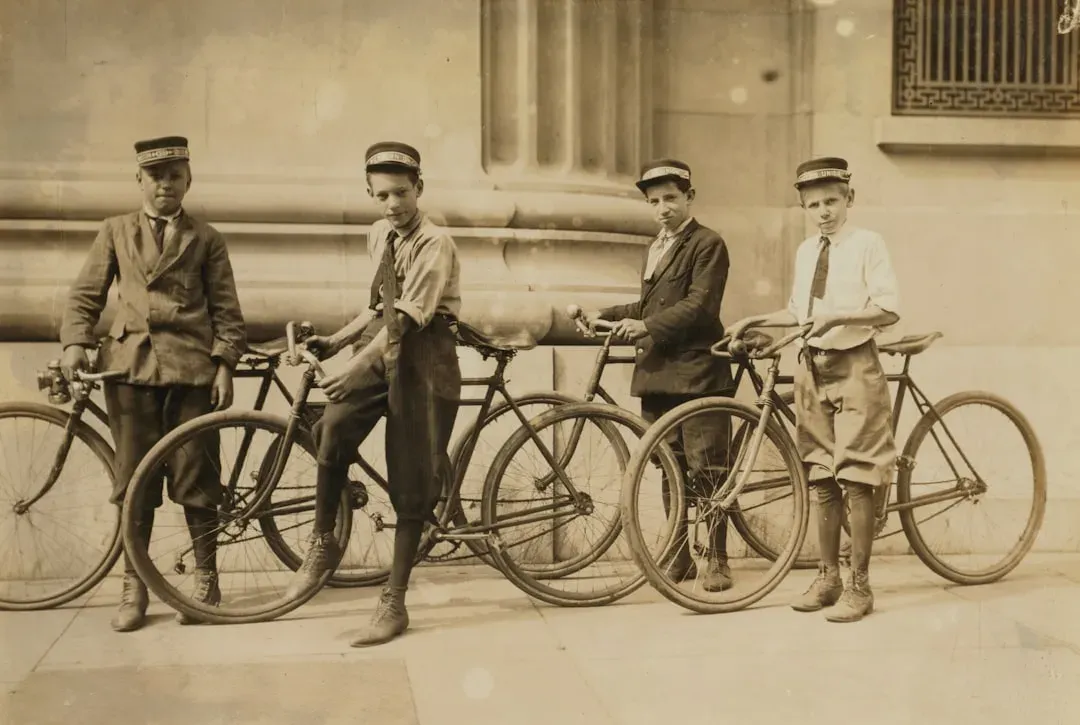
The Commonwealth soldiers who remained behind were confident in their ability to repel any land forces, believing the Japanese ground troops wouldn’t be up to the task of covering the rough terrain and jungle in large numbers. It turned out they were very wrong. The Japanese chose bicycles as their method of transport, and invaded by way of Malaya. Entire squads could travel very quickly across a variety of ground, and were able to carry more provisions than soldiers marching on foot.
The Battle of Singapore ended when 60,000 British troops surrendered to the Japanese, a defeat which some call one of the worst disasters in British history. The Japanese had moved faster than any conventional motorized force could have managed through jungle terrain. Using bicycles for military invasion had never featured in British strategic planning, because it seemed too absurd to consider. That assumption cost them an empire’s most important port.
What connects all nine of these strategies is not luck, exactly, though luck played its role in several of them. What they share is a willingness to exploit the enemy’s assumptions so completely that the opponent couldn’t process what was happening until it was too late. The defender’s certainty that something was impossible became the attacker’s most reliable weapon. That’s the insight military schools keep returning to: the rules of war matter, but so does knowing when the other side’s belief in those rules is the opening you’ve been waiting for.
Partner offer
Planning a trip to Vegas?
Compare hotel rates and show tickets on VEGAS.com.