Every so often, a movie arrives to a chorus of critical groans, limps through its theatrical run, and then quietly refuses to disappear. Years later, that same film shows up on best-of lists, gets a fancy 4K restoration, and inspires the kind of devotion that opening-weekend reviews never saw coming. The gap between initial reception and long-term reputation is one of the stranger, more human quirks of film history.
What follows are nine films that critics either dismissed or actively despised when they first hit theaters, only to watch them grow into some of the most cherished cult classics in cinema. Their stories say as much about shifting taste and timing as they do about the movies themselves.
1. Blade Runner (1982)

When Ridley Scott’s neo-noir sci-fi film opened in the summer of 1982, it landed with a thud. Janet Maslin in The New York Times called it a “muddled…gruesome…mess,” while People magazine described it as “a slothful movie, dim both literally and figuratively.” Even Roger Ebert, who would later revise his opinion, initially called it “a stunningly interesting visual achievement, but a failure as a story.”
Part of the problem was timing. Blade Runner opened just weeks after E.T. the Extra-Terrestrial, and coming off Alien, it was a box office failure, with the summer dominated by E.T. and Rocky III. Once home video and later director’s cuts gave audiences a chance to sit with its dense, melancholic world without the marketing baggage, opinions flipped entirely. Today it is regularly cited among the finest science fiction films ever made, its influence visible in everything from anime to video games.
2. The Thing (1982)

John Carpenter’s Antarctic body-horror nightmare might be the textbook case of a movie released at exactly the wrong moment. It opened exactly two weeks after Steven Spielberg’s E.T., which could hardly have been worse timing for a film about paranoia and grotesque alien transformation. Critics were unkind, to put it mildly.
The New York Times called it “foolish, depressing, overproduced… it looks as if it aspired to be the quintessential moron movie of the ’80s,” while Roger Ebert famously labeled it a “great barf-bag movie.” The backlash reportedly cost Carpenter future directing work and strained his relationship with Universal. Yet the film slowly built a cult following through the late 1980s and early 1990s, eventually being recognized as one of the defining genre films in cinema history, largely thanks to Rob Bottin’s still-astonishing practical effects.
3. Scarface (1983)
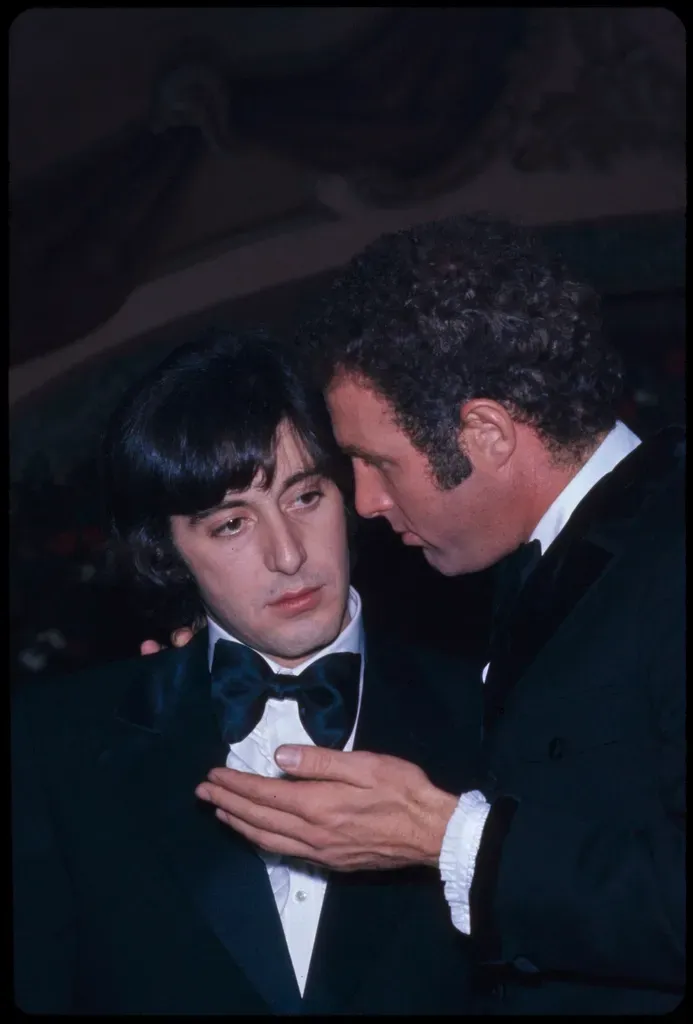
Brian De Palma’s remake of the 1932 gangster film, starring Al Pacino as Cuban refugee turned drug kingpin Tony Montana, was met with a wave of critical distaste on release. Reviewers found the film excessively violent, bloated at nearly three hours, and morally hollow, with several dismissing Pacino’s performance as cartoonish overacting rather than the towering turn fans now celebrate.
Cuban-American groups also protested the film’s depiction of Miami’s exile community, adding to a rocky release that underperformed relative to expectations. Decades on, “Scarface” has become a touchstone of hip-hop culture, fashion, and gaming, with its “say hello to my little friend” finale endlessly quoted and referenced. Pacino’s Montana is now considered one of the most iconic performances of his career rather than the embarrassment some critics deemed it in 1983.
4. Heaven’s Gate (1980)

Few films have suffered a more brutal critical mauling than Michael Cimino’s sprawling Western. Reviewers savaged its indulgent pacing, ballooning budget, and perceived narrative incoherence, and the film became shorthand in Hollywood for directorial excess. Its commercial failure was so severe that it effectively helped end United Artists as an independent studio and is often cited as the moment the era of unchecked director autonomy in 1970s Hollywood came crashing down.
The theatrical cut released in 1980 was drastically shorter than Cimino’s intended version, which likely worsened an already hostile reception. When the full-length director’s cut later resurfaced and was restored, critics and historians began reassessing the film’s sweeping visual ambition and its unusually bleak, unromantic view of the American frontier. Retrospectives in recent decades, including screenings at major festivals, have positioned it as a misunderstood, painterly epic rather than the disaster it was once labeled.
5. Showgirls (1995)

Paul Verhoeven’s Las Vegas-set drama about a dancer clawing her way up the Vegas showgirl circuit remains one of the most spectacularly panned films of the 1990s. It was brutally panned by just about every major critic, with Metacritic listing it at a mere 16 out of 100, and it earned a record 13 nominations at the Golden Raspberry Awards, winning seven. Critics from Roger Ebert to Owen Gleiberman to Janet Maslin lambasted the film as sexist, exploitative, and trashy.
Partner offer
The film barely made back its budget theatrically, yet found a second life on home video, where it became a tremendous success on the VHS market. Over the following decades, the movie has enjoyed a reevaluation and accumulated a dedicated fan base, with drag performers, midnight screenings, and the 2020 documentary “You Don’t Nomi” all contributing to its rise as a camp touchstone. Whether it is genuinely satirical or simply, gloriously bad remains a genuine debate among its fans, which is arguably part of the appeal.
6. Fight Club (1999)

David Fincher’s adaptation of Chuck Palahniuk’s novel confused and unsettled many critics upon release, who found its violence gratuitous and its message either too nihilistic or too muddled to take seriously. Some reviewers accused the film of glorifying masculine aggression without adequately critiquing it, and it underperformed at the box office relative to its production cost. Studio executives at Fox reportedly worried the film would be seen as an embarrassment for the studio.
Home video changed everything. Away from the pressure of a single theatrical viewing, audiences began picking apart the film’s twist ending and its satire of consumerism, corporate emptiness, and manufactured identity. By the 2000s, “Fight Club” had become a fixture on college dorm walls and best-of-the-decade lists, with Brad Pitt’s Tyler Durden becoming one of the most quoted characters in modern film. Its reputation now sits comfortably among Fincher’s most respected work, a reversal few would have predicted in 1999.
7. The Big Lebowski (1998)

The Coen brothers followed the acclaimed “Fargo” with this shaggy, plotless comedy about a Los Angeles slacker mistaken for a millionaire, and critics at the time were distinctly underwhelmed. Many reviews called it a lesser, meandering effort that failed to live up to its predecessor, with pacing and structure singled out as particular weaknesses. It performed modestly at the box office and seemed destined to be remembered as a minor entry in the Coens’ filmography.
Instead, “The Big Lebowski” became one of the most quoted comedies of its era, spawning annual Lebowski Fest gatherings across the country where fans dress as the Dude, bowl, and recite dialogue verbatim. Jeff Bridges’ performance as the Dude has become a kind of cultural shorthand for laid-back detachment, referenced in everything from advertising to political commentary. The film’s loose, hangout structure, once seen as a flaw, is now widely appreciated as central to its charm.
8. Office Space (1999)

Mike Judge’s satire of soulless cubicle culture arrived to a shrug from both critics and audiences, grossing only a modest sum against its budget and closing quickly in theaters. Reviews were mixed, with some critics finding its humor too flat or its targets too easy, missing the specific, deadpan absurdity that would later define its appeal. It seemed, briefly, like a forgettable footnote in late-1990s comedy.
Cable reruns and home video told a different story. “Office Space” found its true audience among office workers who recognized the soul-crushing minutiae of stapler disputes, passive-aggressive memos about TPS reports, and performance reviews that go nowhere. Phrases from the film, along with its now-iconic printer-smashing scene, entered everyday workplace vocabulary, and the movie is now widely regarded as one of the sharpest satires of corporate life ever made.
9. Idiocracy (2006)

Mike Judge’s follow-up satire, about a man from the present who wakes up five centuries in the future to find society has become aggressively, catastrophically dumb, was barely released at all. Twentieth Century Fox gave it a minimal marketing push and a limited theatrical run in only a handful of cities, and the few critics who saw it were unimpressed by its broad, cartoonish humor. It seemed destined for total obscurity.
Word of mouth, streaming availability, and an increasingly online culture eager for satirical commentary on media, politics, and consumerism turned “Idiocracy” into an unlikely touchstone. Its exaggerated vision of a dumbed-down future, complete with a president who is a former wrestler and action star, has been repeatedly cited in political and cultural commentary in the years since. What was dismissed as a lazy one-joke comedy is now frequently praised for its eerily prescient satire, even as critics still debate how much of that reputation is retroactive projection rather than genuine foresight in the writing.
What links these nine films is not a single formula but a shared pattern: critics reviewing a film against the expectations of its moment often miss what a film is actually doing, especially when that film is doing something unfamiliar. Home video, cable reruns, and eventually streaming gave audiences the freedom to revisit these movies without the noise of opening-weekend hype or backlash, and in that quieter setting, their strengths became easier to see. It is worth remembering the next time a new release gets savaged on arrival. Sometimes the critics are right. Sometimes, as these nine cases prove, they simply weren’t watching the same movie audiences would eventually fall for.
Partner offer
Planning a trip to Vegas?
Compare hotel rates and show tickets on VEGAS.com.