Walk into any secondhand bookstore and you’ll find them stacked in neat, suspiciously pristine rows: the classics people meant to read. Spines uncracked, pages still stiff, sometimes with a bookmark wedged in around page forty. There’s a strange comfort in owning these books, even if they mostly serve as furniture for the mind rather than actual reading material.
This isn’t really about laziness. Some of these novels are genuinely difficult, structurally unusual, or simply long enough to outlast a reader’s patience. Here are ten titles that show up again and again on “abandoned book” lists, and a look at why they trip up so many well-intentioned readers.
1. Moby-Dick by Herman Melville

Melville’s 1851 novel about a whaling captain’s obsession with a white whale is often bought for its reputation as the great American novel, then quietly shelved somewhere around the chapters on cetology. The plot itself moves slowly, but it’s the lengthy digressions into whale anatomy, maritime history, and philosophical musing that tend to lose readers who expected a straightforward adventure story.
Ironically, the parts people give up before reaching are often the ones critics praise most, since Ishmael’s narration turns increasingly strange and meditative as the voyage continues. Readers who push through the middle stretch usually find the final chapters, when the Pequod finally encounters its quarry, worth the wait.
2. War and Peace by Leo Tolstoy
At over twelve hundred pages depending on the edition, Tolstoy’s sprawling account of Napoleonic-era Russia intimidates readers before they even open the cover. The sheer number of characters, many with multiple names and nicknames, makes it easy to lose track of who is who within the first hundred pages.
What often surprises people who abandon it early is that the novel isn’t actually as dense as its reputation suggests once the family dramas take over from the battle scenes. Tolstoy alternates between intimate domestic moments and enormous historical set pieces, and readers who stick with the Rostov and Bolkonsky families tend to find their footing.
3. Ulysses by James Joyce
Joyce’s 1922 novel, which follows Leopold Bloom through a single day in Dublin, is famous for being one of modern literature’s most challenging reads. The shifting narrative styles, including stream of consciousness passages and chapters written as stage plays or newspaper headlines, can feel disorienting without guidance.
Bloomsday celebrations held every June 16th, the date on which the novel is set, keep interest in the book alive even among people who have never finished it themselves. Annotated editions and reading groups have become almost essential companions, since the text rewards context that most readers simply don’t have on a first attempt.
4. In Search of Lost Time by Marcel Proust

Proust’s multivolume work, sometimes translated as Remembrance of Things Past, runs to roughly four thousand pages across seven volumes published between 1913 and 1927. Its famous opening scene involving a madeleine dipped in tea sets the tone for a novel built almost entirely on memory, sensation, and long, winding sentences.
Many readers make it through the first volume, Swann’s Way, then never continue, partly because the pacing is deliberately unhurried and demands patience rather than plot momentum. The reward, according to those who finish, is a portrait of memory and time that few other novels attempt on this scale.
5. Don Quixote by Miguel de Cervantes
Often cited as the first modern novel, Cervantes’ two-part story from the early 1600s about a delusional knight and his loyal squire Sancho Panza is frequently bought out of curiosity about its historical importance. The humor and satire, while sharp, rely on context about medieval chivalric romances that modern readers don’t always have on hand.
The novel’s episodic structure, essentially a string of adventures rather than one continuous plot, makes it easy to put down between chapters and never pick back up. Still, readers who stay with Quixote’s misadventures often find the second part, published a decade after the first, surprisingly self-aware and funny.
Partner offer
6. The Brothers Karamazov by Fyodor Dostoevsky

Dostoevsky’s final novel, published in 1880, wrestles with questions of faith, morality, and family through the story of three brothers and their father’s murder. The philosophical and religious debates, particularly the famous Grand Inquisitor chapter, can feel like a detour from the central murder mystery to readers expecting a tighter plot.
What trips people up isn’t necessarily the ideas themselves but the density of the prose and the sheer number of names each character goes by. Those who push past the first hundred pages, though, tend to find the courtroom drama and family tension genuinely gripping.
7. Infinite Jest by David Foster Wallace

Published in 1996, Wallace’s over one-thousand-page novel about addiction, entertainment, and a lethally entertaining film has become something of a modern symbol for ambitious reading projects abandoned midway. The book’s hundreds of endnotes, some containing entire subplots, require constant flipping back and forth that disrupts any sense of narrative flow.
Online reading groups that organize year-long, chapter-by-chapter progress through the novel have become common precisely because so many readers need structure and accountability to finish it. The nonlinear timeline adds another layer of difficulty, since events aren’t presented in the order they actually happen.
8. Middlemarch by George Eliot

Eliot’s 1871 novel about provincial English life follows multiple interconnected characters across a fictional town, and its reputation as a masterpiece of Victorian realism draws in readers who then struggle with its unhurried pace. The novel’s strength, a deep psychological insight into ordinary people’s disappointments and small triumphs, is also what makes it feel slow compared to more plot-driven fiction.
Virginia Woolf famously praised it as one of the few English novels written for grown-up people, a line often quoted on the book’s covers and one that raises expectations some readers find hard to match. Those who finish it usually point to the character of Dorothea Brooke as the emotional anchor that makes the patience worthwhile.
9. Gravity’s Rainbow by Thomas Pynchon
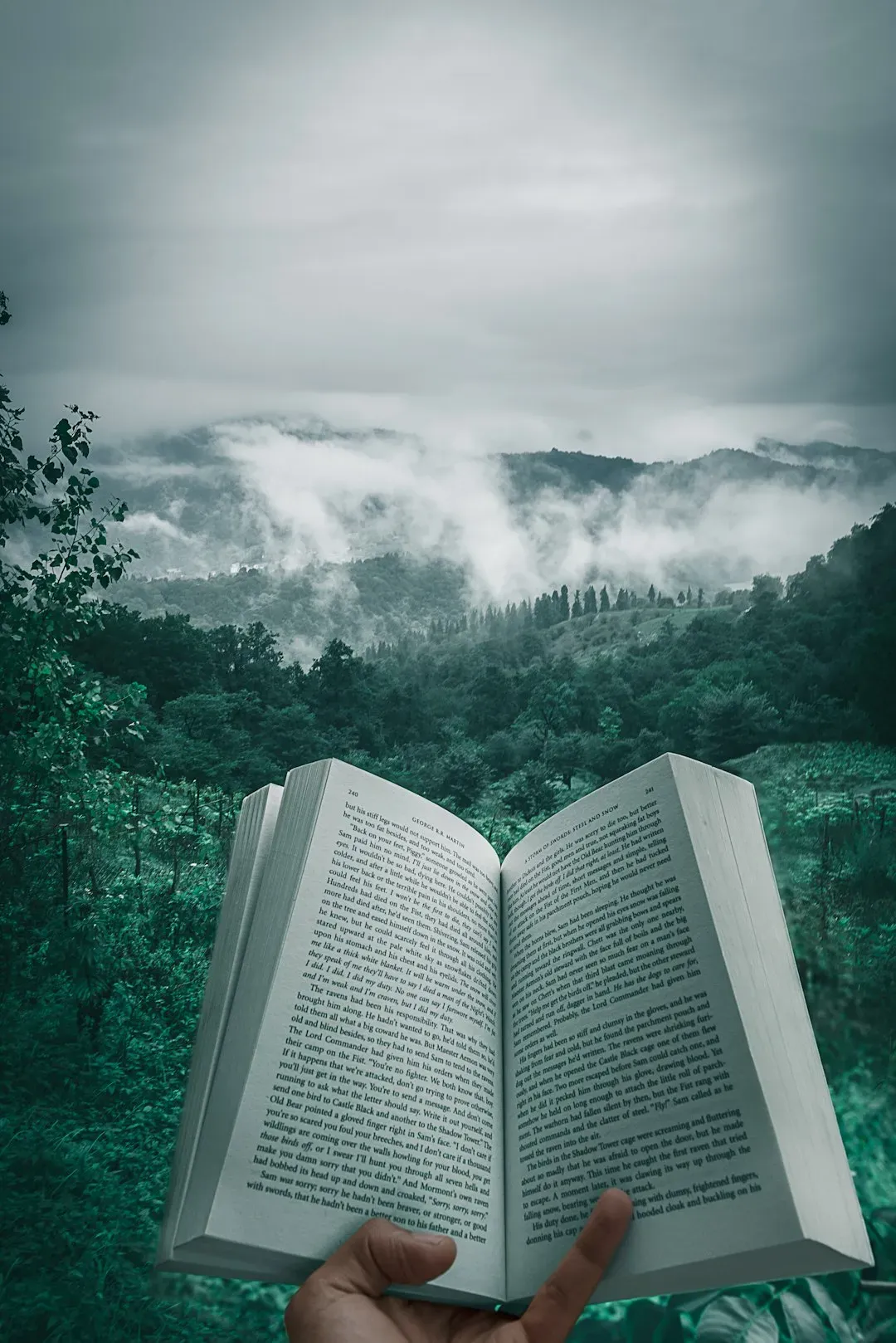
Pynchon’s 1973 novel set during the final months of World War II is often described as one of the most difficult American novels of the twentieth century, blending historical fiction with paranoid conspiracy and dense scientific references. The plot, centered loosely on a soldier whose sexual encounters seem to predict V-2 rocket strikes, resists any simple summary.
Readers frequently cite the shifting cast of characters and constant tonal swings between comedy and horror as reasons they set the book aside. It won the National Book Award in 1974, yet remains one of the most purchased and least completed titles among serious literary fiction.
10. Les Misérables by Victor Hugo

Hugo’s 1862 epic about Jean Valjean’s redemption is widely known through its musical and film adaptations, which leads many readers to expect a fast-paced story when they open the unabridged novel. Instead, they encounter lengthy digressions, including an entire section on the Battle of Waterloo that has little direct connection to the main plot.
These tangents, while historically rich, can feel like obstacles to readers eager to get back to Valjean, Cosette, and Javert. Abridged editions exist for this exact reason, though purists argue the digressions are part of what gives the novel its scope and moral weight.
Owning these books isn’t the same as failing them. Many readers return to unfinished classics years later, sometimes with more patience, sometimes with better editions or reading companions that make the density easier to manage. The gap between buying and finishing says less about any individual reader and more about how these novels were built, often for a slower, more deliberate kind of attention than modern reading habits tend to allow.
Partner offer
Planning a trip to Vegas?
Compare hotel rates and show tickets on VEGAS.com.