Animal narrators have a long literary history. They let writers look at human behavior from an outside angle, and sometimes they just tell a gripping story. Some of these books are children’s classics, and others are sharp political satires or quiet meditations on loyalty.
The nine novels below cover different eras and tones. Each one gives its animal narrator a real voice, whether that voice is gentle, indignant, funny, or heartbreaking. The details come from the books themselves and from their well-documented publication histories.
1. Black Beauty by Anna Sewell

Published in 1877, Black Beauty is presented as the autobiography of a horse. Beauty describes his happy early years, then a series of owners who treat him very differently. The book is told in the first person, so readers feel each change in his fortunes directly.
Sewell wrote it to encourage kind treatment of horses, and it is widely credited with raising awareness of animal welfare in Victorian England. It was also her only novel. Its plain, sincere voice is a big reason it is still read today.
2. The Call of the Wild by Jack London

Jack London’s 1903 novel follows Buck, a domestic dog taken from California and sent to work as a sled dog in the Klondike gold rush. London narrates in the third person, but he stays close to Buck’s perceptions and instincts. Strictly speaking, then, it is a borderline case among animal narrators.
The story is a tale of survival and a return to the wild. Its short length and driving pace helped make it one of the best known American adventure novels. It shows how a narrator’s viewpoint can come from an animal even when the narration isn’t a literal first-person account.
3. Watership Down by Richard Adams

Richard Adams published Watership Down in 1972. It follows a group of rabbits who leave their doomed warren to find a new home. The story is told through the rabbits’ eyes, with their own folklore, language, and leaders.
Adams reportedly developed the tale from stories he told his daughters during a car journey. The novel treats rabbit society seriously, with fear, courage, and politics all on the page. It has remained in print for decades and has been adapted for film and television.
4. Animal Farm by George Orwell
Animal Farm appeared in 1945 as a satirical fable about the Russian Revolution and Stalinism. The farm overthrow their human owner, and then the pigs gradually take control. The narration is third person, but it follows the ‘ perspective and collective experience.
Orwell struggled to find a publisher at first, partly because of its political subject. Today it’s a staple of school reading lists. Its short, fable-like form makes its warnings about propaganda and power easy to grasp.
5. The Art of Racing in the Rain by Garth Stein

Garth Stein’s 2008 novel is narrated by Enzo, a dog who loves car racing and learns about life by watching his owner, a race driver named Denny. Enzo speaks in a reflective first person. He’s convinced that he’ll be reincarnated as a human.
Partner offer
The book became a bestseller and was adapted into a 2019 film. Its racing metaphors, about patience and control, give Enzo’s voice a distinctive frame. It’s a good example of how modern fiction uses a dog narrator for emotional storytelling.
6. Flush by Virginia Woolf

Virginia Woolf’s Flush (1933) is a playful biography of the cocker spaniel owned by poet Elizabeth Barrett Browning. It follows him from the countryside to London and then to Italy. Woolf filters the world through the dog’s senses, especially smell.
It’s a lighter work than her major novels, yet it shows her interest in perception and point of view. The dog is a real historical animal, which gives the book an unusual blend of fact and imagination. Readers often find it charming and quietly inventive.
7. The Life and Opinions of the Tomcat Murr by E. T. A. Hoffmann

Hoffmann’s unfinished novel, published in 1819 and 1821, is narrated by Murr, a pompous and self-satisfied tomcat who writes his memoirs. Pages from the biography of the composer Kreisler are accidentally mixed in, because Murr used them as scrap paper. The result is two stories interleaved.
The book is a witty parody of the self-important autobiography and the German Romantic tradition. Murr’s vanity is the comic engine. It remains a landmark among older novels with a talking animal as author.
8. Beautiful Joe by Marshall Saunders

Beautiful Joe, published in 1893, is narrated by a dog who was abused by his first owner and later rescued by a kind family. Canadian author Marshall Saunders wrote it for an animal welfare essay contest. It is often described as a Canadian counterpart to Black Beauty.
The novel was very popular in its time and reportedly sold in large numbers. Joe tells his story simply and with gratitude, which reinforces the book’s humane message. It is a useful reminder that animal narrators were often tied to reform campaigns.
9. Bambi, A Life in the Woods by Felix Salten
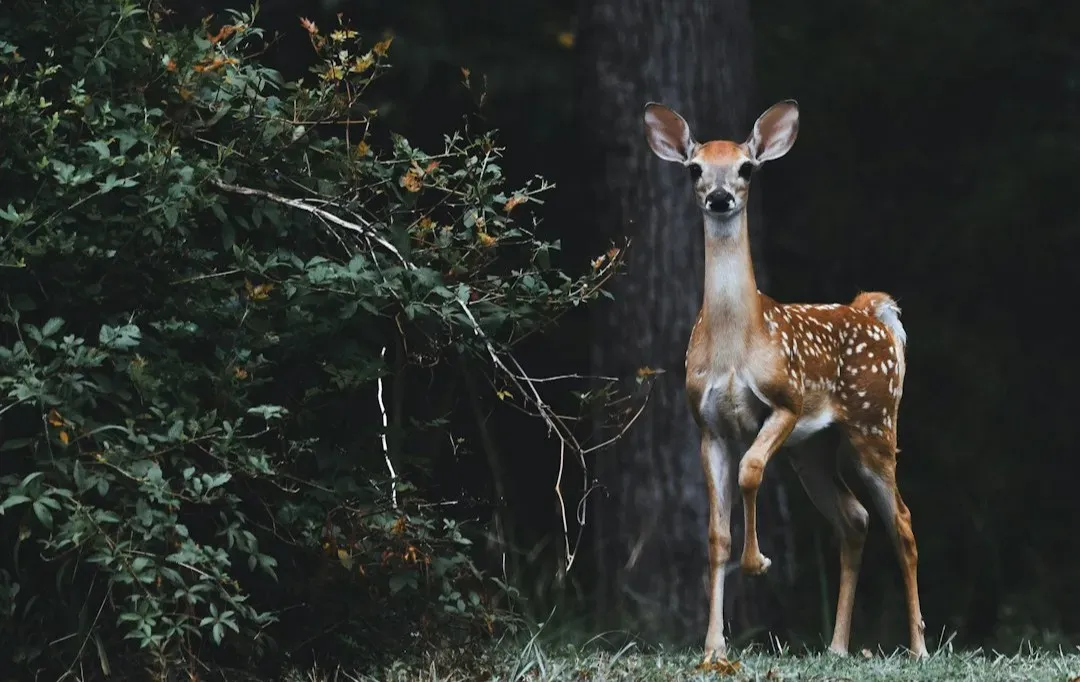
Felix Salten’s Austrian novel was published in German in 1923 and later translated into English. It follows a roe deer from birth to maturity. The narrative stays closely with the ‘ experience of the forest, including the danger posed by hunters.
The novel is darker and more naturalistic than the Disney film that followed in 1942. Its portrayal of the deer’s fragile world has made it a lasting work. Salten’s book shows that animal-centered fiction can be serious as well as gentle.
Taken together, these books show how flexible the animal narrator can be. Some are strict first-person memoirs, and others lean on a close third-person view, but all of them ask readers to see the world from a different position.
If you’re picking just one to start with, choose by mood. Black Beauty is the gentlest, Animal Farm the sharpest, and Watership Down the most epic. Whichever you pick, you may find that a non-human voice says something very human.
Partner offer
Planning a trip to Vegas?
Compare hotel rates and show tickets on VEGAS.com.