
There was no formal list. No single document circulated through the studios with names printed in black ink. Even during the period of its strictest enforcement from the late 1940s to late 1950s, the blacklist was rarely made explicit nor easily verifiable. Instead, it was the result of numerous individual decisions implemented by studio executives and was not the result of formal legal statute. The effect, though, was entirely real.
Between the late 1940s and the early 1960s, amid the postwar fears of Soviet Communist influence in the US, the Hollywood Blacklist kept hundreds of writers, directors, producers, actors, and musicians out of work in the entertainment industry due to suspicions of Communist associations or sympathies. For directors especially, there was nowhere to hide. Unlike screenwriters who could pass work through a “front,” a director’s name was attached to every frame. Some left the country. Some stopped working altogether. A few quietly found ways to keep making films, often brilliant ones, often from a distance of thousands of miles. These are six of those directors, and the work they refused to stop creating.
Jules Dassin – Rififi (1955) and Never on Sunday (1960)

Dassin was a successful director of Hollywood films including “The Naked City” (1948) and “Thieves’ Highway” (1949), but in 1950, during the production of “Night and the City,” he was blacklisted. He was named at HUAC hearings by Edward Dmytryk and fellow filmmaker Frank Tuttle, and subsequently left for France, spending much of his remaining career in Greece.
Dassin did not work as a film director again until Rififi in 1955, a French production and his most influential film. He won the Best Director award for the film at the 1955 Cannes Film Festival. Rififi is remarkable in part for its nearly 30-minute heist scene, filmed with no dialogue or music. Dassin carved out a successful film career post-blacklist, mainly in France and Greece, with Rififi (1955) and Never on Sunday (1960) as his most acclaimed hits. He had been thrown out of Hollywood and ended up shaping an entire genre.
Herbert Biberman – Salt of the Earth (1954)

Salt of the Earth was directed by Herbert Biberman, one of the so-called Hollywood Ten, a group of leftist filmmakers blacklisted and jailed for contempt of Congress after refusing to answer questions from HUAC in 1947. Emerging after six months in a federal institution, Biberman was undeterred; he and like-minded colleagues decided that if they were sanctioned for supposed subversion, the only thing to do was to create truly subversive films.
Salt of the Earth is a neorealist pro-labor film based on the true events of New Mexican zinc miners who went on strike to demand safer work conditions, making it the only film created by currently blacklisted members of the industry – one that inevitably suffered the same fate as its creators. With time, the film acquired an aura of prestige, shown repeatedly at social action events in the 1960s and 1970s. It is now considered a landmark of American independent cinema, remarkable precisely because the studio system never wanted it to exist.
Joseph Losey – The Servant (1963)

Joseph Losey was among the directors blacklisted by Hollywood. Most had, at one time or another, been members of the American Communist Party. Some directors, including Losey, went to Europe and eventually became successful there. Working in England, Losey triumphed with The Servant, the film that heralded a major director the American film industry had thrown away.
The blacklisted émigrés produced acclaimed art films like The Servant (1963, Joseph Losey, director), contributions that ranged from crime film masterpieces to international blockbusters. Losey, who later pronounced his blacklisting a blessing in disguise because it got him out of Hollywood, was perhaps the best known of the filmmakers who settled in England. In Britain, freed from the formulas of the American studio machine, Losey found his voice as a director of genuinely unsettling psychological cinema.
Abraham Polonsky – Force of Evil (1948) and Tell Them Willie Boy Is Here (1969)
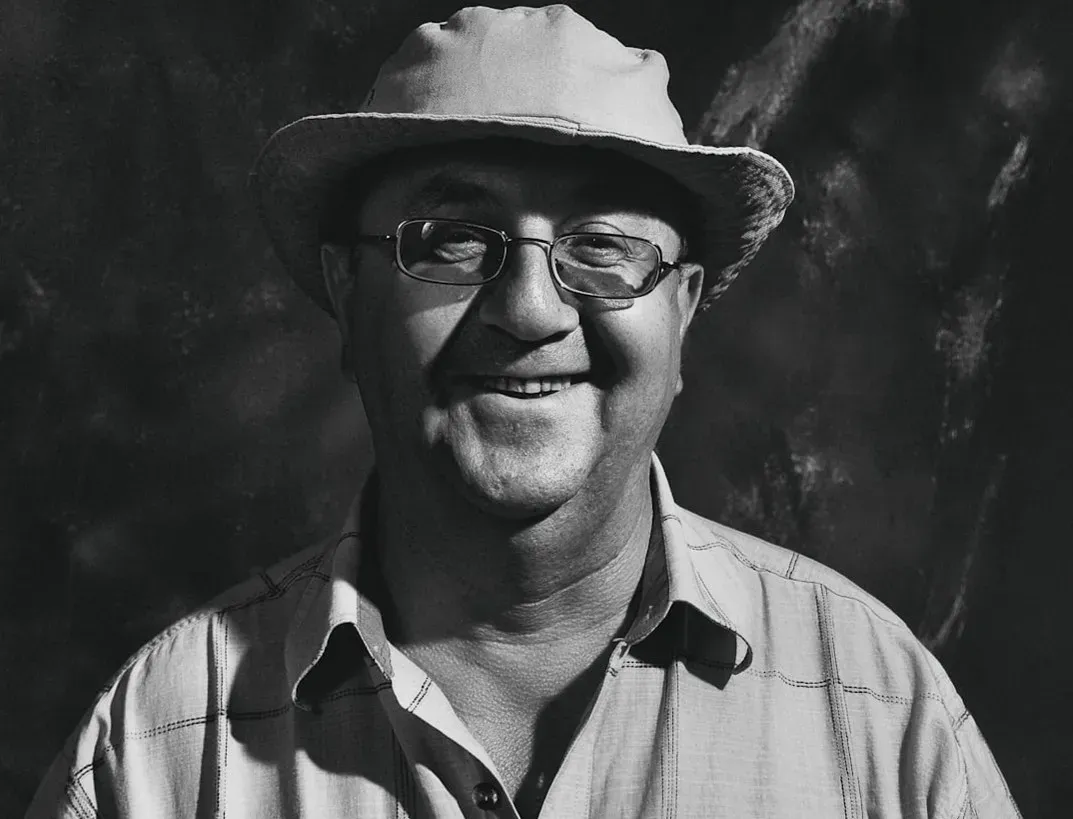
Polonsky moved into directing, helming his own adaptation of the Ira Wolfert novel Tucker’s People. Given the somewhat more exciting title Force of Evil, the film wasn’t an immediate success, but it caught on overseas and was ultimately recognized as a classic noir. Unfortunately, shortly thereafter, Polonsky’s refusal to testify during the HUAC hearings effectively brought his career to a halt, and it would be nearly 20 years before 1968’s Madigan brought him back into the spotlight.
Abraham Polonsky did not direct between Force of Evil (1948) and Tell Them Willie Boy Is Here (1969), managing only occasional work in the intervening decades. While blacklisted, he wrote the scripts for Odds Against Tomorrow (1959) and numerous episodes of the educational television program You Are There. The gap between his directorial efforts represents nearly twenty years stolen – yet Force of Evil is today preserved in the National Film Registry, a permanent record of what the blacklist nearly erased.
Cy Endfield – Try and Get Me! (1950) and Zulu (1964)

In December 1951, director Cy Endfield boarded the Queen Mary for the UK with two suitcases in hand. He never looked back. Although Endfield had not been a box office hitmaker, his resume was growing and he seemed poised for a successful career in Hollywood. Instead, he fled into exile upon learning he would be summoned to testify before the House Un-American Activities Committee.
His name was omitted from credits on some early British projects because American distributors sometimes banned films credited to blacklisted directors. However, he earned a living and, after the blacklist waned, made what became his signature film, the nuanced historical epic Zulu (1964), starring Michael Caine. It was Endfield who took a chance on inexperienced 30-year-old actor Michael Caine, and Caine has long recalled that it took an American to give this working-class actor the chance to play a British officer role. The film launched one of cinema’s most enduring careers.
John Berry – He Ran All the Way (1951) and Claudine (1974)

Dassin was named as one of seven directors – along with Frank Tuttle, Herbert Biberman, John Berry, Bernard Vorhaus and Dmytryk himself – who had attended a Communist meeting, making Berry one of the earliest directors drawn into HUAC’s crosshairs. According to Berry himself, He Ran All the Way was all about the feeling of doom, and “that was no coincidence.” The film came out just as the noose was tightening around his career.
Another film that focused on the Black experience in America was Claudine, a quiet film set in Harlem around a single mother played by Diahann Carroll, who meets a well-meaning garbage man played by James Earl Jones. The film was directed by John Berry, who had been blacklisted and went on to work on this film. Berry had spent years working in French theater and television during his exile, and Claudine, made more than two decades after his blacklisting, earned an Academy Award nomination for Carroll’s performance. His persistence across an interrupted career remains one of the less-told but more remarkable stories of the era.
The blacklist officially had no end date. It was generally recognized to have weakened by 1960, the year when Dalton Trumbo was openly hired by director Otto Preminger to write the screenplay for Exodus. It wasn’t until the 1960s that the ban began to lift, and finally, in 1997, the Writers’ Guild of America unanimously voted to change the writing credits of 23 films made during the blacklist period. What these six directors left behind, made in exile, under pseudonyms, or against considerable odds, turned out to be among the most enduring films of the postwar era – proof that a system built on fear can silence careers, but rarely silences the work itself.