There’s a strange kind of relief in discovering a movie clocks in at under an hour and a half. No bathroom break calculations, no wondering if the third act justifies the runtime. Just a story that gets in, does its work, and gets out before you’ve had time to check your phone. The films below rarely show up on mainstream watchlists, yet each one has quietly built a following through word of mouth, festival buzz, or streaming rediscovery. They prove that brevity, when handled well, isn’t a limitation. It’s often the whole point.
The Man from Earth (2007)

The Man from Earth is a 2007 American science fiction drama film directed by Richard Schenkman, running 89 minutes. It was written by Jerome Bixby, who conceived the screenplay in the early 1960s and completed it on his deathbed in April 1998. The entire film unfolds in one cabin, during one night, with almost no special effects to speak of.
The plot follows a group of college professors and a grad student gathered at a going-away party, where the departing colleague reveals he is secretly 14,000 years old and a former caveman. The rest of the film revolves around the group dissecting his claims about the historical events and people he says he witnessed firsthand. It’s talky by design, and that’s exactly why it has earned a devoted cult following over the years.
Coherence (2013)
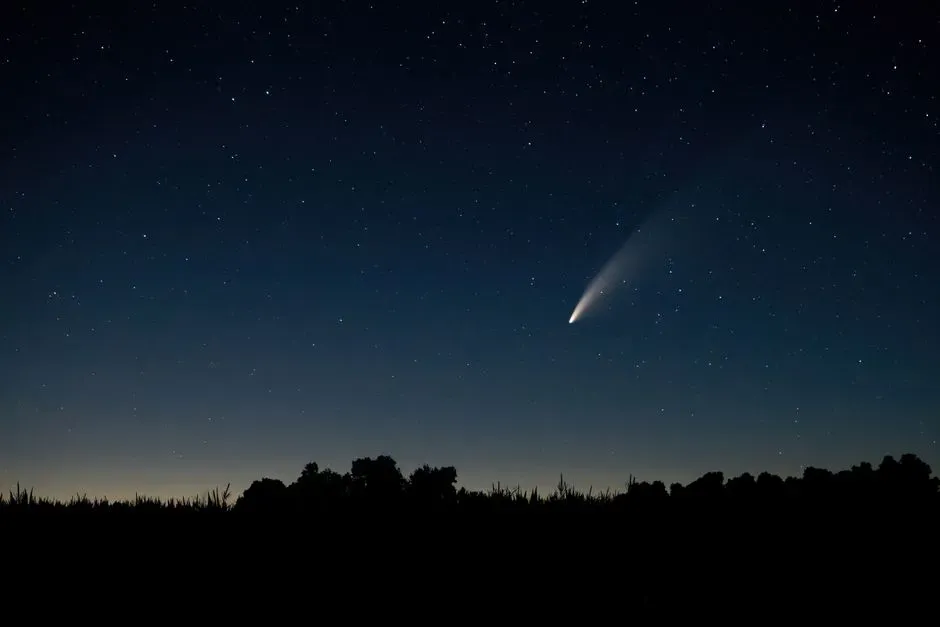
Coherence is a 2013 American film directed by James Ward Byrkit, with a running time of 89 minutes and a budget of just fifty thousand dollars. The ultra low-budget science fiction thriller was shot over the course of five days. Despite those constraints, it manages to feel dense with ideas rather than cheap.
The story follows a dinner party that takes an odd turn on the night a comet passes near Earth, when the power goes out and the friends discover strange secrets in the only house on the street that still has electricity. Much of the dialogue was improvised, which gives the escalating paranoia a raw, unscripted feel. It’s the kind of movie that rewards a second viewing almost as much as the first.
Locke (2013)
Locke is a 2013 psychological drama written and directed by Steven Knight, starring Tom Hardy, with a running time of 85 minutes and a two million dollar budget. The entire film takes place inside a moving car, with Hardy as the only actor ever seen on screen. Everyone else exists purely as a voice on the other end of a phone call.
The story follows construction manager Ivan Locke as he leaves a job site and drives from Birmingham to London, spending the journey on emotional calls to his wife, his children, and his colleagues. Rotten Tomatoes’ critical consensus describes it as a one-man show set in a confined location that demands, and gets, a powerful performance from Hardy. It’s a small film with a surprisingly large emotional weight.
Krisha (2015)

Krisha is a 2015 psychological drama written, directed, and edited by Trey Edward Shults in his feature-length directorial debut, running 81 minutes on a budget of just thirty thousand dollars. Most of the cast is comprised of members of Shults’s own family, in a drama set in Texas over a turbulent Thanksgiving weekend. That closeness between director and cast gives the film an unsettling authenticity rarely seen in low-budget debuts.
The film received the Grand Jury Award and Audience Award in the narrative feature competition at the 2015 South by Southwest Film Festival. It’s a tense, uncomfortable watch about addiction and family dysfunction, but it never wastes a minute of its short runtime getting there. Anyone curious about A24’s early catalog should start here.
Attack the Block (2011)

Directed by Joe Cornish, this British science fiction comedy runs a lean 88 minutes and helped launch John Boyega’s career years before his Star Wars casting. The premise sounds almost like a joke: aliens crash-land on a South London council estate on Guy Fawkes Night, and a group of teenagers who just committed a mugging end up as the estate’s unlikely defenders. It blends genuine scares with sharp, working-class humor in a way few horror comedies manage.
The film never got the box office attention it deserved on release, but its reputation has grown steadily through streaming and cult screenings. Critics have long praised its practical effects and its refusal to condescend to its young, mostly Black cast. For a film about alien invasion, it’s remarkably grounded in its neighborhood and its characters.
Cheap Thrills (2013)
Directed by E.L. Katz, this pitch-black comedy thriller clocks in around 88 minutes and stars Pat Healy, Ethan Embry, Sara Paxton, and David Koechner. The setup is simple and brutal: two old friends, both broke and desperate, are offered escalating cash rewards by a wealthy couple for completing increasingly dangerous dares over the course of one night. What starts as awkward comedy curdles into something much darker by the final act.
It’s a film that uses its tight runtime as a pressure cooker, ratcheting up tension without ever letting the audience catch their breath. Koechner, in particular, delivers a performance that’s both funny and genuinely menacing. Fans of morally uncomfortable thrillers tend to remember this one long after it ends.
Timecrimes (2007)

Directed by Nacho Vigalondo, this Spanish science fiction thriller, originally titled Los Cronocrímenes, runs about 92 minutes and builds an entire time-loop puzzle from a shockingly small budget. The plot follows an ordinary man who accidentally travels back in time and finds himself tangled in a spiraling series of encounters with earlier versions of himself. It plays out like a mechanical puzzle box, where every small decision ripples forward and backward at once.
Unlike bigger-budget time travel films, Timecrimes keeps its scope deliberately small, mostly confined to one house and its surrounding woods. That restraint is part of what makes it so effective. It’s often mentioned alongside Primer as proof that clever science fiction doesn’t need a large budget to feel genuinely mind-bending.
Tangerine (2015)
Directed by Sean Baker and shot largely on an iPhone 5s, Tangerine runs roughly 88 minutes and follows a transgender sex worker in Los Angeles on Christmas Eve, tracking down the boyfriend who cheated on her while she was in jail. Starring Kitana Kiki Rodriguez and Mya Taylor, the film moves at a breathless, sun-bleached pace through Hollywood’s back streets. Its scrappy visual style became almost as famous as the story itself.
What could have been a gimmick, a movie shot on a phone, instead became one of the more celebrated independent films of its decade. The energy is relentless, funny, and occasionally heartbreaking, all packed into a runtime that never overstays its welcome. It remains one of the clearest examples of resourceful filmmaking turning a limitation into a signature style.
Support the Girls (2018)
Directed by Andrew Bujalski and starring Regina Hall, this comedy drama runs about 90 minutes and follows a single, chaotic day in the life of a manager at a Hooters-style sports bar in Texas. Hall’s performance anchors the film, balancing warmth, exhaustion, and quiet resilience as she handles staff crises, a broken air conditioner, and a boss who barely seems to notice her efforts. It’s a workplace comedy with a surprising amount of heart underneath the jokes.
Despite strong reviews upon release, the film never found a wide audience, which is part of why it belongs on this list. It captures the exhausting rhythm of service work with more honesty than most films even attempt. Hall’s performance alone makes the tight runtime worth carving out.
I Don’t Feel at Home in This World Anymore (2017)
This 2017 American neo-noir comedy thriller, written and directed by Macon Blair in his directorial debut, runs 96 minutes and was distributed by Netflix. It stars Melanie Lynskey, Elijah Wood, David Yow, Jane Levy, and Devon Graye. The film had its world premiere at the Sundance Film Festival in January 2017, where it won the Grand Jury Prize in the U.S. Dramatic competition.
The story follows a depressed woman played by Melanie Lynskey who, after being burglarized, teams up with her obnoxious neighbor to track down the thieves, only to find themselves up against a group of dangerous criminals. It swings unpredictably between dark comedy and sudden violence, never quite settling into one tone for long. Despite its awards pedigree, it remains one of Netflix’s more overlooked original acquisitions.
Ten films, ten different decades of independent filmmaking instinct, and not one of them needs two hours to make its point. Some rely on a single location, others on a single gimmick pushed to its full potential, but all of them trust the audience enough not to pad the runtime with filler. If nothing else, they’re proof that a tight, disciplined story often lingers longer than a sprawling one ever could.