Book titles feel permanent once a novel becomes part of the literary canon. Yet the names we associate with some of the most celebrated works in English literature were not always the ones their authors first chose. Editors, publishers, and sheer coincidence often had the final say, sometimes just weeks before a manuscript went to print. Behind these last-minute changes are stories involving anxious authors, competitive publishing houses, and even accidental title clashes with other books. Here are three well-documented cases where a beloved classic almost went out into the world under a very different name.
1. Pride and Prejudice, once known as First Impressions
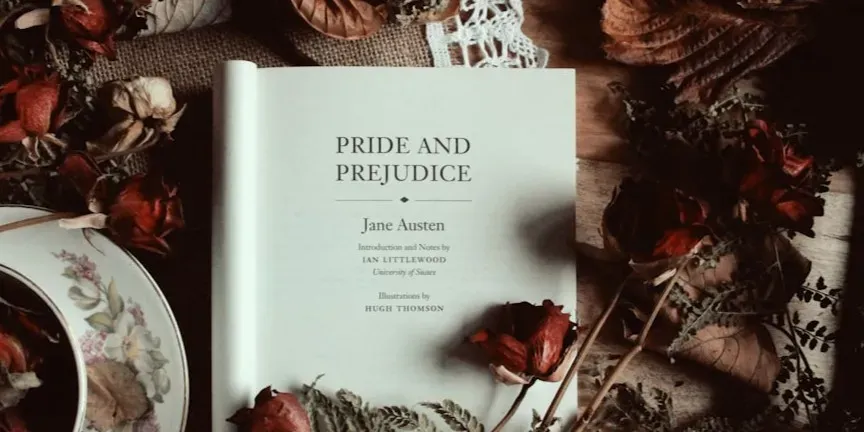
Jane Austen began drafting her most famous novel in 1796, and according to family history, Jane Austen began writing First Impressions, the novel we know today as Pride and Prejudice, in October 1796 at the age of 20, completing it just ten months later. Her father tried to get it published under that title in 1797, sending a query letter to a London publisher, but the offer was rejected by return mail. The manuscript sat aside for years while Austen worked on other projects.
When Austen returned to the story more than a decade later, she gave it a new name for a very practical reason. Since drafting First Impressions, another novel with that name had appeared, by Margaret Holford, published in 1801. She landed on Pride and Prejudice instead, and Jane’s new title was drawn from a line in Cecilia, by Fanny Burney, an author Jane greatly admired. The novel finally reached readers in January 1813, and the rest is publishing history.
2. The Great Gatsby, once known as Trimalchio

F. Scott Fitzgerald was famously indecisive about what to call his 1925 masterpiece, and his first serious choice was far stranger than the title we know today. He initially planned to call the book Trimalchio, a reference to a character from the ancient Roman satire the Satyricon. Trimalchio refers to a character in the novel The Satyricon, an ex-slave who is now a wealthy man and threw lavish parties. The parallel to Gatsby’s own rags-to-riches rise and extravagant gatherings was clearly intentional.
Fitzgerald’s publisher, however, worried the reference was too obscure for general readers, and Fitzgerald’s publisher had the good sense to reject Trimalchio in West Egg, the initial title. Fitzgerald reworked the manuscript extensively before it was released under its final name, and the surviving proof pages still carry traces of that abandoned title. Among the rare book holdings at Brandeis University is a facsimile of the first galley proofs, known at the moment of printing as Trimalchio, with only a hastily scribbled-over title change marking the switch. Scholars still study that early version today, since a full scholarly edition of it was eventually published for readers interested in comparing the two.
3. Catch-22, once known as Catch-18

Joseph Heller spent years shaping his satirical World War II novel around a single darkly comic idea, and for most of that time it carried a different number in its title. Gottlieb was not happy with 14, since the central concept of the novel had been called Catch-18 for more than three years by everyone at Simon and Schuster. The number itself was not especially meaningful; it simply needed to sound right alongside the word Catch.
Trouble arrived just before publication in the form of an unrelated but very similarly titled book. In January 1961, Leon Uris’s new novel, Mila 18, was announced for summer publication, making a new title for Catch-18 inevitable given Uris’s best-selling reputation. Heller and his editor scrambled through several alternatives, including Catch-11 and Catch-14, before settling on the number that stuck. Heller originally titled the novel Catch-18, but his publisher changed it to Catch-22 to avoid confusion with Leon Uris’s Mila 18, which was published the same year. The phrase went on to enter everyday English as shorthand for an impossible, self-defeating situation, a legacy the original title likely would never have achieved.