Walk into almost any bookstore and you will find a shelf of titles that never seem to leave. Not because staff are lazy about rotating stock, but because certain books simply keep moving, month after month, year after year, decades after their first printing. Booksellers have a name for this phenomenon: the backlist, and within it, a small group of perennial sellers that quietly outperform most new releases combined. What makes these particular books so durable is not always obvious at first glance. Some ride school curriculums, others ride cultural anxiety, and a few just seem to have found something timeless that readers keep rediscovering on their own.
1. To Kill a Mockingbird by Harper Lee
Few backlist titles illustrate staying power quite like this one. The Pulitzer Prize–winning novel spent 88 weeks on bestseller lists, and by the 50th anniversary of its publication in 2010 had sold some 40 million copies, and it continues to sell around a million copies a year and is often ranked among the world’s best-sellers. That kind of consistency, decade after decade, is almost unheard of in publishing.
Much of the credit goes to its place in American classrooms, where it remains a fixture year after year. Booksellers have confirmed that the more accessible mass-market paperback edition historically outsold the trade paperback significantly, with the mass-market version selling 55,376 copies since January 2016 compared to 22,554 for the trade edition over the same period. Even as formats shift, the underlying demand from schools and casual readers alike hasn’t slowed much.
2. 1984 by George Orwell

Orwell’s dystopian classic has a strange habit of becoming urgently relevant whenever politics gets uncomfortable. Sales of the classic skyrocketed by 9,500 percent after Donald Trump took the Oath of Office, according to its publisher Penguin USA, which had to order 75,000 new copies and considered another reprint. Booksellers point to this as a textbook example of how current events can suddenly reignite a decades-old title.
But the spikes aren’t purely political theater. A Penguin spokesman noted that the novel typically sees a spike in sales at the beginning of the calendar year, coinciding with the start of the spring semester, since it remains a staple in classrooms. That steady academic demand, layered with occasional viral moments, keeps the book cycling through bestseller charts more than seventy years after it was written.
3. The Alchemist by Paulo Coelho

Paulo Coelho’s slim parable about a shepherd boy chasing his destiny had an almost accidental rise to global fame. When first published in Brazil in 1988, The Alchemist was not an immediate success, and Coelho’s first publisher printed only 900 copies before stopping publication. It took a French translation catching fire in the early 1990s to turn it into the phenomenon booksellers know today.
Since then, the numbers have only grown. It has since been translated into more than 65 languages and has sold more than 65 million copies worldwide. The Alchemist spent over 300 weeks on The New York Times Best Seller list, a run that helps explain why it remains a staple on self help and fiction tables alike.
4. The Great Gatsby by F. Scott Fitzgerald

Fitzgerald’s novel about wealth, longing, and the emptiness behind the Jazz Age glitter is a fixture on nearly every high school reading list in the United States. Booksellers describe it as one of those rare public domain classics that never needs a marketing push, since new editions keep appearing from different publishers every year. Its short length and cinematic prose make it an easy assignment for teachers, which guarantees a fresh wave of student purchases each autumn.
The novel’s presence in film and television adaptations over the years has only added to its visibility on shelves. Because the copyright entered the public domain in the United States in 2021, an unusually large number of publishers now compete to print their own editions, which paradoxically keeps the title even more visible in stores than some newer, tightly licensed books.
5. Fahrenheit 451 by Ray Bradbury
Bradbury’s warning about censorship and a society that has stopped reading has found renewed relevance in recent years, as debates over book banning have made national headlines. It appeared among the top ten best-selling backlist books tracked by an editor with BookScan access over the past year, alongside titles like Animal Farm and 1984. Booksellers often note that whenever a school district removes a book from a curriculum, sales of Fahrenheit 451 itself tend to tick upward, almost as if readers want to see what all the fuss over censorship is really about.
Its short, propulsive style also makes it a favorite for reluctant readers being introduced to dystopian fiction for the first time. Combined with regular assignment in middle and high school classrooms, that mix of curiosity and curriculum keeps the book in steady rotation on backlist tables.
6. Animal Farm by George Orwell
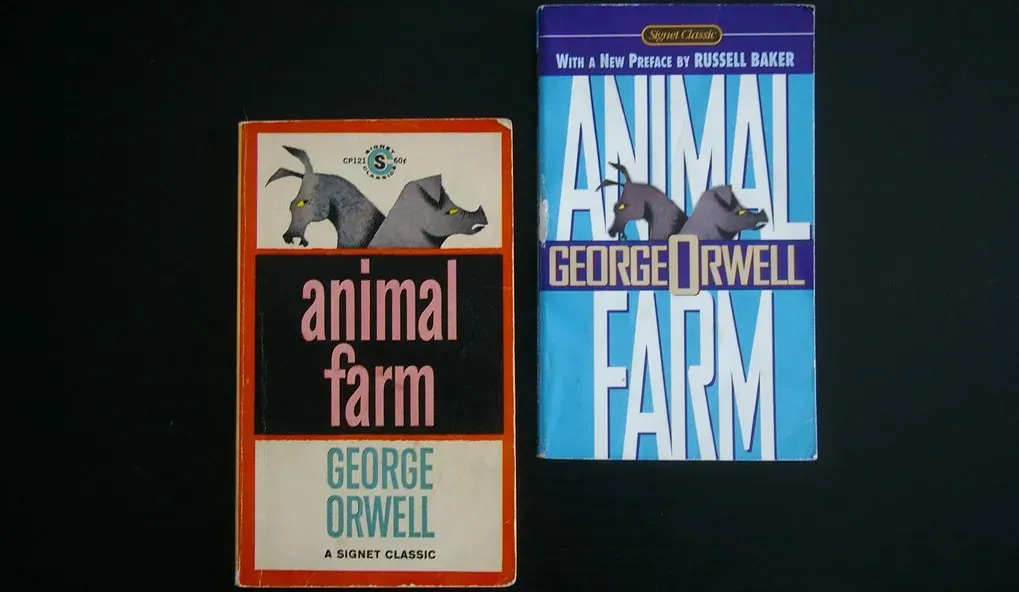
Orwell’s second entry on this list proves that lightning really can strike twice for the same author. Animal Farm placed among the ten best-selling backlist titles of the past year according to BookScan tracking, sitting comfortably alongside 1984 in bookstore politics and classics sections. Its brevity, barely more than a hundred pages, makes it one of the most assigned texts in middle school English classes.
Booksellers also point out that Animal Farm benefits from a kind of evergreen relevance that has nothing to do with any single news cycle. Its satire of totalitarian power grabs and propaganda reads as fresh to each new generation of students, which means demand rarely dips even in years without a dramatic political headline attached to it.
7. The Handmaid’s Tale by Margaret Atwood

Atwood’s novel has had an unusual second life thanks to its television adaptation, which brought a new wave of readers to the original text years after publication. It ranked among the top best-selling backlist books of the past year, tracked through BookScan sales data, a strong showing for a novel originally published back in 1985. Booksellers frequently describe it as one of the clearest examples of how a strong screen adaptation can revive backlist sales almost overnight.
Beyond the show’s influence, the novel continues to be assigned in university courses on dystopian literature and feminist studies. That academic staying power, paired with ongoing cultural conversations about reproductive rights, keeps new print runs moving through bookstores on a near constant basis.
8. Of Mice and Men by John Steinbeck

Steinbeck’s brief, devastating story of two displaced ranch workers during the Great Depression remains one of the most frequently assigned novels in American secondary schools. It appeared on the list of the ten best-selling backlist titles tracked over the past year via BookScan, a testament to how firmly it has held its place in classrooms for generations. Its length, well under two hundred pages, makes it a practical choice for teachers working within tight semester schedules.
Booksellers note that the novel’s themes around loneliness, disability, and the fragility of the American dream continue to resonate regardless of when a given reader first picks it up. That timelessness, more than any marketing effort, is what keeps fresh printings appearing on shelves every school year.
9. Brave New World by Aldous Huxley

Huxley’s vision of a pleasure numbed, engineered society often gets paired with Orwell’s work on bookstore dystopia tables, and for good reason. It was named among the top ten best-selling backlist titles tracked over the past year according to BookScan data, placing it in the same tier as 1984 and Fahrenheit 451 in terms of consistent demand. Booksellers frequently point to its uncanny ability to feel more relevant with each passing decade, particularly as conversations about technology, medication, and engineered contentment shift in tone.
Unlike some of its dystopian peers, Brave New World rarely experiences the same dramatic news driven sales spikes. Instead, its appeal tends to build slowly and steadily, sustained by curriculum assignments and by readers who discover it after finishing 1984 and want more from the same shelf.
Taken together, these nine titles say less about any single trend and more about how publishing actually works beneath the surface of new releases. Curriculum requirements, adaptations, and the occasional jolt of current events all play a role, but the common thread is simpler than it looks. These are books that gave readers something durable enough to keep recommending, assigning, and rediscovering long after the original hype faded, and that quiet, unglamorous consistency is exactly what booksellers count on to keep the lights on between bestseller launches.