Ask a room of readers how great novels get written, and many will picture a burst of inspiration at a desk. Novelists themselves tend to describe something much plainer. They talk about wake-up times, word counts, and the discipline of showing up.
Three authors have been unusually open about how their days are built: Stephen King, Haruki Murakami, and Toni Morrison. Their habits differ in the details, yet each one treats the work as a daily practice rather than a mood.
Stephen King and the Daily Word Count

In his 2000 book On Writing, King explains that he sets a daily goal of about two thousand words, which he describes as roughly ten pages. He generally works in the morning and treats the afternoon and evening as time for reading, family, letters, and revision. Once he starts a project, he tries not to stop until the day’s quota is met.
He also writes that he works nearly every day, including holidays, and that he aims to finish a first draft in around three months. For that first pass he keeps the door closed and shows the pages to nobody. The idea is to finish the story while it still feels fresh, then step back and revise it later with a clearer head.
Haruki Murakami and the Early Morning Marathon

Murakami has described his routine in interviews, including a well known Paris Review conversation, and again in his book Novelist as a Vocation. When he’s working on a novel, he wakes around four in the morning and writes for five to six hours. He doesn’t wait for a good idea to arrive. The schedule is the starting point.
Afterward, he runs about ten kilometers or swims fifteen hundred meters, then reads, listens to music, and goes to bed around nine at night. He has said that repeating this pattern day after day is what matters most, and he treats physical stamina as part of a writer’s toolkit. For him, a long novel is as much an endurance project as a creative one.
Toni Morrison and the Hour Before Sunrise
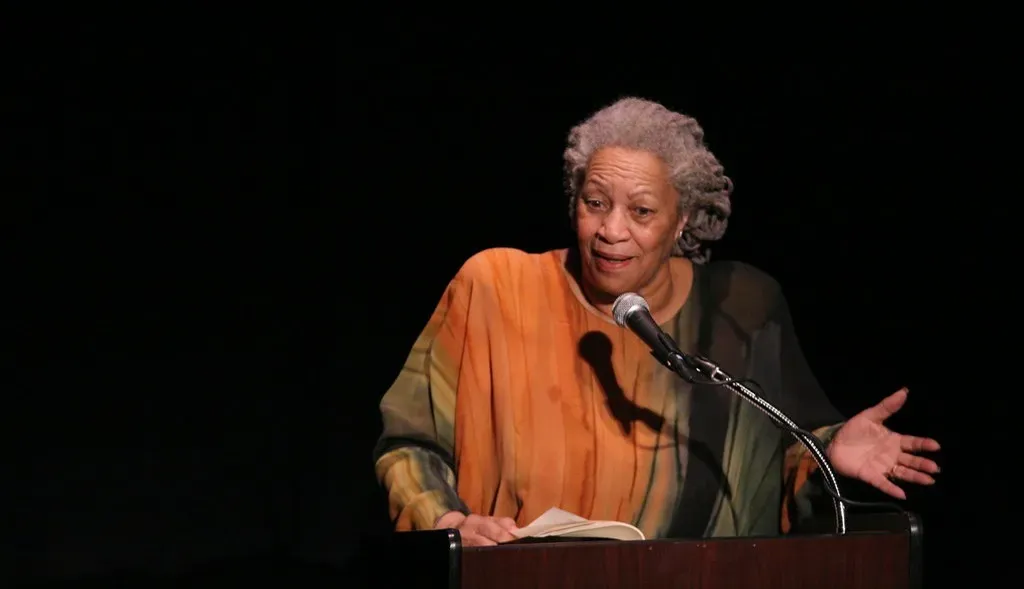
Morrison wrote her early novels while raising two sons and working as an editor at Random House. Her time was limited, so she wrote before the day demanded anything else from her. In a 1993 Paris Review interview she explained that she rose before dawn, made coffee, and sat with the darkness until the light began to appear.
That quiet stretch became her working ritual, and she said she came to understand it as the time when she wrote best. She wasn’t chasing a specific word count. She was protecting a small, regular window of attention, and across many years it helped produce novels such as Beloved and Song of Solomon.