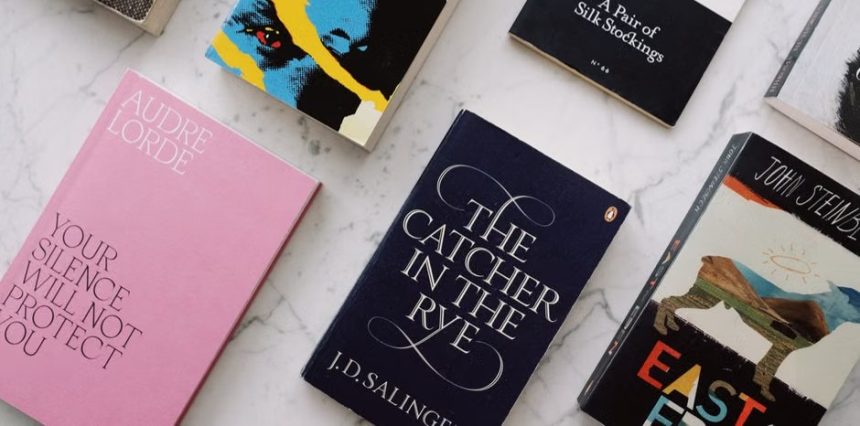
Some books fade after their moment passes. Others seem to get more relevant with every decade, even as the world around them tries to shut them out. There is one novel from the early 1950s that spent years on banned book lists in towns across America, only to end up on the syllabus of nearly every high school English class in the country. Its story says as much about American attitudes toward youth and authority as it does about literature itself.
The novel that started it all
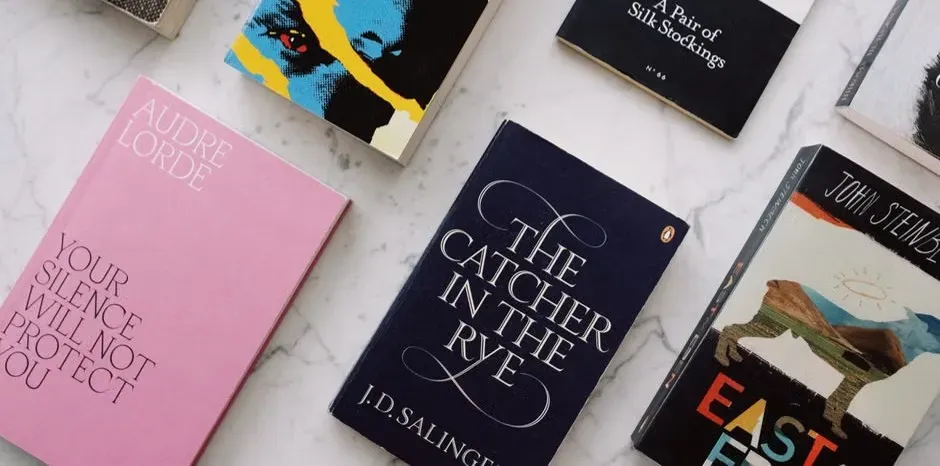
Published in 1951, The Catcher in the Rye, J. D. Salinger’s Bildungsroman about sixteen-year-old Holden Caulfield, is one of the most controversial novels in recent U.S. history. The book follows Holden over a few restless days in New York City after he gets expelled from prep school, wandering through a world he finds phony and exhausting.
The coming-of-age novel follows and is narrated by 16-year-old Holden Caulfield, who goes on a weekend trip back home to New York City after being expelled from his boarding prep school, struggling with the death of his brothers and the stresses of life, before ultimately finding solace through his little sister, Phoebe, before seeking treatment. It was an odd, moody, deeply interior book for its time, and readers either loved it or found it deeply unsettling.
Why it landed on banned lists so quickly

The Catcher in the Rye has, like most banned books, been banned almost from its publication in 1951. The objections were not subtle. The book also faced bans for “bad language,” “vulgarity” and “sexual references,” and by 1963, the American Book Publisher’s Council reported that The Catcher in the Rye had become the most censored book in American public schools.
School boards did not always go as far as an outright ban either. In some instances, school boards banned the novel, while others removed it from school reading lists or “restricted” it, requiring students to obtain parental permission to read it. The variety of responses shows just how unsettled communities were about handing this particular book to teenagers.
A decades-long pattern of censorship

This was not a brief controversy that flared and died out. Since the early 1960s, disputes over Catcher in the Rye have arisen in more than seventy communities across the United States. That is an extraordinary number for a single novel, and it points to something structural rather than incidental in the reaction against it.
According to Time, The Catcher in the Rye was the most challenged book in the United States from 1961 to 1982, and there was a resurgence of challenges in 2005 and 2009. Even in the 2000s, decades after its publication, parents and school boards were still finding reasons to push back against Holden Caulfield.
The specific complaints that kept surfacing

The American Library Association states that The Catcher in the Rye has been banned by schools and public libraries for having “excess vulgar language, sexual scenes, things concerning moral issues, excessive violence and anything dealing with the occult” and “communism,” among other things. That last complaint, communism, feels almost absurd from a modern vantage point, but it reflects the anxieties of the Cold War era rather than anything actually in the text.
The 1950s and 1960s were particularly sensitive to anti-establishment themes, as the Cold War and McCarthyism fueled fears of “corrupting youth”. Holden’s contempt for phoniness and institutional authority read, to some adults at the time, less like teenage angst and more like a dangerous seed of rebellion.
A teacher fired for refusing to drop it

The controversy occasionally spilled beyond book removals and into employment disputes. In Harris v. Mechanicville Central School District (N.Y. 1978), a high school English teacher was dismissed for insubordination when he refused to drop the book from his curriculum. That case became a touchstone in discussions about academic freedom and what a teacher can and cannot be forced to remove from a lesson plan.
Legal battles like this one gave the censorship fights around the novel a weight beyond simple parental complaints. They turned a dispute over a paperback into a question about who gets to decide what young people read in a public classroom, and how far a school board’s authority actually extends.
Partner offer
How it slowly moved into required reading

Despite, or maybe partly because of, its rocky history, the book kept finding its way back onto shelves. In spite of, or more probably because of, this controversy, it keeps finding its way into adolescent hands, mainly as assigned reading by high school English teachers. The very qualities that made adults nervous, the blunt language and the raw honesty about teenage isolation, are what eventually made teachers argue for its educational value.
Following its 1951 publication, Salinger’s instant hit about disillusioned teenager Holden Caulfield became regularly assigned reading in high schools across the country as well as “a favorite target of censors,” according to the American Library Association, which reports it remained among the most-challenged books for decades. Those two facts sitting side by side, required reading and frequent target of censors, sum up the strange path this novel has walked.
The scale of its cultural footprint
Numbers help put the book’s staying power in perspective. Salinger’s classic novel has sold over sixty-five million copies worldwide, making it one of the best-selling books of all time, and it is also one of the most cherished books in the history of American literature, taught in many schools across the nation. Very few novels manage to be both a perennial bestseller and a perennial target for removal.
Salinger’s book is filled with valuable lessons about growing up, but has been the subject of controversy for many years because of its frequent references to premarital sex, underage drinking, and profane language. That tension between literary value and content concerns has never fully resolved, which is part of why the book keeps resurfacing in debates decades after its release.
Echoes in today’s book banning climate
The pattern that played out around this novel in the 1950s has taken on new relevance recently. PEN America’s annual “Banned in the USA” report says the current environment of “unfettered book banning is reminiscent of the Red Scare of the 1950s.” That comparison is not accidental. Organizations tracking modern censorship often point back to this exact era as the historical low point they are worried about repeating.
More than 6,800 book bans were enacted during the 2024-25 school year in 87 public school districts across 23 states, according to a report released by PEN America. The titles being challenged now are different, often focused on LGBTQ themes or contemporary young adult fiction, but the underlying anxiety about what teenagers should be allowed to read on their own terms feels familiar.
What its survival says about assigned reading

There is something instructive in watching a book move from banned to mandatory over the course of a few decades. Understanding why this novel has been so widely banned, and why it continues to resonate, requires examining its historical context, the specific reasons for its banning, and the ongoing debate over its cultural impact. The novel did not change. What changed was how educators and communities came to weigh its honesty about adolescence against its rough edges.
The debate has not disappeared entirely, even now. Some schools still field occasional complaints, and the language that once seemed radical can still catch a parent off guard on a first read. Yet the broader consensus among educators has shifted firmly toward treating the novel as a useful, if uncomfortable, mirror for teenage readers rather than a threat to them.
The long view

A novel that once got teachers fired for assigning it now sits comfortably on required reading lists in classrooms across the country. That shift did not happen overnight, and it was not universal or permanent in every district. But it stands as a clear example of how a book’s reputation can be rewritten over enough time, not because the text changed, but because the culture reading it did.
Partner offer
Planning a trip to Vegas?
Compare hotel rates and show tickets on VEGAS.com.