Walk into a mall, pizza parlor, or bowling alley in the 1980s and you’d hear it before you saw it. Electronic beeps, digital explosions, and the steady clink of coins dropped into slots. Arcades were the social hub for a generation of kids and teenagers.
Many of the machines from that decade still have a hold on people, and some are still in production on modern hardware. Here are nine cabinets that defined the era, and the details that made each one stick.
Pac Man
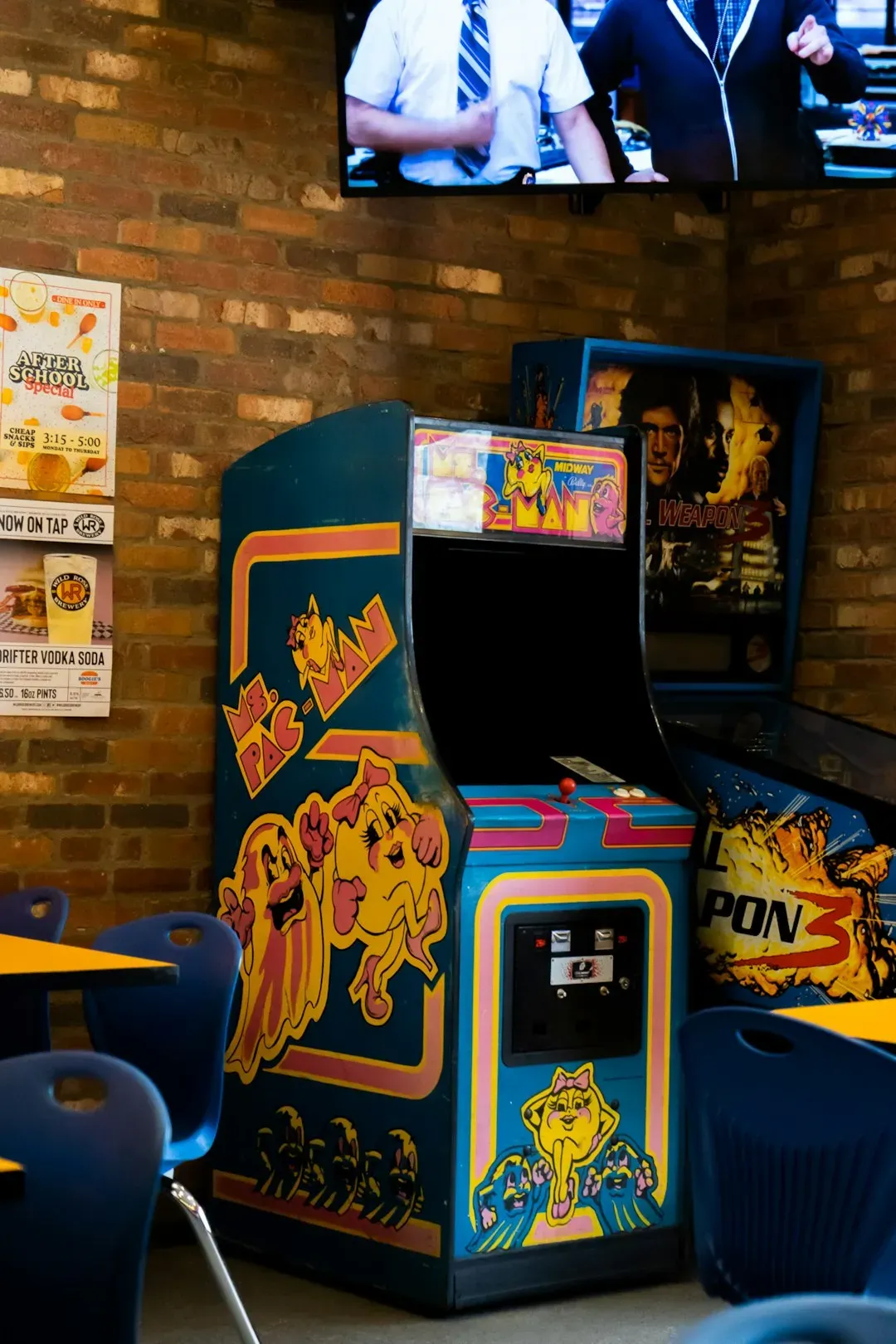
Namco released Pac Man in Japan in May 1980, and Midway brought it to North America later that year. Designer Toru Iwatani built it around a simple maze and a character who eats dots, which set it apart from the space shooters that dominated arcades at the time.
It became one of the best known video games ever made. Each of the four ghosts follows its own targeting behavior, which is why the chase felt smart rather than random. Fans spent years learning the patterns.
Donkey Kong
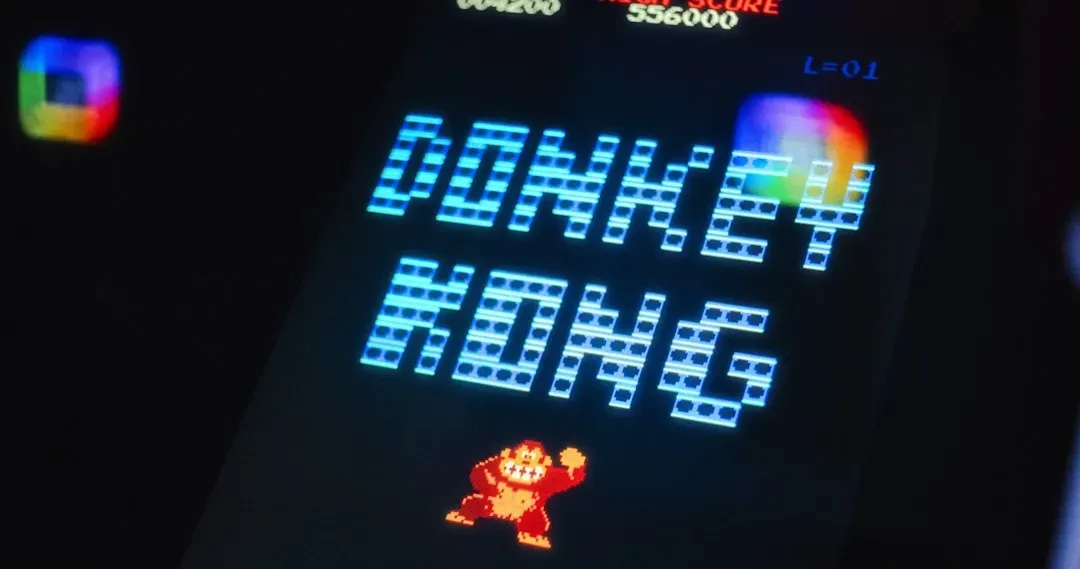
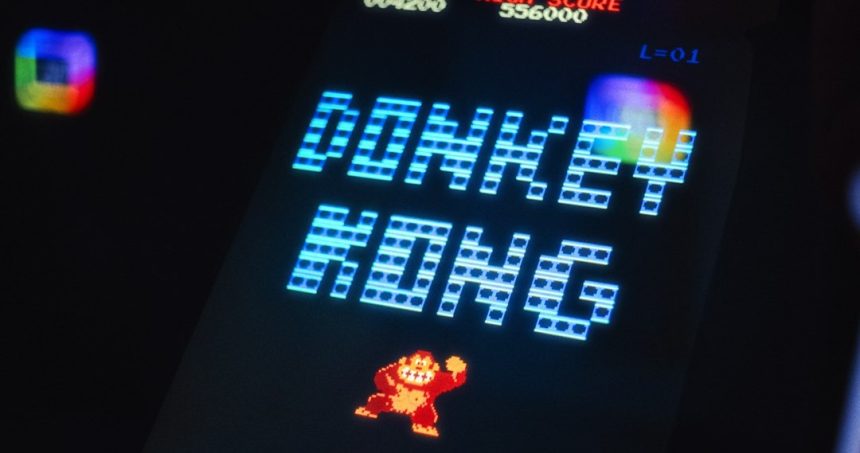
Nintendo’s Donkey Kong arrived in 1981 and was designed by Shigeru Miyamoto. It was a hit in the United States and rescued Nintendo of America’s early arcade business. It was also the first appearance of the character first called Jumpman, who later became Mario.
The game’s four stages of barrels, rivets, and ramps pushed the idea of a platformer into the mainstream. Jumping was part of the core design, which was unusual then. Timing a leap over a rolling barrel became a shared skill among players.
Galaga
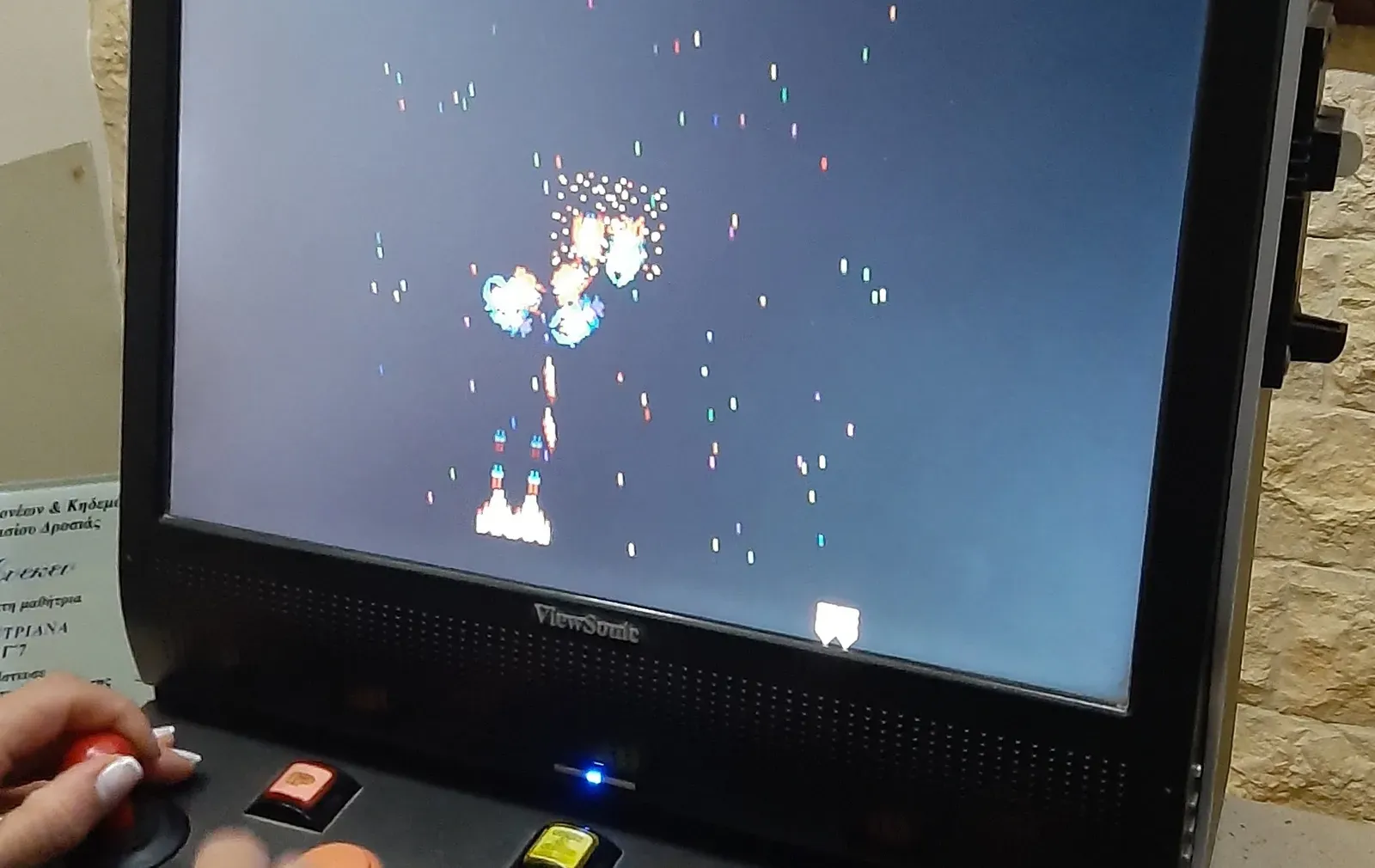
Namco’s Galaga came out in 1981 as a follow up to Galaxian, with Midway handling distribution in North America. Enemy ships dive in swooping formations rather than lining up for easy targets. The pacing was faster and the patterns more varied than in its predecessor.
Its best known trick was the tractor beam. If a boss ship captured your fighter, you could rescue it and fly two ships at once, doubling your firepower. It was a gamble that rewarded careful players, and it made the game feel generous and risky at the same time.
Defender
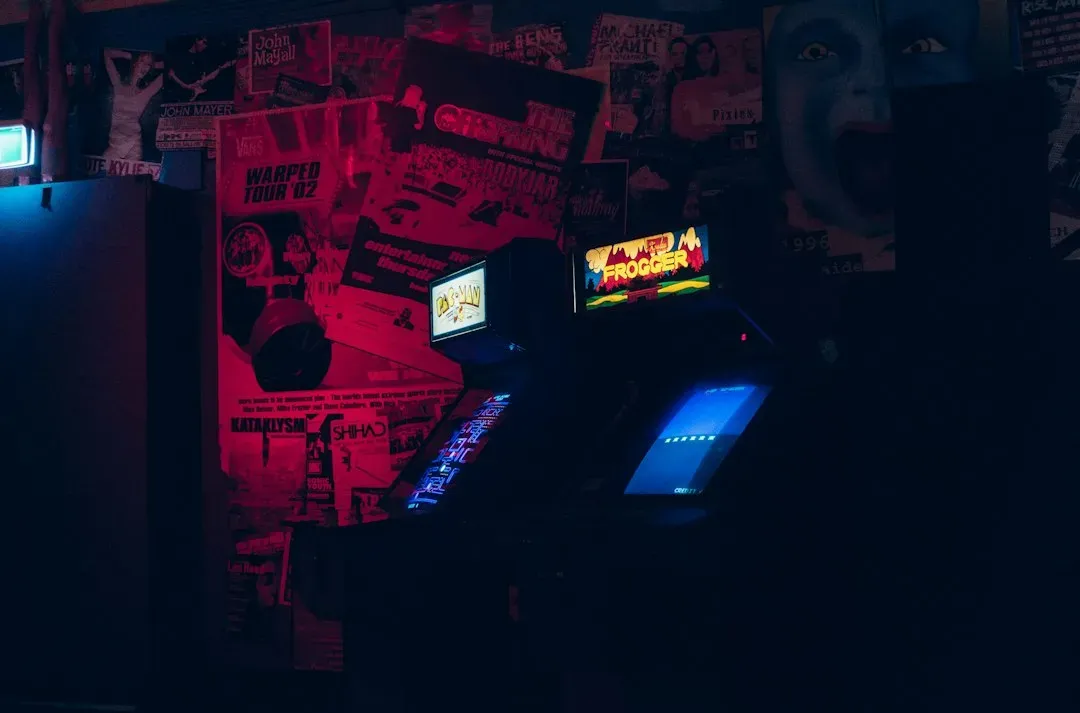
Williams released Defender in 1981, designed primarily by Eugene Jarvis with Larry DeMar. It used a horizontally scrolling world and a control panel with a joystick and several buttons for firing, thrust, reversing direction, smart bombs, and hyperspace. That was far more complicated than most arcade controls of the time.
The game had a reputation for being brutally hard, and many players lost their first ship within seconds. Still, it drew a devoted crowd that treated mastery like a badge. Its radar scanner at the top of the screen was an early example of a heads up display.
Frogger
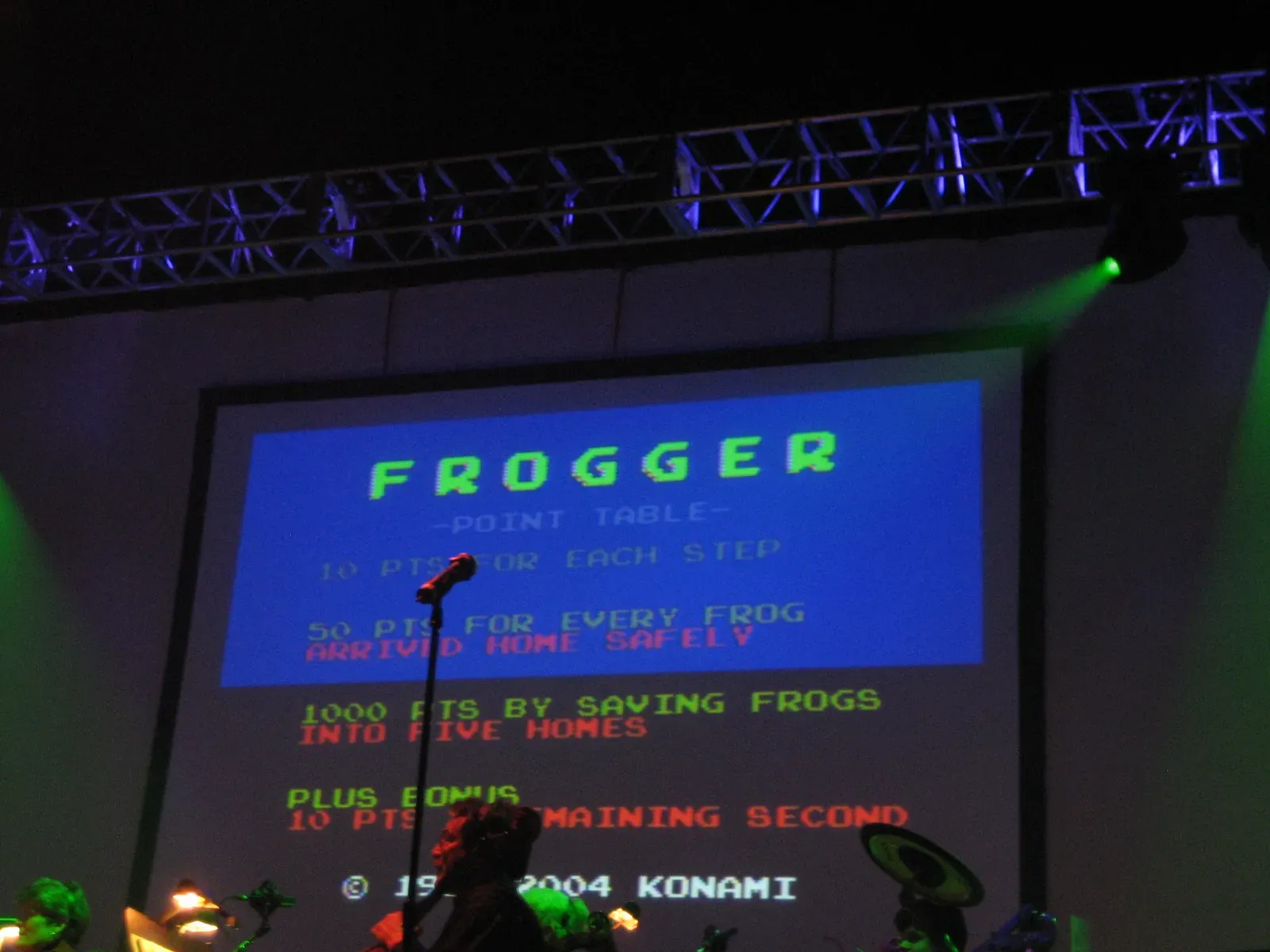
Konami made Frogger in 1981, and Sega handled its release in North America. The goal was simple: guide a frog across a busy road, then across a river by hopping on logs and turtles. There was no shooting at all, which made it approachable for people who didn’t care for space combat.
It had broad appeal beyond the usual arcade crowd, and plenty of casual players dropped quarters in it. The tension came from crossing lanes with different speeds and patterns. One mistimed hop and you’d start again.
Q*bert

Gottlieb released Q*bert in 1982, created by Warren Davis and Jeff Lee. Players guide an orange character hopping down a pyramid of cubes, changing the color of each as they land. Enemies chase along the same pyramid, so every move needs some planning.
The isometric look was unlike nearly anything else in the arcade. The character’s cartoon swearing, shown as a speech bubble, added to its charm. The unusual joystick, mounted at a diagonal angle, matched the cube layout.
Dig Dug
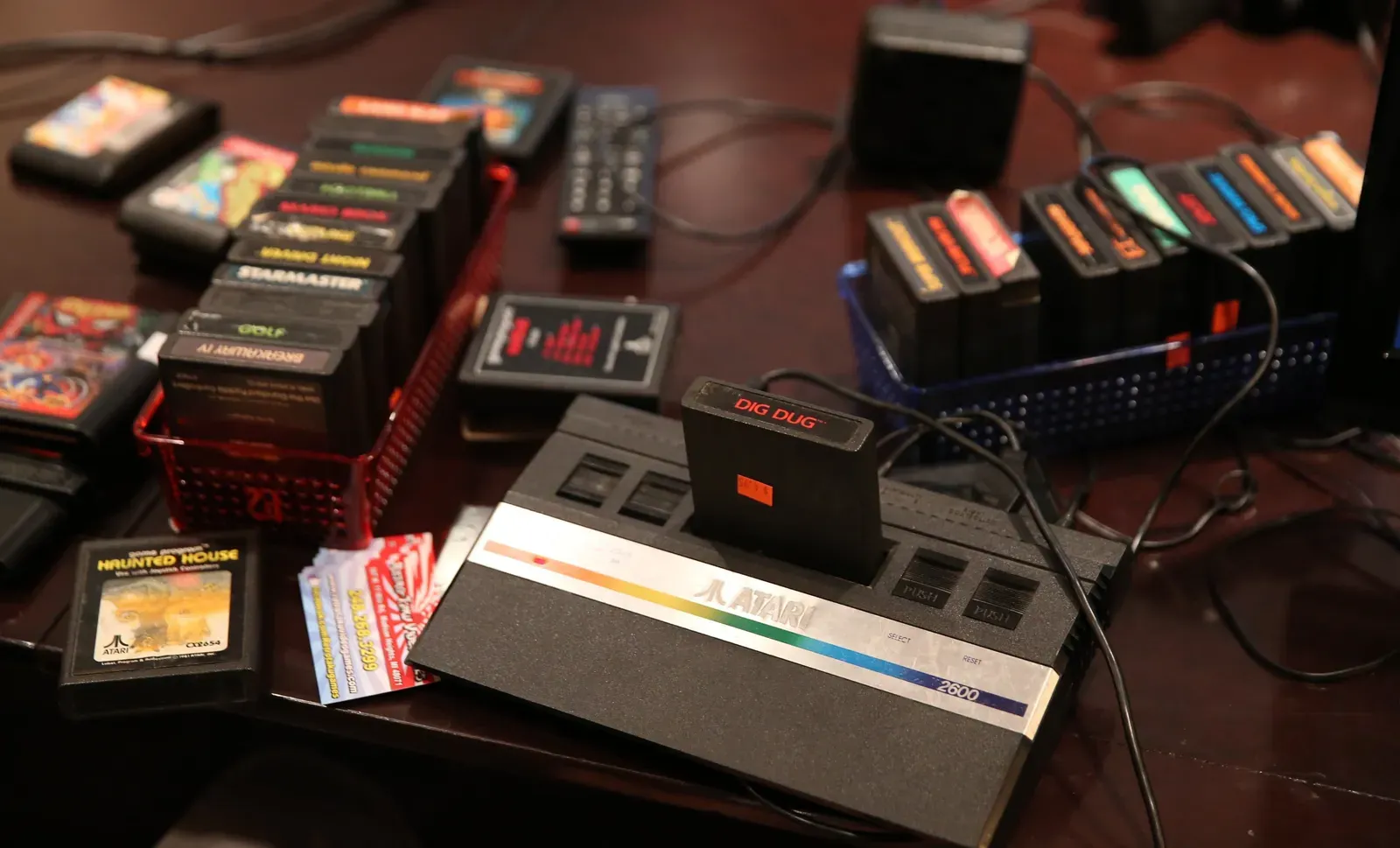
Namco’s Dig Dug debuted in 1982, with Atari distributing it in North America. You tunnel through dirt as a character who can defeat enemies by inflating them with an air pump until they pop. You can also drop rocks on them, which added a tactical layer.
What made it interesting was that the player shaped the level while playing it. Every tunnel you dug became a path enemies could use too. That risk and reward balance kept people coming back for one more round.
Dragon’s Lair
Cinematronics launched Dragon’s Lair in 1983, and it looked like nothing else in the arcade. It used laserdisc technology to play animated scenes drawn by former Disney animator Don Bluth. Players made quick inputs at the right moment to keep the hero, Dirk the Daring, alive.
It was also priced higher than most games, at fifty cents a play in many locations. Crowds gathered to watch even if they didn’t play. The gameplay was limited, but the visuals set a standard that was hard to match on home consoles of the day.
Gauntlet
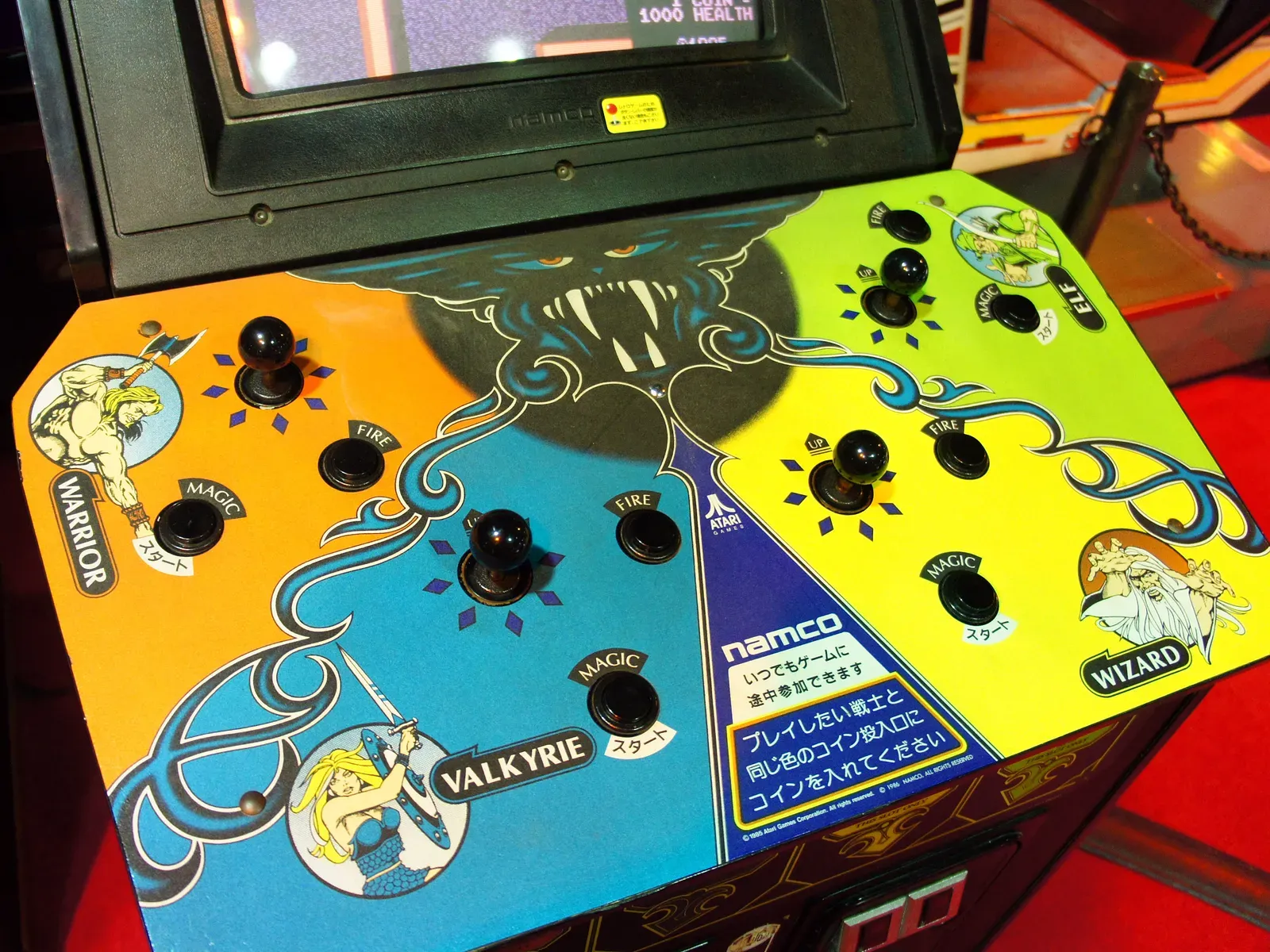
Atari Games released Gauntlet in 1985, and its big selling point was four players at the same time. Each player picked a character class, such as warrior or wizard, and fought through dungeon mazes full of monsters. Shared health and food mechanics encouraged cooperation, or at least loud arguments.
It became a social centerpiece for arcades, since friends could join in together. The game also helped popularize the dungeon crawl format in the arcade space. It was a late decade standout that showed where multiplayer was headed.
Where These Games Stand Today
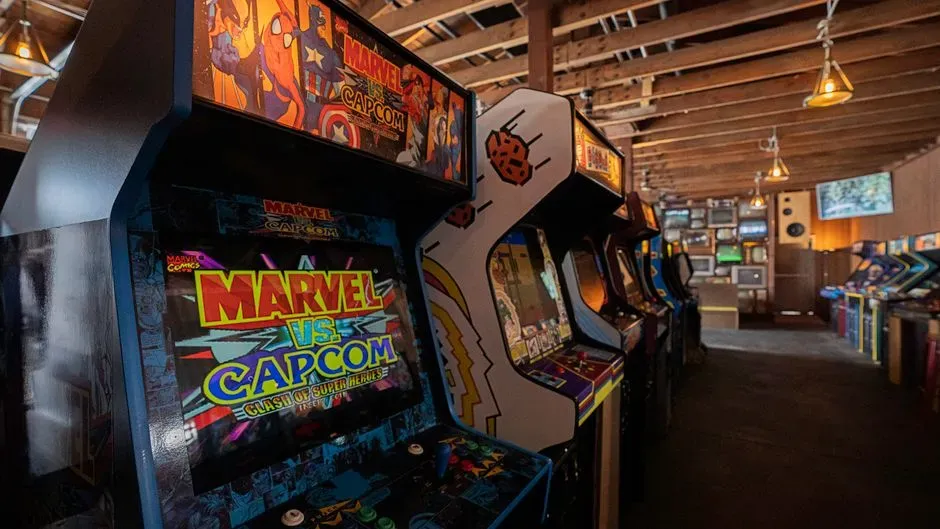
Many of these titles remain available through retro collections, restored cabinets, and classic game compilations. Pac Man, Donkey Kong, Galaga, and Frogger in particular have been rereleased across multiple generations of hardware.
Original cabinets still turn up in barcades and collectors’ homes. If you recognize more than a few of these nine, your quarters were well spent.