
Having a pool in Las Vegas sounds like pure luxury. Triple-digit summers, a backyard retreat, family weekends in the water. What’s easy to overlook is the weight of responsibility that comes with it. Pool ownership in Clark County is governed by some of the most detailed safety codes in the American Southwest, and the stakes behind those codes couldn’t be higher.
Drowning is the leading cause of unintentional injury and death in Clark County for children four years old and under. The majority of these drowning deaths occur in residential pools. For Las Vegas homeowners, the legal requirements aren’t bureaucratic box-checking. They exist because the numbers demand it.
The Scale of the Problem in Southern Nevada

The Southern Nevada Health District reported 38 submersion incidents in Clark County in 2024, with roughly three quarters of them involving children under four years old. Most of those submersions occurred in residential swimming pools.
Nationally, drowning deaths are on the rise following decades of decline. Over 4,500 people died due to drowning each year from 2020 through 2022, which is about 500 more per year compared to 2019.
Rates of swimming pool drowning deaths are highest in states like Florida, Arizona, Nevada, and Mississippi, which puts Las Vegas in a particularly high-risk zone. The desert heat extends the pool season nearly year-round, and that extended exposure adds to the risk.
The 2024 ISPSC: Clark County’s New Legal Standard
On January 11, 2026, Clark County officially adopted the 2024 International Swimming Pool and Spa Code along with specific Southern Nevada amendments. This update isn’t just paperwork for new builds. It’s the standard that home inspectors, insurance adjusters, and local authorities are using right now to judge the safety of your property.
Many Southern Nevada municipalities, including Clark County, Henderson, Las Vegas, and North Las Vegas, follow the Southern Nevada Amendments to this code, which sets out basic safety standards for private and public pools.
Homeowners who think their older setup is still compliant should think carefully. Building codes are the bare minimum, and they change. What was considered “to code” twenty years ago might not meet the current Southern Nevada Health District guidelines for layers of protection.
Fence Height and Barrier Requirements
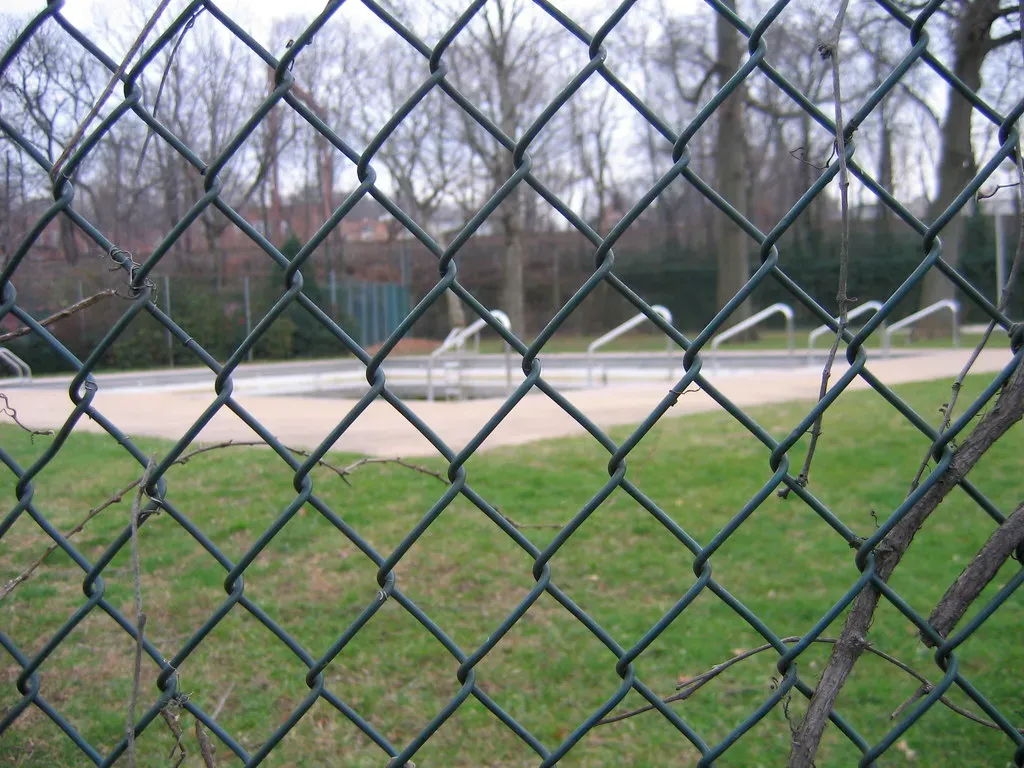
The Southern Nevada code states that residential pools should have a barrier of at least 60 inches high, and any gates or doors must be self-latching. Perimeter fences must be non-climbable, four-sided, and a minimum of 60 inches high, according to Clark County Fire Department guidelines.
In Las Vegas, any residential pool must be surrounded by a fence or wall at least five feet high, with no gaps wider than four inches. This regulation is designed to prevent accidental drownings, especially among children.
While Nevada doesn’t have a single statewide law requiring every private pool to have a fence, most counties and cities, including Las Vegas in Clark County, require pool owners to install a proper safety barrier. That distinction matters. The obligation is local, specific, and enforceable.
Self-Closing, Self-Latching Gates: What the Law Requires
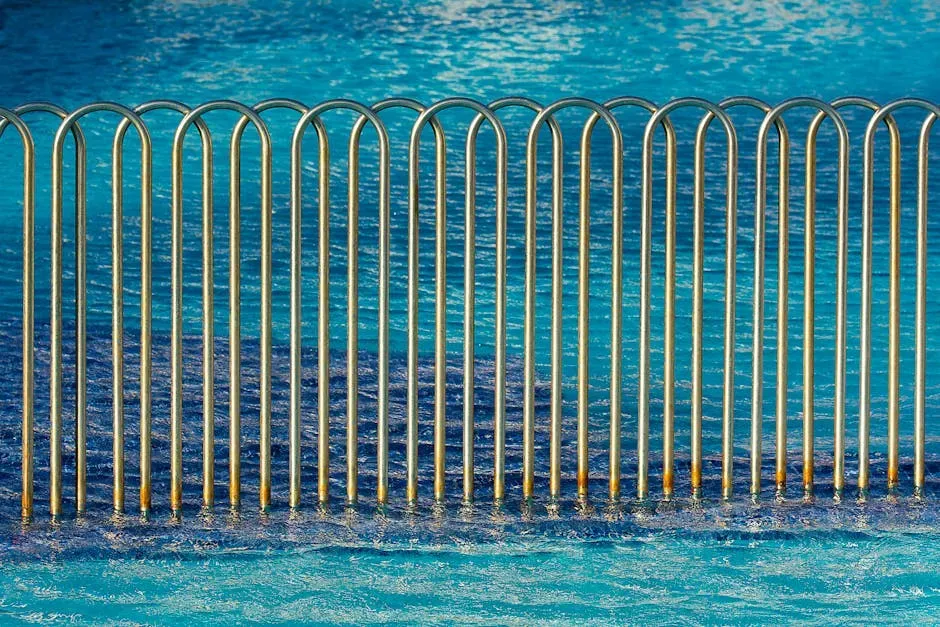
By law, every pool gate in Clark County must be self-closing and self-latching. This means the gate must be able to close and click into the locked position on its own from any open position, whether it’s wide open or just cracked a few inches.
If a latch is mounted lower than 54 inches from the ground, the law requires it to be placed on the pool side of the gate, at least three inches below the top. Additionally, the gate and fence must have no opening larger than a half-inch within 18 inches of the latch. This prevents a child from reaching through the mesh or bars to trigger the mechanism.
Under the Southern Nevada amendments to the 2024 ISPSC, if horizontal rails on a fence are spaced less than 45 inches apart, they must be located on the pool side of the fence. This addresses an older, widespread issue with privacy fences that double as pool enclosures.
Door and Window Alarm Requirements

Doors and windows leading to the pool or spa must be alarmed to alert family members when opened. Doors, windows, and gates must also be locked.
The Southern Nevada Pool Code specifies that alarms must cover doors, operable windows with a sill height of 48 inches or less, and pet doors. The alarm must sound continuously for a minimum of 30 seconds within seven seconds after the door is opened, at a minimum of 85 decibels.
Doggie doors must also be alarmed or secured. A crawling baby can exit through a doggie door and drown in an unprotected pool. That detail catches many homeowners off guard, but it’s in the code for a very concrete reason.
Pool Covers: What Actually Counts as a Safety Cover

Power-operated pool covers provide safety and are easy to use. Solar and floating pool covers, however, are not safety covers and do not provide adequate protection. Children can slip underneath and become trapped out of sight.
Pool covers are required for new residential pools in Las Vegas to reduce evaporation, a rule tied to the city’s strict water conservation policies. The Southern Nevada Water Authority limits how much water residential pools can use, and a cover helps homeowners stay on the right side of both safety and conservation rules.
The distinction between a safety-rated cover and a standard floating cover is not a technicality. In the event of an incident, an improper cover can actually increase the risk of entrapment rather than prevent it.
The Attractive Nuisance Doctrine and Homeowner Liability
Nevada law recognizes the heightened risk pools present to children through the attractive nuisance doctrine, which holds property owners to a higher standard when it comes to preventing child injuries. Under this doctrine, pool owners must go beyond basic safety measures. They are legally required to take reasonable precautions to prevent children from gaining unsupervised access to the pool area.
Unlocked gates, missing alarms, or inadequate fencing expose homeowners to liability under Nevada’s attractive nuisance doctrine. Tragic drownings in private pools often result from lapses in these safety measures.
Failure to comply with pool safety laws can result in a fine of up to $1,000. In addition, if a child is injured as a result of an unsecured pool, homeowners can be held liable. Civil damages in wrongful death suits, however, can dwarf any code violation fine many times over.
Building Permits and City Inspections
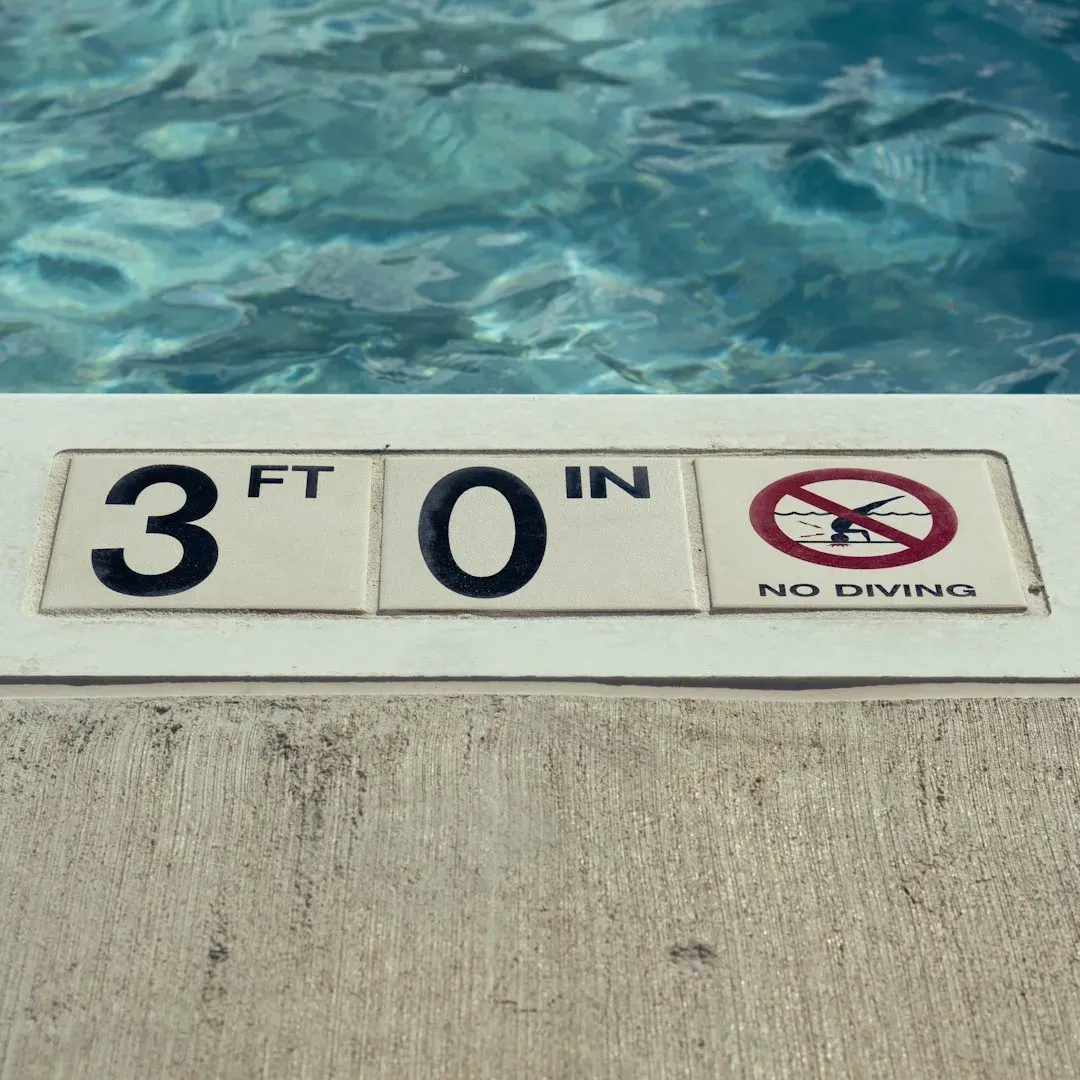
All in-ground pools require a permit in Las Vegas. Some above-ground pools may be exempt depending on their size and depth, but permanently installed hot tubs and spas with electrical or plumbing connections typically require a permit. The permitting process often includes multiple types of approvals, including building, electrical, and plumbing permits.
Once construction is complete, the city will conduct inspections to ensure the pool structure meets safety and zoning requirements, that electrical and plumbing systems function correctly, and that required safety features such as fencing and alarms are in place.
Constructing a pool without a permit can lead to serious legal and financial risks, including fines and legal issues, home resale complications, and insurance denials if damage to an unpermitted pool is not covered. Skipping the permit process to save time almost always costs more in the end.
Insurance Implications of Non-Compliance

Insurance companies are in the business of assessing risk. In recent years, many carriers in Nevada have become much stricter about pools. Some will outright refuse to cover a rental property if the pool isn’t fully enclosed by a secondary fence.
Failure to comply with pool safety laws in Nevada can lead to fines and penalties from local building authorities, liability issues if an accident occurs on your property, and insurance complications, as homeowners’ insurance may not cover incidents if safety laws are ignored.
Permits provide a permanent record of the work performed and inspections conducted on the home for insurance needs, resale value, and general knowledge of the history of the home. If you improve or add on to your home without permits and it fails, your insurance company may not help you with the liability.
Swim Lessons, CPR, and the Human Layer of Protection
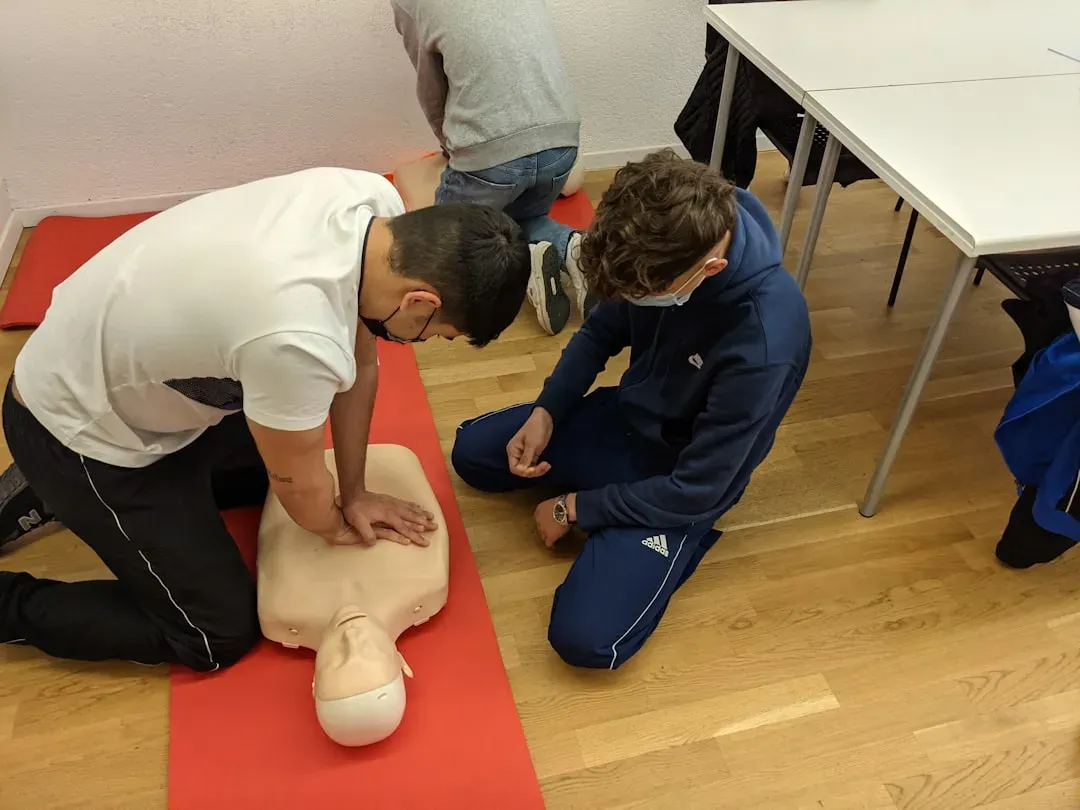
Code compliance covers the physical barriers, but local health officials are clear that hardware alone isn’t enough. Creating a plan ahead of time by enrolling children in swimming lessons, taking CPR classes, and ensuring every water watcher knows how to call 9-1-1 in case of an emergency is strongly recommended by the Southern Nevada Health District.
Participation in formal swimming lessons can reduce the risk of drowning by as much as 88 percent among young children aged one to four years. That’s one of the most significant risk-reduction figures available in any area of child safety.
The responsibility of pool and spa ownership includes ensuring that family members learn to swim and know CPR. It’s worth noting that drowning is typically silent. A child can drown in as few as 20 seconds, and drowning may not always involve splashing or loud noises. Fences and alarms buy time. Knowledge saves lives.
Keeping Up With Code Changes

In the Las Vegas Valley, “obsolete” doesn’t just mean the hinges are squeaky or the paint is peeling. It means your gate is a legal liability that could fail a home inspection during a sale, lead to a denied insurance claim, or contribute to a tragic accident.
The desert wind, extreme heat, and aging hardware common in older Henderson and Summerlin homes mean that many gates that passed code in 2015 are now completely non-compliant under the 2024 ISPSC standards. Annual inspections of your own barrier system aren’t required by law, but they’re a reasonable habit given how quickly desert conditions degrade hardware.
Homeowners should contact the Clark County Building Department directly when in doubt, since jurisdictional boundaries between the city of Las Vegas and unincorporated Clark County mean the applicable code can vary by address. Staying current isn’t optional. The law, and more importantly the consequences, don’t wait for homeowners to catch up.
Conclusion: A Pool Is a Responsibility, Not Just a Perk

Las Vegas pool safety law is detailed, updated, and actively enforced, and the reasoning behind every rule traces back to a real risk. The 2024 ISPSC, adopted in Clark County in January 2026, raised the bar again. Five-foot fences, self-latching gates, door alarms, proper covers, and building permits aren’t suggestions from overzealous regulators. They’re layers of protection between a split-second lapse and an irreversible outcome.
Drowning remains a leading cause of preventable and unintentional death among young children in southern Nevada, and most of those deaths happen in backyards that belong to ordinary families. The distance between a compliant pool and a tragedy is often just one unlocked gate or one missing alarm battery.
Staying compliant means more than avoiding fines. It means every family in your neighborhood, including the ones whose children wander where they shouldn’t, is a little safer because you took the time to get it right.