Language has a long memory, even when we don’t. The phrases we toss around in offices, at dinner tables, and in casual texts have been smoothed down by centuries of repetition until they feel harmless, almost decorative. Most people never stop to ask where they came from.
The honest answer, in many cases, is somewhere genuinely disturbing. Battlefields, prison camps, mass poisonings, and public executions quietly shaped the vocabulary we use every single day. Here are nine of the most striking examples.
1. “Deadline” – The Line That Got You Shot

Most etymologists agree that the word “deadline” first appeared during the American Civil War. According to author Christine Ammer, it was coined at the Andersonville prison camp in Georgia, and first appeared in writing in a report by Confederate Inspector-General Colonel D.T. Chandler on July 5, 1864. The concept was brutally literal: a physical boundary marked inside the prison stockade, not a calendar reminder on your phone.
A light fence known as “the dead line” was placed about 19 feet inside the main wall. Anyone crossing or even touching this line was shot without warning by guards sitting in elevated platforms. Built to hold 10,000 prisoners, Andersonville held more than 33,000 Union soldiers at its peak in August 1864. The National Park Service reports that out of roughly 45,000 Union prisoners held at the camp during its 14 months of operation, nearly 13,000 died from disease, poor sanitation, starvation, overcrowding, or exposure. It was only in the 1920s that the word morphed into its current usage, describing a looming time or date by which something must be completed.
2. “Mad as a Hatter” – Mercury Poisoning on the Shop Floor

The phrase “mad as a hatter” may sound whimsical, but it refers to a serious medical condition that once plagued the hatmaking industry. In the 18th and 19th centuries, fur felt for hats was made by treating animal pelts with mercury nitrate. Workers exposed to this toxic substance over time developed symptoms such as tremors, speech problems, hallucinations, and mental and emotional instability.
This exposure to mercury caused a range of symptoms in hatters, collectively known as “hatter’s shakes” or “mad hatter disease.” The term “mad as a hatter” became a common way to describe someone behaving erratically or seeming mentally unstable, not knowing that it was actually a reference to the tragic effects of mercury poisoning. The popularity of the phrase shows how widespread the ailments were, but mercury continued to be used in hatmaking into the 20th century.
3. “Bite the Bullet” – Surgery Without Anesthesia

Before the advent of effective anesthesia, patients undergoing surgery had few options for pain management. One common technique during battlefield amputations was to give the soldier something to bite down on – often a bullet – to help endure the excruciating pain. The hardness of the bullet provided something to clench against, and some historians suggest the lead might have had mild analgesic properties when bitten. More practically, it prevented soldiers from biting off their tongues or breaking their teeth from clenching too tightly.
An alternate origin story applies the same idea to victims of flogging. In his 1796 book A Classical Dictionary of the Vulgar Tongue, English lexicographer Francis Grose mentions soldiers who would “chew a bullet” while being flogged, noting that grenadiers considered it a point of honor never to cry out during punishment. Today, when we talk about “biting the bullet,” we refer to enduring something unpleasant with stoic resolve – a metaphorical nod to these early medical practices and a grim reminder of how far medicine has progressed.
4. “Caught Red-Handed” – Murderers and Scottish Law

The origins of “caught red-handed” can be traced back to 15th-century Scotland, where the phrase was used in the context of someone being discovered with blood on their hands from an act of murder or poaching. This was a direct and unmistakable indicator of guilt. The earliest recorded usage of the term “red hand” appears in the Scottish Acts of Parliament of James I in 1432.
Over time, the phrase evolved in the Scottish legal system, often cited as “apprehended redhand” or “taken with redhand,” indicating someone caught in the very act of committing a crime. The transition to “red-handed” as we know it is credited largely to the influence of Sir Walter Scott’s Ivanhoe, published in 1819, which helped popularize the term. Today it describes anything from theft to a child sneaking cookies, but its roots are unmistakably violent.
Partner offer
5. “Drinking the Kool-Aid” – The Jonestown Massacre

The phrase originates from events in Jonestown, Guyana, on November 18, 1978, in which over 900 members of the Peoples Temple movement died. The movement’s leader, Jim Jones, called a mass meeting at the Jonestown pavilion after the murder of U.S. Congressman Leo Ryan and others. Jones proposed what he called “revolutionary suicide” by ingesting a powdered drink mix lethally laced with cyanide and other drugs, which had been prepared by his aides.
Seventy or more individuals at Jonestown were injected with poison, and roughly a third of the victims were minors. Guards armed with guns and crossbows had been ordered to shoot those who tried to flee the Jonestown pavilion. The brand-name product Kool-Aid was not actually used on November 18, 1978. Instead, the lethal combination of potassium cyanide and sedatives was mixed with the fruit drink Flavor Aid. The Kool-Aid brand name stuck anyway – a testament to how tragedy and language collide in the public imagination.
6. “Trial by Fire” – Medieval Proof of Innocence

The phrase “trial by fire” originates from an actual medieval practice where the accused would have to endure intense physical pain – often walking over hot coals or holding a red-hot iron – to prove their innocence. The idea was that divine intervention would protect the innocent. Today, this phrase is used figuratively, but its roots remain as terrifying as ever.
Language carries the weight of history, often in ways we don’t realize. Many old sayings have their origins rooted in some of the darkest aspects of human history, particularly the cruel methods of interrogation and punishment used during medieval times. The ordeal was considered a legitimate judicial tool well into the 12th century, backed by church authority and community belief. Surviving it didn’t just mean you were lucky – it meant God himself had spoken.
7. “Turn a Blind Eye” – Nelson at the Battle of Copenhagen
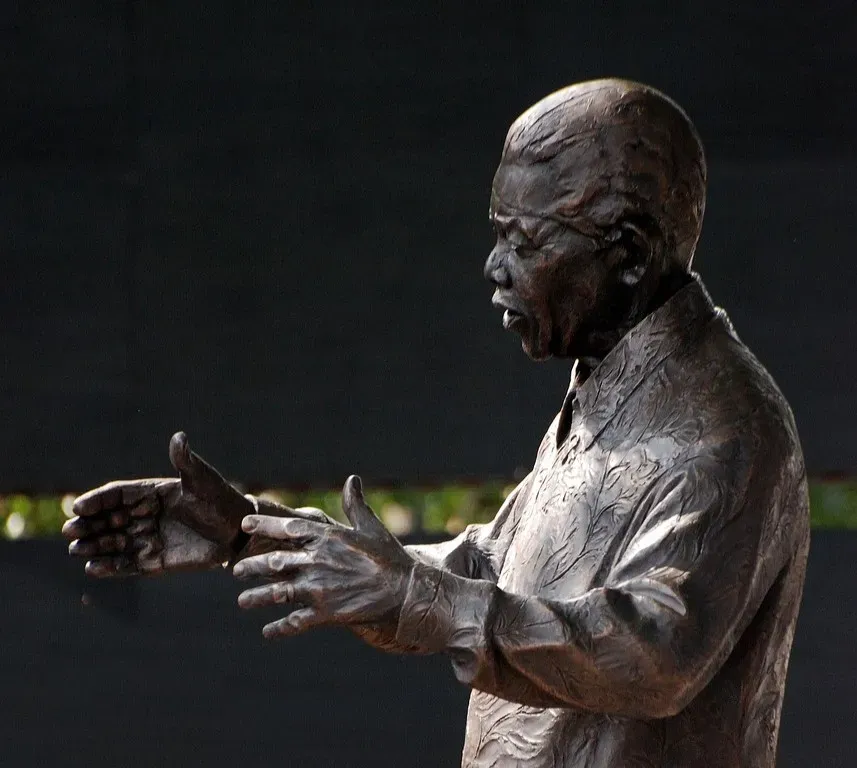
The phrase “turn a blind eye” dates back to a legendary chapter in the career of British naval hero Horatio Nelson. During the 1801 Battle of Copenhagen, Nelson’s ships were pitted against a large Danish-Norwegian fleet. When his more conservative superior officer flagged for him to withdraw, the one-eyed Nelson supposedly brought his telescope to his bad eye and proclaimed, “I really do not see the signal.” He went on to score a decisive victory.
The phrase’s first recorded use in the form we understand today was by Martha Wilmot in 1823, suggesting it was already a well-understood concept at the time. The story of Nelson, whether entirely accurate or not, has cemented the phrase in the English language as a metaphor for intentional disregard. Some historians have since dismissed Nelson’s famous quip as merely a battlefield myth, but the phrase persists to this day.
8. “Sold Down the River” – The American Slave Trade
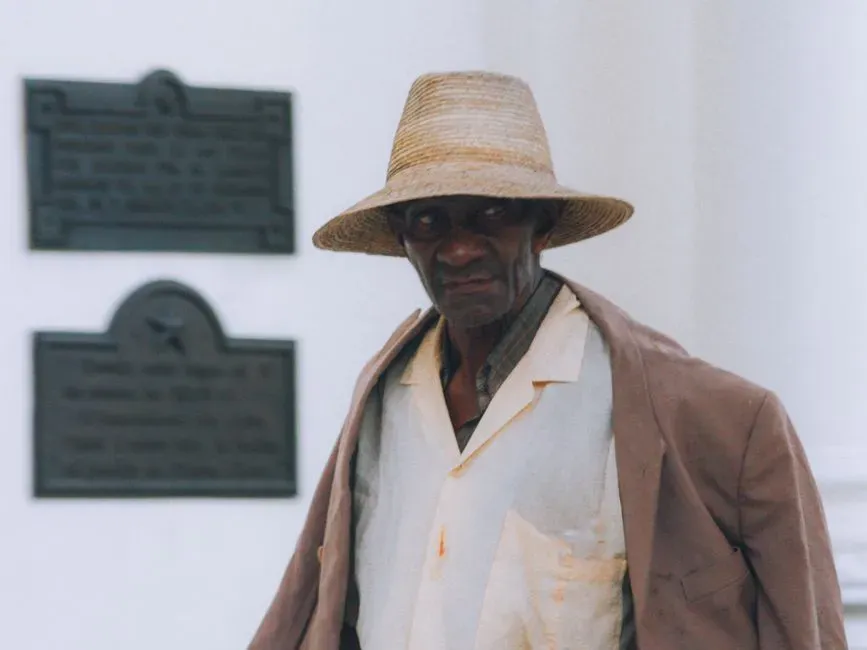
This idiom is rooted in the shameful period in American history when slavery was legal. An enslaved person, especially one regarded as a troublemaker, would often be separated from their families and transported down the Mississippi River to a plantation with harsher working and living conditions.
Enslaved people in the northern United States were treated comparatively better than those in the South. If any group of enslaved people in the North proved difficult to handle, they were rounded up and sold in Louisville, Kentucky. From there, they were transported via the Mississippi River to the South and sold to plantations to meet the rising demand for labor in the booming cotton industry. The phrase now simply means to be betrayed or cheated – but its etymology carries the full weight of that history.
9. “Blockbuster” – A World War II Bomb

The term “blockbuster” originated from a type of World War II bomb used by the RAF. The “Block Buster” was what the Germans started calling a British bomb capable of reducing a single city block to rubble – and that is exactly what it did to many German cities over the course of the war. Almost immediately, the term began being thrown around to describe anything “big and exciting.”
After the end of World War II, the term continued being used, increasingly in the description of films. By the mid-1950s, “blockbuster” had been cemented as a label for any movie grossing at least two million dollars, the equivalent of roughly seventeen and a half million dollars in modern terms. Every time someone calls a summer film a blockbuster, they’re borrowing a word that once described obliterated city streets and mass destruction – repurposed entirely, but never fully emptied of its past.
Partner offer
Planning a trip to Vegas?
Compare hotel rates and show tickets on VEGAS.com.