Some are so familiar that people can picture them without hearing a note of the music. A crosswalk, a prism, a swimming baby and a banana have all become shorthand for the records they wrapped.
Most of these images came from quick decisions, small budgets or happy accidents. Here are the stories behind eight of them, drawn from well documented accounts of how each cover came together.
Abbey Road by The Beatles
The band photographed the cover outside EMI Studios in London on the morning of August 8, 1969. Photographer Iain Macmillan stood on a stepladder while a police officer held back traffic. He had only about ten minutes and took six frames.
Paul McCartney picked the fifth frame, the one where all four men are mid stride and out of step with each other. Neither the band’s name nor the album title appears on the front. The Beatles were confident enough that the image alone would identify them.
The Dark Side of the Moon by Pink Floyd
Storm Thorgerson and his design studio Hipgnosis handled the 1973 cover. The band wanted something clean and bold, and they preferred it to the photographic options Thorgerson showed them. A prism splitting a beam of white light into a spectrum came from the same brief.
Illustrator George Hardie drew the final artwork, and the design is often linked to the album’s themes of pressure and perception. The rainbow also continues across the gatefold, so the image reads as one piece when the sleeve is opened.
Nevermind by Nirvana

Photographer Kirk Weddle shot the 1991 cover underwater, with a baby named Spencer Elden apparently reaching for a dollar bill on a fishhook. Kurt Cobain had reportedly been drawn to the idea after watching a documentary about water births. The band’s own concept was later adjusted so the image would work on the front of the record.
Elden sued in 2021, claiming the image amounted to child exploitation. A federal judge dismissed the case in 2022, and the dispute continued through appeals. It has kept the cover in the news decades after release.
Sgt. Pepper’s Lonely Hearts Club Band by The Beatles
Artists Peter Blake and Jann Haworth designed the 1967 cover as a crowded tableau. It combines wax figures, cardboard cutouts and photographs of about seventy people, including writers, artists and film stars. The Beatles stand among them in bright military style costumes.
The sleeve was one of the first in rock to include printed lyrics and to use a gatefold format. The collage set a new standard for how elaborate an album package could be, and it has been parodied many times since.
Partner offer
The Velvet Underground & Nico
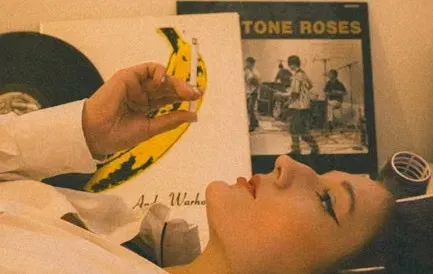
Andy Warhol produced the band’s 1967 debut and supplied a simple image of a yellow banana. The first pressings invited the listener to peel the banana. Under the sticker was a flesh colored fruit, a playful and slightly cheeky joke.
The peel away sticker made early copies costly to produce, and the record initially sold modestly. Over time it became a landmark of the era. Warhol’s name sits on the front, but the band’s name is small and tucked away.
Unknown Pleasures by Joy Division
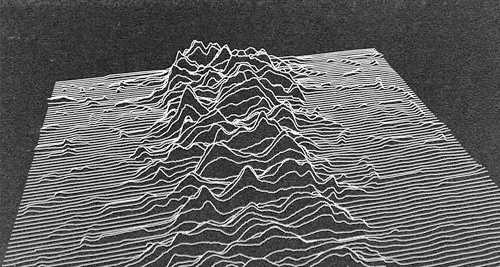
Designer Peter Saville created the 1979 cover using a graphic of radio waves from a pulsar, known as CP 1919. The image came from the Cambridge Encyclopaedia of Astronomy, where it appeared as black lines on a white background. Saville reversed it to white lines on black, which gave it a stark, ghostly look.
The sleeve carries no band name or title on the front. That restraint has helped the design outlive the era of its release. The image now appears on posters and clothing far beyond the world of post punk.
London Calling by The Clash

Photographer Pennie Smith captured bassist Paul Simonon smashing his instrument at the Palladium in New York on September 21, 1979. She considered the shot too blurry to use, but the band chose it anyway. The 1979 cover became one of the best known rock photographs.
Designer Ray Lowry gave the lettering a pink and green treatment, echoing Elvis Presley’s 1956 debut album. The result nods to rock and roll’s beginnings while showing a band tearing at its own tools.
The Freewheelin’ Bob Dylan
Photographer Don Hunstein took the picture for the 1963 album on Jones Street in New York’s Greenwich Village. Dylan walks down the slushy street with his girlfriend Suze Rotolo holding his arm. It was a cold winter day, and the two of them look relaxed and a little huddled against the weather.
The casual, candid feel was unusual for a major label release at the time. The image is often credited with shaping how folk and rock artists were photographed afterward. Rotolo later wrote about the moment in her memoir.
Final Thoughts
Each of these covers came from a specific moment, whether a ten minute photo session, a pulsar chart or a blurry concert shot. That mix of planning and chance is what gave them their lasting place in music history.
Partner offer
Planning a trip to Vegas?
Compare hotel rates and show tickets on VEGAS.com.