Hollywood loves a big swing, but not every mega-budget bet pays off. For every Avatar or Avengers that mints billions, there’s a John Carter or a Lone Ranger quietly tanking a studio’s quarterly earnings report. These films weren’t necessarily bad on paper, they had A-list talent, ambitious visions, and massive marketing pushes behind them. Yet somewhere between the boardroom greenlight and the box office ledger, things went spectacularly sideways.
What makes these flops fascinating isn’t just the dollar signs attached to them, it’s the chain of decisions, miscalculations, and sheer bad luck that turned each one into a cautionary tale. Below are eight of the costliest box office disasters in film history, along with the stories behind why they crashed so hard.
John Carter (2012): The Mars Mission That Sank Disney’s Studio Chief


Disney’s adaptation of Edgar Rice Burroughs’ Barsoom novels was meant to launch a franchise on the scale of Avatar. Instead, it became shorthand for box office catastrophe. John Carter earned just $284.1 million on a $306.6 million budget. Once marketing costs were factored in, the studio’s losses ballooned even further, with reports pegging the total production spend, before tax credits, at a staggering $307 million.
The fallout was immediate and brutal. Analysts had known since John Carter’s $30 million domestic opening weekend that the movie, with a production budget of $275 million and another $100 million spent on marketing, would cause a large write-down for Disney. Disney movie studio head Rich Ross stepped down after the studio lost $200 million from the film, making it one of the rare flops that cost an executive his job as directly as it cost shareholders their money.
The Lone Ranger (2013): When Production Chaos Met Audience Indifference


Johnny Depp and Armie Hammer’s Western reboot was troubled from the start. In August 2011, nine months before principal photography began, the production would be delayed due to the budget that was ballooning out of control, before being drastically reduced to roughly $215 million. That discipline didn’t last. While filming on location, the production was delayed due to intense rainstorms, snowfall, wildfires, 70-MPH winds, dust storms, and temperatures over 100 degrees, and more delays meant more money spent, with the budget swelling back up to $225-250 million as production progressed.
The final numbers were grim. The film, which cost $250 million and generated $175.6 million at the worldwide box office initially, was expected to dent Disney’s earnings, with the studio expecting to take a loss of $160 million-$190 million. Disney ultimately posted an impairment charge of $86 million with the rest based on the film’s final worldwide run. It remains one of the clearest examples of a production spiraling out of control before a single ticket was ever sold.
Battleship (2012): A Board Game That Couldn’t Win the War


Universal’s attempt to turn the classic naval combat board game into a summer tentpole looked reasonable on paper, at least until the receipts came in. Battleship raked in $303 million worldwide, which by some estimates may sound respectable, but against the budget of $209 million and marketing, that simply wasn’t enough to avert a loss. The film’s global gross actually looked healthy compared to some of the other titles on this list, which made the loss sting in a different way.
The issue wasn’t just the number on the budget sheet, it was the ambition behind it. Universal was clearly hoping to spin the film into an ongoing franchise, backing it with heavy visual effects spending and a wide international release. When audiences and critics both shrugged, the studio was left holding a nine-figure loss on a movie that, unlike some flops, wasn’t even a poor performer at the global box office, just a financially miscalculated one from the start.
Cutthroat Island (1995): The Pirate Movie That Sank a Studio


Long before Johnny Depp made pirates cool again, Cutthroat Island proved just how badly the genre could fail. The shortfall was $73.5 million on a budget of $92 million against a worldwide gross of just $18.5 million, and the price tag on this movie was so high, and the buzz was so bad, that even before the 1995 pirate adventure opened in theaters, the film company behind it struggled for cash and filed for bankruptcy.
The damage went beyond a single quarterly report. Cutthroat Island was such a failure that it allegedly bankrupted the studio that produced it, and the box office bomb scared Hollywood away from the pirate genre for nearly 20 years, until a pirate named Jack Sparrow came sailing into theaters. Few flops in history can claim to have single-handedly frozen an entire genre for two decades, but Cutthroat Island managed exactly that.
The 13th Warrior (1999): A Viking Epic Buried By Reshoots


Based loosely on Michael Crichton’s novel Eaters of the Dead, The 13th Warrior became infamous less for what audiences saw and more for what happened behind the scenes. Extensive reshoots, a change in editorial direction, and Crichton himself reportedly stepping in to reshoot large portions of the film ballooned costs well past the original budget. The final worldwide gross barely scratched the surface of what the studio needed to recoup.
According to widely cited box office breakdowns, the film’s worldwide gross landed around 62 million dollars against production costs that soared past 200 million dollars once reshoots were tallied. It has since found a modest cult following on home video, but during its theatrical run it stood as one of the most lopsided budget-to-gross ratios of its era, a reminder that a troubled production almost always shows up on screen and in the ledger.
Sinbad: Legend of the Seven Seas (2003): DreamWorks’ Animated Miscalculation


DreamWorks Animation swung big with this hand-drawn adventure, hoping to compete with the wave of computer-animated hits dominating the early 2000s box office. The gamble didn’t pay off. The end results unfortunately blew up in the face of DreamWorks, to the tune of 214 million bucks, and while critics were mixed at the time, largely praising the visuals and music but less so the story, DreamWorks almost didn’t recover from the loss, and the film remains a black mark within the company’s history.
The failure of Sinbad is often cited as one of the reasons DreamWorks pivoted so heavily toward computer animation in the years that followed, essentially abandoning traditional hand-drawn features altogether. It’s a rare case where a single box office disappointment reshaped an entire studio’s creative direction going forward, pushing it firmly toward the CGI-driven style that would define hits like Shrek and Kung Fu Panda.
Mortal Engines (2018): Peter Jackson’s Steampunk Gamble


Produced and co-written by Peter Jackson, Mortal Engines carried enormous expectations given his track record with Lord of the Rings and King Kong. Those expectations never translated into ticket sales. The film ended up a $219 million failure to Universal and its co-production companies, including Jackson’s WingNut Films.
The reasons for its collapse were layered. Produced by Peter Jackson and based on a young-adult novel, the steampunk adventure struggled with unfamiliar source material and a crowded release schedule after the young-adult boom had faded. By the time the film arrived, franchises like The Hunger Games and Divergent had already cooled off considerably, leaving little appetite for another sprawling YA universe, no matter how impressive the visual effects were.
The Marvels (2023): A Superhero Sequel Nobody Asked For


Marvel Studios has weathered plenty of ups and downs, but The Marvels stands out as one of its most expensive miscalculations. The film’s worldwide gross came in at $206.1 million against an estimated loss of $237 million, numbers that stunned even seasoned box office analysts given Marvel’s usual dominance.
Several factors converged to sink the film. Following the conclusion of Avengers: Endgame, many viewers seemed to lose interest, compounded by a lackluster antagonist and narrative threads that became increasingly convoluted. It became one of the clearest signs that superhero fatigue, once a theoretical concern, had become a very real box office phenomenon, forcing Marvel to rethink its release strategy and slow down its output in the years that followed.
Wonder Woman 1984 (2020): A Pandemic-Era Casualty

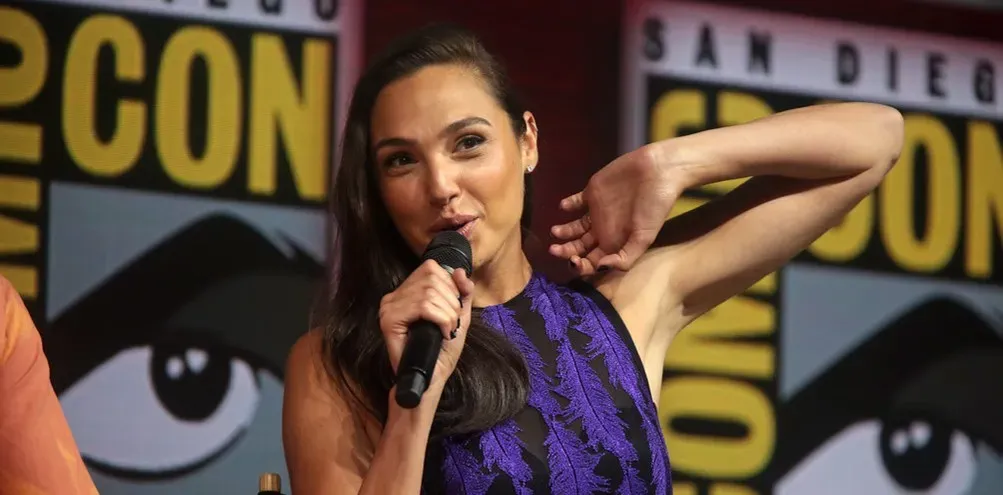
Not every flop on this list can be blamed purely on creative missteps or bloated budgets. Wonder Woman 1984 arrived in the middle of the COVID-19 pandemic, when theaters worldwide were operating at reduced capacity or closed entirely. Based on its actual release figures in December 2020, Wonder Woman 1984 made around $46 million domestically and approximately $123 million worldwide, resulting in a loss of about $155 million for the film.
Warner Bros. made the unusual decision to release the film simultaneously in theaters and on HBO Max, a move designed to salvage some revenue during an unprecedented moment for the industry. While that strategy helped subscriber numbers for the streaming service, it also cannibalized traditional box office returns, leaving the film’s financial performance as much a product of extraordinary circumstances as of the movie itself. It’s a reminder that not every flop stems from bad decision-making alone, sometimes timing and forces far beyond a studio’s control do the damage.
Partner offer

What These Flops Teach Us About Hollywood Risk


Looking across these eight films, a pattern emerges that has little to do with quality and everything to do with math. Massive budgets require massive returns just to break even, and once marketing costs, theater splits, and production overruns are factored in, even a film that grosses hundreds of millions of dollars can still end up deep in the red. A film costing $264 million needs to make, at the very least, $660 million worldwide to break even, a bar that only a handful of movies clear each year.
These stories also reveal how fragile the greenlighting process can be. Ambitious directors, franchise dreams, and studio politics often collide in ways that inflate budgets long before a script is even finalized. Whether it’s weather delays on a Western set, a genre shift that came a decade too late, or a global pandemic upending release plans, the biggest flops in film history remind us that even with unlimited resources, Hollywood can’t always guarantee an audience will show up. That unpredictability, frustrating as it is for studios, is part of what keeps the industry endlessly fascinating to watch from the outside.
Partner offer
Planning a trip to Vegas?
Compare hotel rates and show tickets on VEGAS.com.