Science fiction doesn’t have a single starting gun. Writers have been imagining other worlds, strange machines and altered futures for centuries, and the genre we recognize today took shape through a long chain of books that each pushed it somewhere new.
The fifteen novels below are arranged roughly in order of publication. Each one introduced an idea, a method or a mood that later writers kept borrowing, arguing with or building on.
Frankenstein by Mary Shelley (1818)

Mary Shelley published Frankenstein anonymously in 1818, when she was still a teenager by the time she began drafting it. The story of a scientist who builds a living being and then abandons it treats scientific ambition as a moral question, not just a plot device. Many scholars and critics, Brian Aldiss among them, have called it the first true science fiction novel.
Its influence runs through almost every story about artificial life, from robots to genetic engineering. Shelley revised the text significantly for the 1831 edition, and both versions are still read and taught. The central warning, that creators owe something to what they create, hasn’t aged.
Twenty Thousand Leagues Under the Seas by Jules Verne (1870)
Jules Verne serialized this novel in France before it appeared as a book in 1870. It follows Captain Nemo and his submarine, the Nautilus, through an underwater world described with the confidence of a man who had read widely in the science of his day. Verne cared about plausible technology, and that habit became a hallmark of what later readers called hard science fiction.
The book helped turn the adventure voyage into a template for speculative stories. Submarines in fiction, and in naming, still echo Nemo’s vessel. Verne’s wide international readership also showed that this kind of fiction could sell at scale.
The Time Machine by H. G. Wells (1895)

H. G. Wells gave the genre one of its most durable devices with The Time Machine, published in 1895. His unnamed Time Traveller journeys to the far future and finds humanity split into two very different groups, the Eloi and the Morlocks. The device itself matters less than what Wells does with it, which is to use the future as a mirror for class division in Victorian England.
The novel popularized the word “time machine” itself and set up countless later time travel stories. Wells also trained as a biologist under Thomas Huxley, and his evolutionary thinking shows in the book’s final chapters. Few short novels have been so widely imitated.
The War of the Worlds by H. G. Wells (1898)
Wells followed up with The War of the Worlds, published in book form in 1898 after magazine serialization. Martians land in southern England, and the story is told as a realistic account of ordinary people caught up in a catastrophe. It was among the earliest and most influential tales of alien invasion.
The book is also read as a comment on imperialism, since Wells invited British readers to imagine being on the receiving end of overwhelming force. Its 1938 radio adaptation by Orson Welles became famous for reports of listener panic, though historians debate how widespread that panic really was. Nearly every invasion story since owes it something.
We by Yevgeny Zamyatin (1924)
Written in Russia around 1920 and 1921, We was banned by Soviet censors and first appeared in print in English translation in 1924. It depicts a future state where citizens live in glass apartments, follow a rigid timetable and are known by numbers. A mathematician narrator slowly begins to feel things he isn’t supposed to feel.
It is widely regarded as the first great dystopian novel of the twentieth century. George Orwell read it and wrote about it, and its influence on Nineteen Eighty-Four is generally accepted. The book showed that science fiction could serve as political critique under direct pressure.
Brave New World by Aldous Huxley (1932)
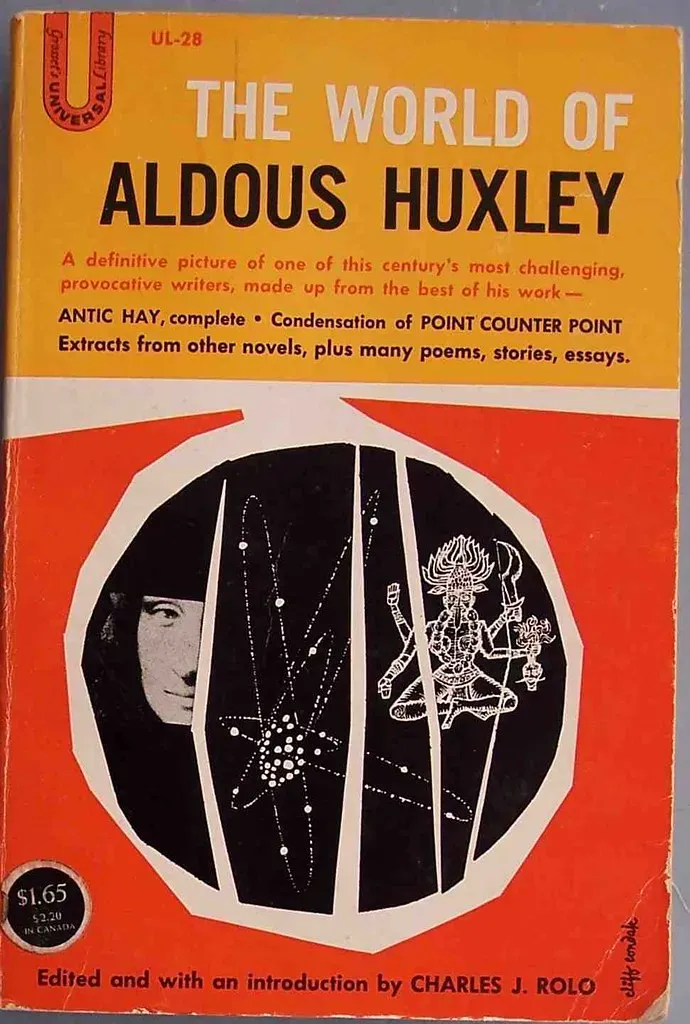
Aldous Huxley’s 1932 novel imagines a society kept stable through engineered birth, conditioning, consumer comfort and a pleasure drug called soma. Unlike many dystopias, its control comes through satisfaction rather than fear. That inversion is the reason it keeps getting reread in conversations about media, technology and distraction.
Huxley wrote it partly as a response to the optimistic futurism of writers like Wells. The book has appeared often on lists of the most important English language novels of the century. It also demonstrated that a dystopia could be unsettling precisely because it looked pleasant.
Nineteen Eighty-Four by George Orwell (1949)
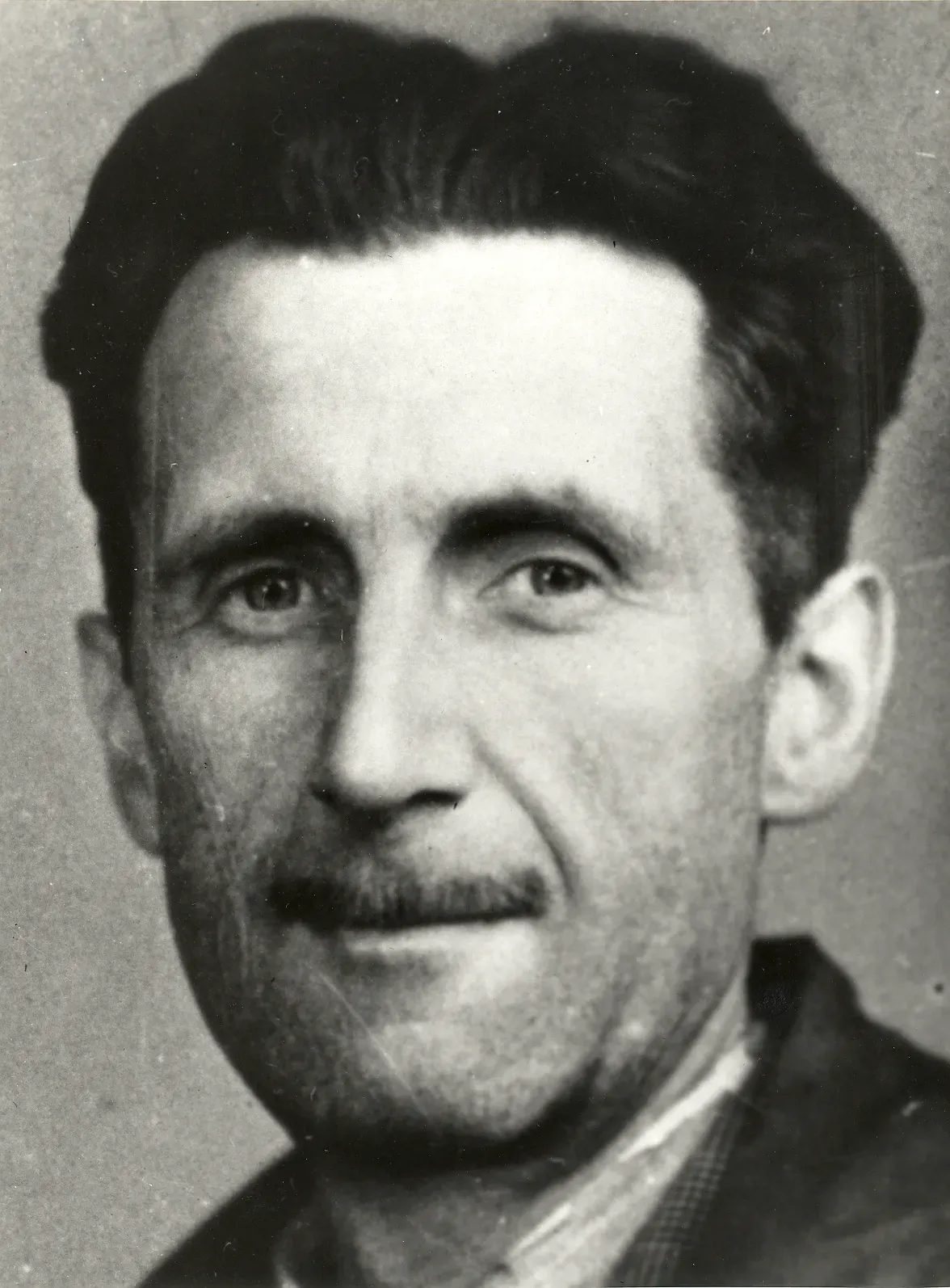
Published in 1949, shortly before Orwell’s death in early 1950, Nineteen Eighty-Four follows Winston Smith inside a surveillance state ruled by Big Brother. The novel gave English a set of terms that are still in daily use, including Orwellian, doublethink and thought police. Its picture of rewritten history and controlled language remains a standard reference point.
Partner offer
Sales have often surged whenever political debates turn to surveillance or official falsehood. Orwell wasn’t predicting a date but warning about a direction. Few science fiction novels have crossed so thoroughly into general public vocabulary.
I, Robot by Isaac Asimov (1950)

This book is a collection of linked stories that Isaac Asimov had published in magazines during the 1940s, gathered in 1950. It features his Three Laws of Robotics, a set of rules designed to keep robots from harming people. Most of the stories work by showing how those rules can still produce surprising and troubling results.
Asimov helped replace the old image of the robot as a monster with something closer to an engineered tool that needs careful design. The Three Laws are still discussed whenever people debate machine ethics, even though Asimov himself used them to explore their failures. His influence on later robot fiction is hard to overstate.
Foundation by Isaac Asimov (1951)

Asimov’s Foundation collects stories first published in magazines in the early 1940s and appeared as a book in 1951. It is built around psychohistory, a fictional science that predicts the large scale movement of societies. Mathematician Hari Seldon uses it to foresee the collapse of a galactic empire and plans a way to shorten the dark age that follows.
The series won the special Hugo Award for Best All Time Series in 1966. It encouraged a style of science fiction concerned with history and civilizations rather than single heroes. Apple TV+ released a screen adaptation in 2021, which brought the story to a new audience.
Fahrenheit 451 by Ray Bradbury (1953)
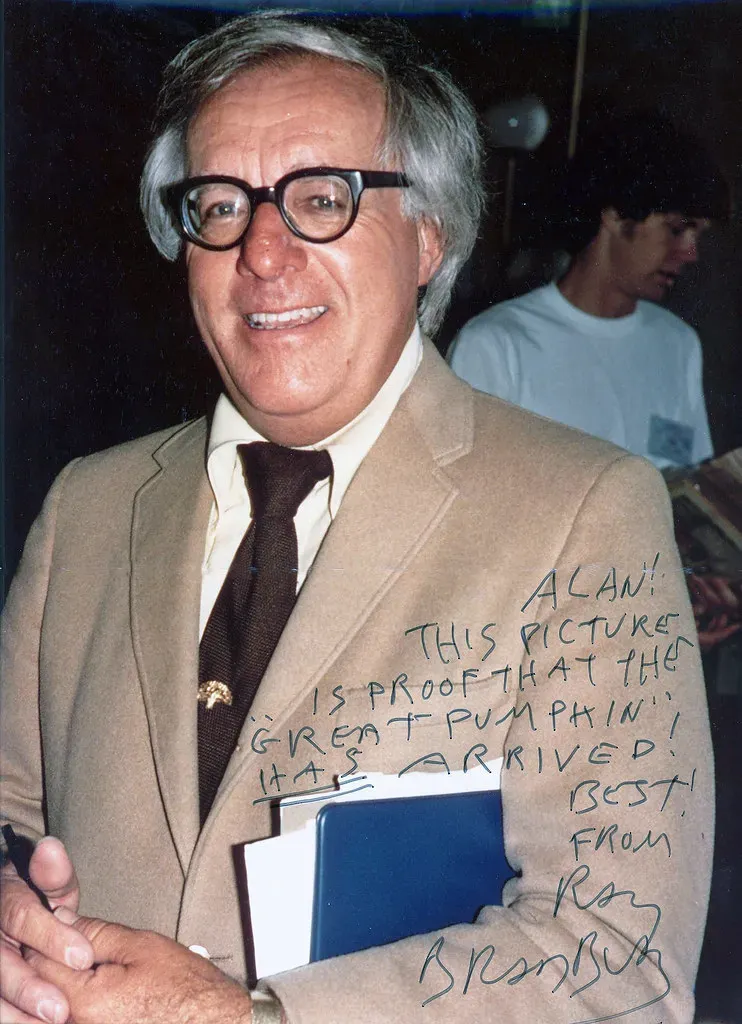
Ray Bradbury’s 1953 novel imagines a society where firemen burn books instead of putting out fires. Guy Montag, one of those firemen, begins to question the work after a chance encounter with a curious young neighbor. The setting also includes wall sized screens and a population happy to be entertained.
Bradbury often said the book was about how people stop reading, not only about government censorship. Its title refers to the temperature at which book paper is commonly said to burn. It remains a fixture in school reading lists and in conversations about attention and media.
Childhood’s End by Arthur C. Clarke (1953)
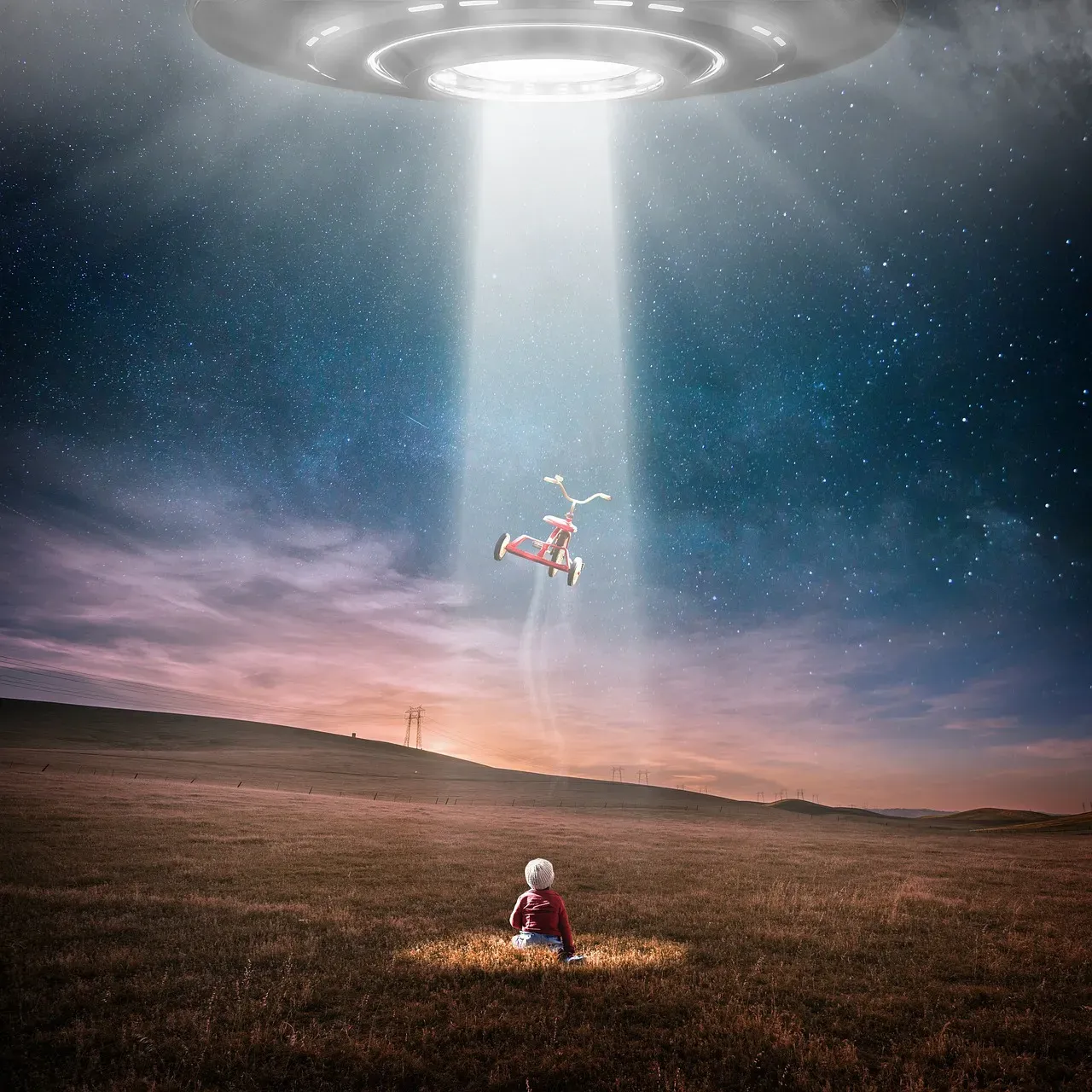
Arthur C. Clarke’s Childhood’s End opens with alien ships appearing over Earth’s cities and an alien race, the Overlords, who guide humanity into an era of peace. The calm is not what it seems, and the book moves toward a vast and unsettling vision of human evolution. It is less interested in conflict than in transformation.
Clarke blended hard scientific knowledge with a sense of cosmic wonder, something that shaped later work including 2001: A Space Odyssey. A television miniseries adaptation aired in 2015. The novel is often cited as an early example of science fiction willing to ask what comes after humanity.
A Canticle for Leibowitz by Walter M. Miller Jr. (1959)

This novel follows a monastic order that preserves fragments of scientific knowledge across many centuries after a nuclear war. Walter M. Miller Jr. structured it in three parts, each set in a different age as civilization slowly rebuilds. It won the Hugo Award for Best Novel in 1961.
It is one of the most respected post apocalyptic stories because it questions whether humanity will repeat its mistakes. Miller was a Catholic convert who served in World War II, and the book carries the weight of both experiences. Few early Cold War novels ask such patient moral questions.
Solaris by Stanisław Lem (1961)
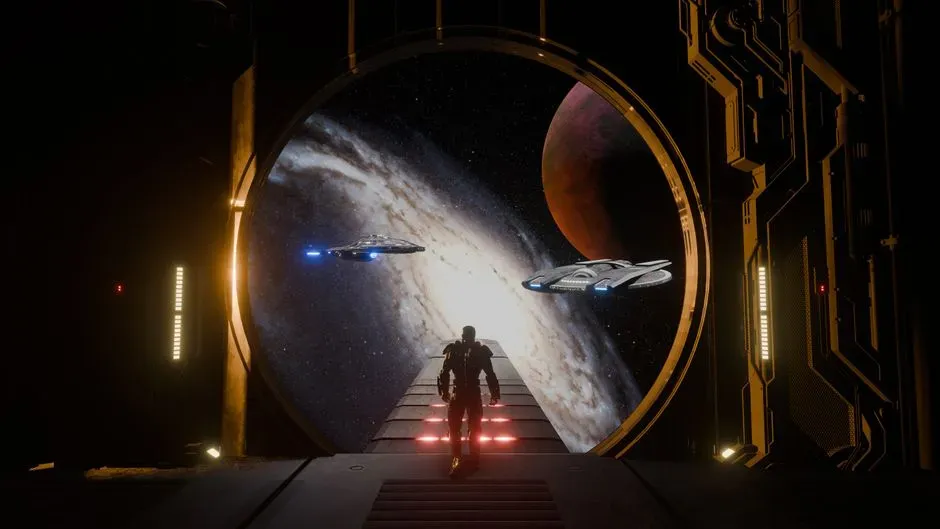
Polish writer Stanisław Lem published Solaris in 1961. A psychologist arrives at a research station orbiting a mysterious ocean planet that seems to be a single living intelligence. The scientists find they cannot communicate with it, and it begins to produce physical manifestations drawn from their memories.
Lem used the story to argue that real contact with an alien mind might be impossible to understand in human terms. The book has been adapted for film several times, including versions by Andrei Tarkovsky in 1972 and Steven Soderbergh in 2002. It remains a landmark of philosophical science fiction from outside the English speaking world.
Dune by Frank Herbert (1965)

Frank Herbert’s Dune was published in 1965 and takes place on Arrakis, a desert planet that holds the universe’s most valuable substance, the spice melange. It weaves together ecology, religion, politics and prophecy through the story of Paul Atreides. Herbert spent years researching and building the setting, and the book shared the first Nebula Award for Best Novel and won the Hugo Award.
It is often cited as one of the best selling science fiction novels ever published. Denis Villeneuve’s film adaptations, released in 2021 and 2024, renewed interest in the book for a new generation of readers. Its blend of environmental themes and political intrigue continues to influence how big scale science fiction is written.
Partner offer
Planning a trip to Vegas?
Compare hotel rates and show tickets on VEGAS.com.