
Every reader has one. A series sitting on the shelf, bookmark still wedged somewhere around book three, silently judging you every time you walk past it. It’s not that the writing got bad or the story lost you completely. Life happened, the books kept growing thicker, and somewhere along the way finishing felt like a project rather than a pleasure.
These seven series are the most commonly abandoned in fantasy and epic fiction, according to reader forums, sales data patterns, and the sheer size of the undertaking involved. Some are unfinished by design. Others are just so massive that finishing them becomes its own kind of achievement.
1. The Wheel of Time by Robert Jordan

This is the series most likely to defeat even devoted fantasy readers, and the numbers explain why. The series consists of 14 books and one prequel, with the main 14 books containing 4,287,886 words. That is not a typo. Reading it at a normal pace works out to roughly 300 hours, and the entire Harry Potter series would fit inside it about four times over.
Part of the difficulty is structural rather than just length. Jordan wrote the first 11 novels of the series and the prequel before his death in 2007, and the final three novels were completed by Brandon Sanderson. Readers often stall out around the middle books, where the pacing slows considerably before picking back up under Sanderson’s hand. Getting through the slower stretch is usually the difference between finishing and giving up for good.
2. A Song of Ice and Fire by George R.R. Martin

Ironically, this series gets abandoned for the opposite reason most others do. It’s not too long to finish, it simply isn’t finished yet. The Winds of Winter is still not finished, and the long awaited sixth installment has now been in development for well over a decade.
As of mid-2026, there’s been movement but no resolution. As of July 2026, The Winds of Winter has not been completed or officially scheduled for publication, and despite online rumors that regularly claim otherwise, neither Martin nor his publishers have announced a release date. Martin has said the manuscript is progressing, with reports in mid-2026 suggesting The Winds of Winter is 75 percent done, but readers who started the series expecting a complete story have been waiting since 2011 for book six alone. Many simply stopped tracking it and moved on, planning to return once there’s actually an ending in sight.
3. Malazan Book of the Fallen by Steven Erikson
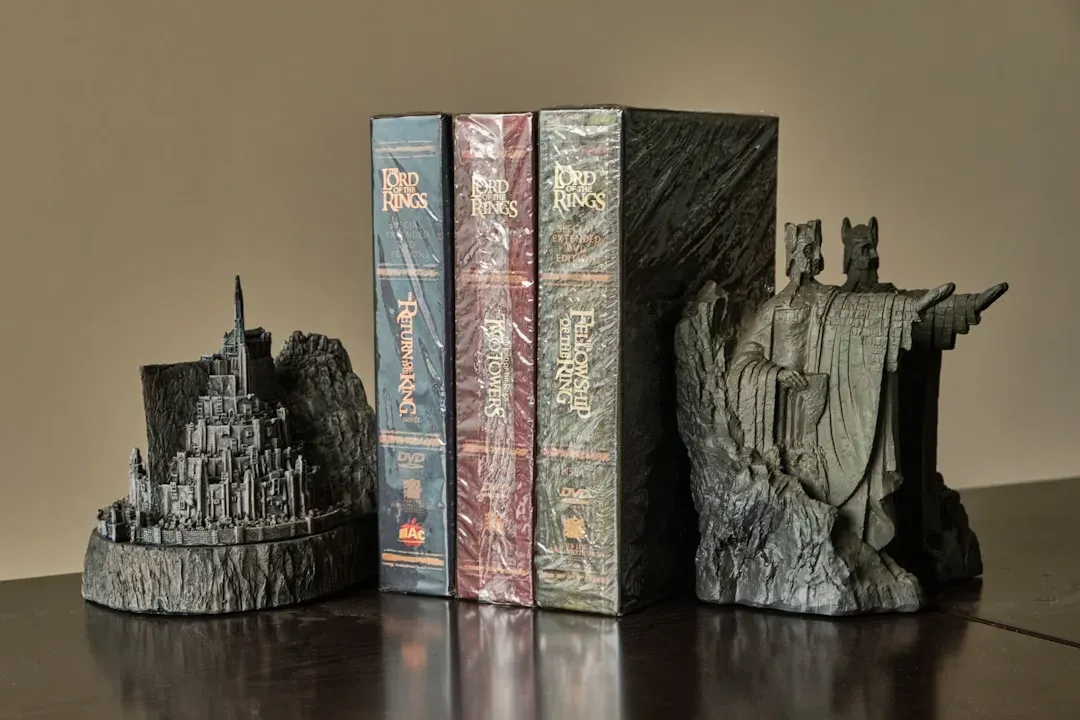
If Wheel of Time is famous for its length, Malazan is famous for its difficulty. The series throws readers into a fully formed world with no hand-holding, no glossary of terms upfront, and no patience for confusion. Ten massive volumes make up the main sequence, and each one assumes you’re keeping pace with a cast that spans continents, gods, and timelines that don’t always move in order.
What makes this series a common dropout point isn’t boredom, it’s disorientation. Many readers quit within the first two books simply because they can’t get their footing, even though fans who push through consistently describe the back half of the series as one of the most rewarding payoffs in fantasy. The sheer cognitive load required to track dozens of major characters across ten books is enough to send casual readers looking for something simpler.
4. The Sword of Truth by Terry Goodkind
This series had a massive readership in the late 1990s and early 2000s, riding the wave of post-Tolkien fantasy fandom. Eleven main novels follow Richard Cypher and Kahlan Amnell through a sprawling political and magical conflict that started strong and, according to many longtime readers, grew increasingly repetitive as it went on.
The common complaint isn’t length exactly, it’s diminishing returns. Readers who loved the first three or four books often describe a noticeable shift in tone and pacing by the middle installments, with philosophical monologues stretching chapters that once moved briskly. A lot of fans simply lost momentum somewhere around book six or seven and never picked the series back up, even though they never disliked it enough to call it quits outright.
5. Discworld by Terry Pratchett

Discworld is a slightly different case because each book largely works as a standalone story, yet the sheer number of them scares off completionists before they even start. The series spans over 40 novels published between 1983 and Pratchett’s death in 2015, following different characters and subseries across the same flat, disc-shaped world.
The challenge here isn’t difficulty, it’s volume paired with the fact that there’s no single obvious reading order. New readers often start with whichever book a friend recommended, enjoy it, then feel overwhelmed trying to figure out where to go next among dozens of entry points. Many readers end up with five or six Discworld books read in no particular sequence, genuinely enjoying each one, but never quite committing to the full run.
6. The Dark Tower by Stephen King
King’s eight-book magnum opus blends western, horror, fantasy, and science fiction into a story that took him more than three decades to complete, starting in 1982 and wrapping in 2012 with additions since. The scope is part of the appeal and part of the problem. Readers who love King’s horror work sometimes find the shift into full fantasy territory jarring, particularly once the story leans harder into its multiverse mechanics in the later books.
A significant number of readers stall specifically at book four, Wizard and Glass, which detours into a lengthy flashback that some find essential and others find like a detour from the story they actually wanted. Getting past that book tends to determine whether someone finishes the series or shelves it indefinitely. The ending itself, deliberately unconventional and divisive among fans, has also discouraged some readers from bothering to reach it at all once they’ve heard how it plays out.
7. The Chronicles of Amber by Roger Zelazny

Less commonly discussed today but historically significant, this ten-book series from the 1970s and 1980s helped shape modern fantasy’s approach to parallel worlds and royal family intrigue. The first five books follow Corwin, a prince fighting for the throne of the true world of Amber, while the second five shift focus to his son Merlin in a considerably different narrative style.
Many readers who discover Amber today start strong with the first five books, often called the Corwin cycle, because they move quickly and read almost like a fast-paced adventure serial. The second half, however, slows considerably and adopts a more introspective, philosophical tone that feels like a different series altogether. That tonal shift is exactly where most modern readers put the series down, satisfied with the Corwin arc but never quite motivated to finish Merlin’s half.
None of this is really about laziness or lack of commitment. Long series ask a lot of readers, in time, in memory, and sometimes in patience with slower stretches that test whether the payoff is worth the investment. If you’ve got one of these sitting half read on your shelf, you’re in very good company, and there’s no rule saying you can’t pick it back up whenever you’re ready.