Long before a subscription and a stable internet connection were all it took to watch a movie, getting your Friday night entertainment meant driving somewhere, walking past rows of plastic clamshell cases, and hoping the good copy of whatever everyone wanted to watch hadn’t already been rented out. That ritual supported an entire industry of regional and national chains, some of which grew into household names before disappearing almost as quickly as they’d expanded. Here is a look back at seven of the rental chains that once lined American strip malls, each with its own rise, its own reason for fading, and its own small footnote in retail history.
1. Blockbuster
No chain defined the video rental era quite like Blockbuster. Founder David Cook opened the first Blockbuster store in Dallas in 1985, in the midst of a sharp downturn in the oil and gas industry. Growth came fast, partly through acquisitions of rivals, and by 1992 Blockbuster was the undisputed video rental leader, with over 2,800 stores worldwide, driven by acquisitions of chains like Britain’s Ritz and U.S. chains Major Video and Erol’s Video.
The company’s scale kept growing through the 1990s, and by 2004 Blockbuster was at the peak of its powers, with about 9,000 stores globally. The collapse that followed was almost as dramatic as the rise. Blockbuster filed for bankruptcy in 2010 after trying to compete with its own DVD-by-mail service, but it proved too little, too late. The very last store, a franchise location in Bend, Oregon, remains open today as something closer to a museum than a functioning rental chain.
2. Hollywood Video
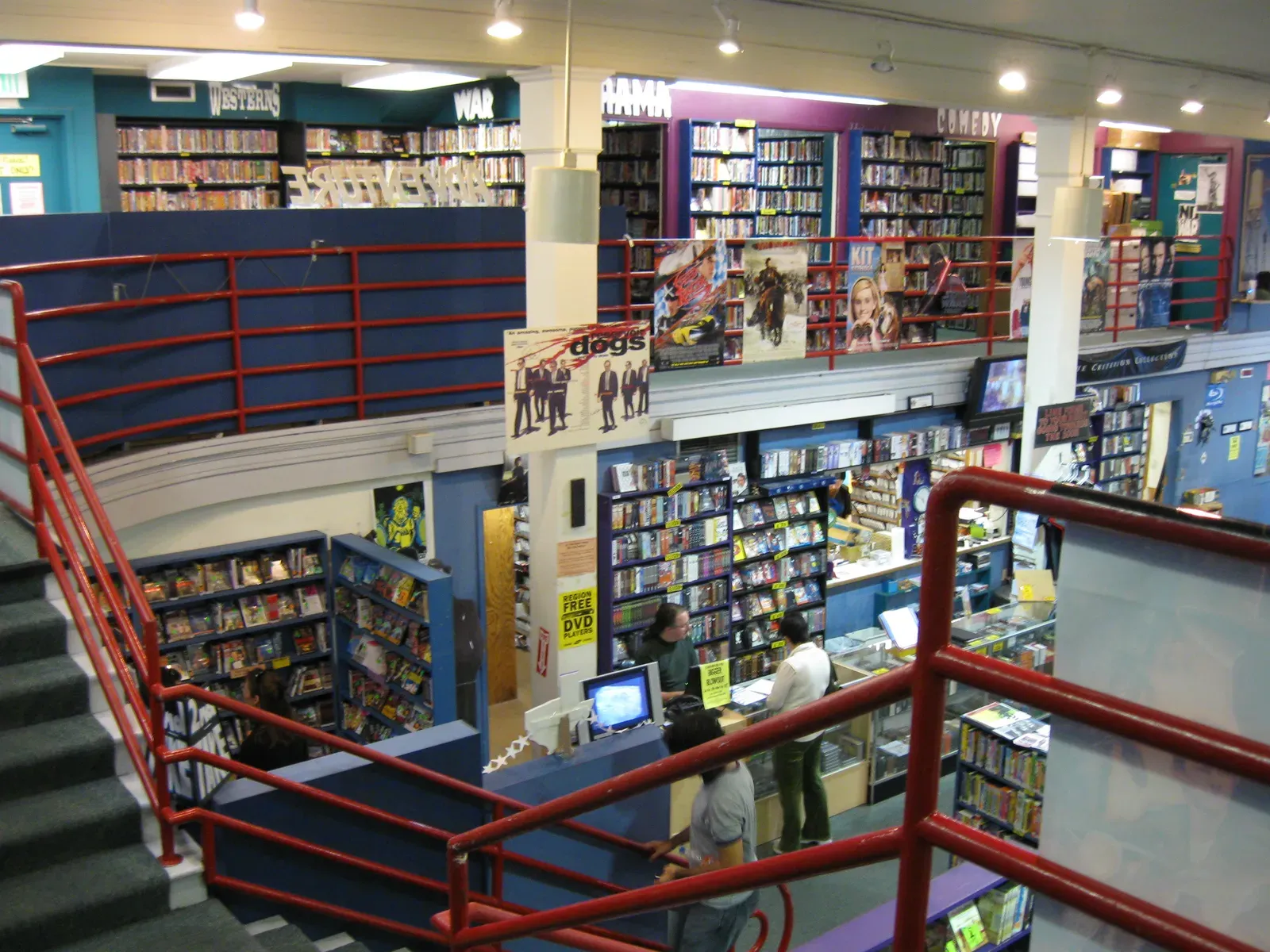
Hollywood Video was founded in Southeast Portland, Oregon, in 1988, and it grew into Blockbuster’s most serious national challenger. The chain positioned itself as Blockbuster’s primary competitor by offering larger stores, better new release availability, and innovative no-late-fee policies. For a stretch of the 1990s and early 2000s, that formula worked well enough to make Hollywood Video a fixture in suburban shopping centers across the country.
The trouble started with an acquisition meant to strengthen the company. Movie Gallery, based in Wilsonville, Oregon after the deal, first landed in bankruptcy court in October 2007, unable to sustain the debt it took on in its $850 million acquisition of rival Hollywood Entertainment Corp. in 2005. A second bankruptcy followed in 2010, and Hollywood Video ceased operations that May when Movie Gallery declared Chapter 7 bankruptcy, with its last U.S. store closing on July 31, 2010.
3. Movie Gallery
Movie Gallery started as a smaller Southern chain before becoming, briefly, the second-largest video rental company in the country. The Dothan, Alabama based company was the nation’s number two video rental chain, and it sought Chapter 11 bankruptcy protection after months of struggling with debt from its purchase of rival Hollywood Entertainment Corp. for $1 billion in 2005. That single acquisition, meant to solidify its position against Blockbuster, ended up dragging the entire company down.
The company tried to right itself but never fully recovered. The acquisition made Movie Gallery the No. 2 rental chain in the country behind Blockbuster Inc., but it was forced to close more than 2,400 of its stores in the years that followed. By 2010, with consumers shifting toward Netflix and Redbox, Movie Gallery was planning to close its 1,900 remaining stores and liquidate entirely.
4. West Coast Video
In 1983, Elliot Stone opened the first West Coast Video store in Northeast Philadelphia, and over the following three months he established the chain by launching three more stores. Growth accelerated quickly, and for a brief moment West Coast Video actually became the biggest name in the business. West Coast Video acquired all 455 National Video stores in September 1988, giving the chain 660 stores total and making it the world’s largest video rental chain at that time.
Partner offer
That top spot didn’t last. Competition heated up as rival Blockbuster oversaw some 1,500 stores by 1990, with larger stores in better locations. Ownership changed hands more than once over the following decade, and the chain ultimately liquidated in 2009, though some stores continued to use the West Coast Video name and run independently for a while after.
5. National Video

Before Blockbuster became a household name, National Video was already an established force in the rental business. National Video was already a major rental name before Blockbuster dominated the industry. Its franchise network was large enough that when it changed hands, it reshuffled the entire competitive landscape.
Its franchise business became part of West Coast Video’s expansion in 1988, and the corporate story then went in a different direction entirely. Rather than disappearing outright, the company behind National Video pivoted into an entirely different business. National Video eventually became Rentrak, a media measurement company that merged with Comscore in 2016. Few customers who once rented from a National Video storefront would likely guess that its corporate descendant ended up in the business of tracking television ratings.
6. Erol’s Video Club
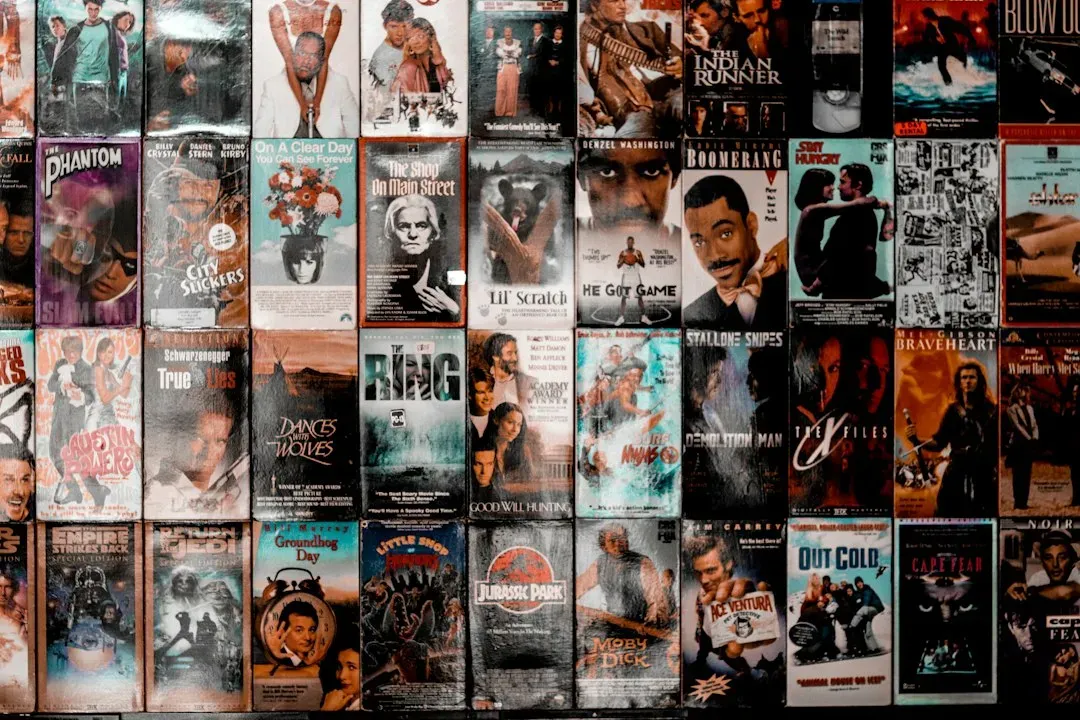
Erol’s had an unusual origin story compared to its rivals. Erol’s Inc. began as a video rental and electronics sales and repair company founded in 1963, adding video rental to its business in 1980. The chain grew into a serious regional power, and Erol’s Video eventually reached over 250 stores, stretching from Raleigh to New York and expanding west into cities like Cleveland and Indianapolis.
Its dominance was concentrated on the East Coast, where by 1985 Erol’s was the country’s largest privately owned videocassette rental company. That independence ended when the industry consolidated around larger public chains. In 1990, Erol’s was sold to Blockbuster, at a point when it was the nation’s third largest video rental chain, with 208 stores in five states and the District of Columbia. The family behind Erol’s later found unexpected success again, this time in dial-up internet service, before that business too was eventually sold off.
7. Family Video
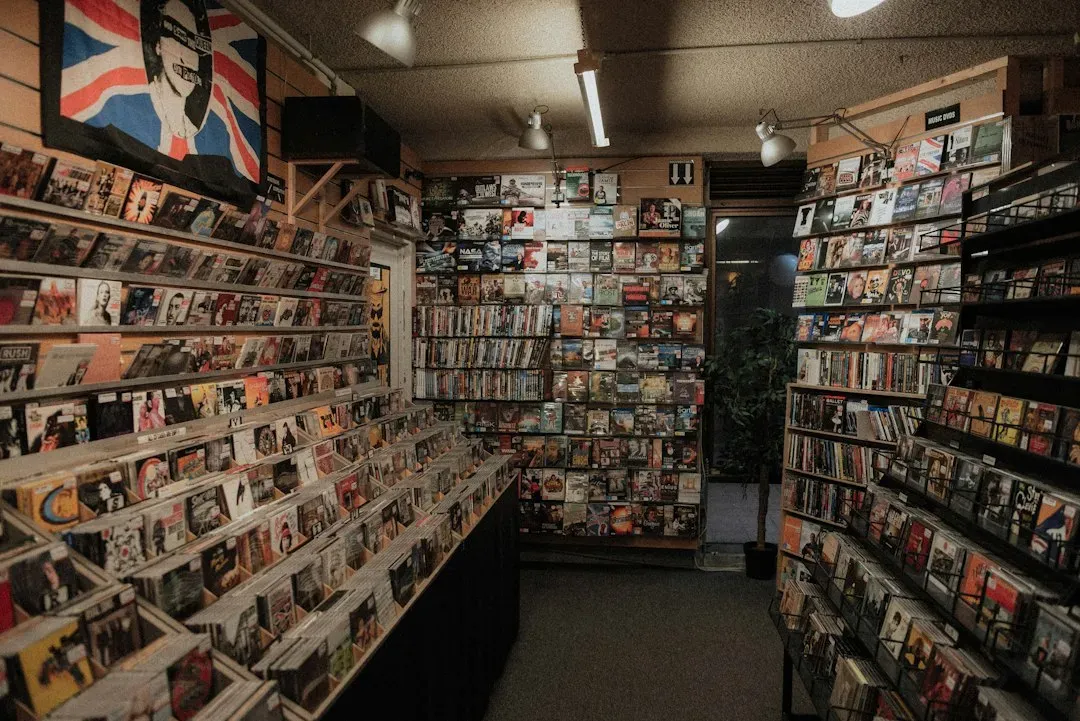
Family Video stands apart from every other chain on this list for one simple reason: it outlasted nearly all of them by well over a decade. The company traces back to 1978, when Charles Hoogland created the Video Movie Club in Springfield, Illinois, after getting stuck with excess inventory from a video distribution business. Unlike Blockbuster, Family Video was mostly established in rural areas, suburbs, and small to midsize cities, avoiding direct competition with Blockbuster’s focus on larger cities.
That strategy, combined with owning much of its own real estate, allowed Family Video to keep operating long after its bigger rivals folded. By 2013 Blockbuster had closed almost all of its remaining stores, and by the end of 2016 Hastings Entertainment had liquidated, making Family Video the sole surviving video rental chain in the United States. The pandemic finally ended the run. On January 5, 2021, the company announced all remaining 250 stores would close, with the chain becoming an online web store only.
Looking at these seven chains together, a pattern emerges that has little to do with any single villain. Streaming gets most of the blame in casual conversation, but the decline actually started earlier, through heavy acquisition debt, overexpansion, and competition from mail-order DVDs and dollar kiosks well before Netflix ever switched on its streaming service. What’s left today are a handful of independent stores, one Blockbuster in Oregon kept alive mostly by nostalgia, and a lot of empty strip mall units that once glowed with the blue and yellow signage so many people still remember.Partner offer
Planning a trip to Vegas?
Compare hotel rates and show tickets on VEGAS.com.