Every hit song has a paper trail, and sometimes that trail runs through a rehearsal room where a band shook its head and said no thanks. Publishers pitched songs the way agents pitch scripts, shopping the same demo to a dozen acts before someone finally said yes. What makes these stories interesting isn’t just the rejection itself, but how often the song that got turned down went on to define somebody else’s entire career. The following nine cases span six decades of pop, rock, and R&B, and in each one a band passed on a song that would go on to become the signature hit for another artist entirely.
The Human Expression and “Born to Be Wild”

Before Steppenwolf turned it into a road-trip anthem, “Born to Be Wild” made a stop with a Los Angeles psychedelic band called The Human Expression. The band wasn’t impressed when they first heard Canadian musician Mars Bonfire’s song, and they weren’t alone in that reaction. Songwriter Mars Bonfire had trouble finding anyone willing to record it at all, and publishers passed on it just as readily as bands did.
The Human Expression broke up before the song found its home. Steppenwolf recorded “Born to Be Wild” in 1968, a year after the Human Expression split, and turned it into a No. 2 hit. The song was also prominently featured in the 1969 film Easy Rider, which cemented it as one of the defining anthems of American rock.
The Fixx and “Don’t You (Forget About Me)”
Producer Keith Forsey wrote “Don’t You (Forget About Me)” for the soundtrack of a coming-of-age film and needed a band willing to sing it. He asked Bryan Ferry, Cy Curnin of the Fixx, Billy Idol, and Chrissie Hynde of the Pretenders, and all of them turned him down. Curnin and the Fixx apparently didn’t hear anything special in the demo, a judgment that would look rough in hindsight.
Forsey eventually convinced Simple Minds to record it, though even they needed persuading first. In November 1984, the Scottish rock band recorded the song for the soundtrack of John Hughes’ The Breakfast Club, and the song and film would go on to define a generation. It topped not only the U.S. Billboard Hot 100, but charts in Canada and the Netherlands, becoming Simple Minds’ biggest international hit.
REO Speedwagon and “Danger Zone”

Long before Kenny Loggins became forever linked to Top Gun, the film’s producers had other bands in mind for its pulse-pounding theme. According to the book Danger Zone: The Making of Top Gun, REO Speedwagon was considered for the song but declined because the band wanted to sing their own material instead. It was a reasonable stance for a band with its own catalog of hits, but it left the door open for someone else.
Kenny Loggins was already contributing another track to the soundtrack when the opportunity landed in his lap. He had already written and recorded a separate song for the film called “Playing With the Boys,” and he stepped in to record the film’s theme song, which became a hit. “Danger Zone” is now inseparable from Loggins’ name, decades after the movie’s release.
The Motels and “Take My Breath Away”

The other big song from Top Gun had its own near-miss story involving a different band fronted by a woman. Two singers from female-led bands were up for the song: Martha Davis of the Motels and Terri Nunn of Berlin. Davis and the Motels ultimately weren’t the ones who ended up recording it, and the track moved on to Nunn’s group instead.
Berlin wasn’t unanimous about taking the song either. Nunn immediately accepted, but the rest of the band wasn’t so sure, since they wanted to record only their own material, though they later reluctantly agreed. The song became Berlin’s first No. 1 hit on the Billboard Hot 100 in 1986, and it also won the Oscar for Best Original Song in 1987.
TLC and “…Baby One More Time”
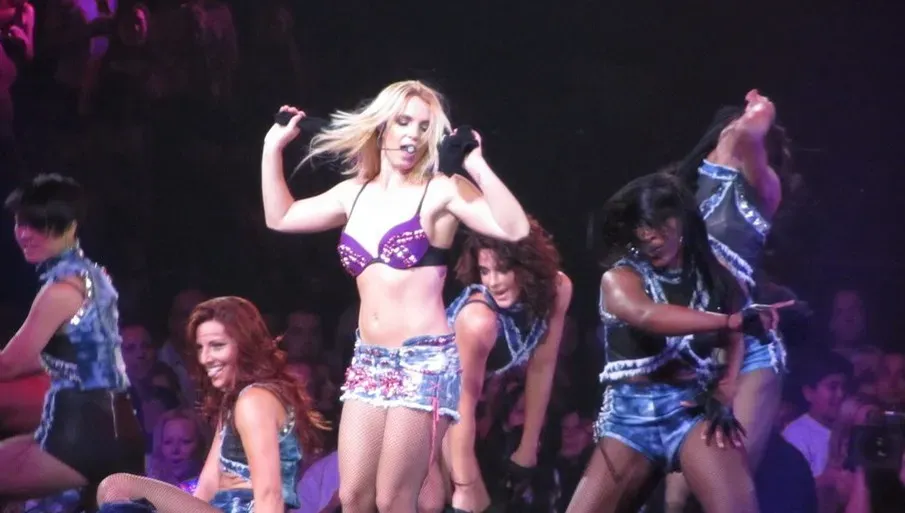
Max Martin’s now-iconic pop song had a rockier road to release than most people realize. “…Baby One More Time” was first offered to TLC, who rejected it because it didn’t quite fit the group’s vibe. The girl group’s R&B-leaning image made the bubblegum production feel like an odd fit at the time.
Partner offer
The song didn’t land immediately with its eventual star either. It was then offered to Robyn before it landed with Britney Spears. Spears’ version became one of the best-selling debut singles in pop history and defined her entire early career, a fact that still surprises people who remember TLC passed on it first.
Five and “Bye Bye Bye”

Before it became one of NSYNC’s signature songs, “Bye Bye Bye” made a stop with a British boy band. The song was first offered to the British band Five, but the group didn’t like it, so it went to Timberlake and Company, aka NSYNC. Five had its own run of UK hits, so the pass wasn’t out of desperation, just a difference in taste.
NSYNC took the opposite view, and the results spoke for themselves. It became one of the boy band’s most iconic hits, a song that still shows up on wedding playlists and throwback radio decades later. It’s hard to imagine the track existing outside of NSYNC’s catalog now, which makes the original offer to Five feel almost like trivia.
The Marvelettes and “Where Did Our Love Go”

Motown songwriter Lamont Dozier didn’t write “Where Did Our Love Go” with the Supremes in mind at all. He originally cut the song with the Marvelettes in mind, recording it in lead singer Gladys Horton’s key, which sat much lower than Diana Ross’ natural range. Dozier said it never entered his mind that the Marvelettes wouldn’t like the song, yet that’s exactly what happened.
The track landed with the Supremes almost by default, since Motown’s in house policy discouraged wasted studio time. It became the first single by the Supremes to reach No. 1 on the Billboard U.S. Pop Singles chart, staying there for two weeks in August 1964. It also kicked off a run of five consecutive Supremes chart-toppers, turning a song the Marvelettes didn’t want into the foundation of a Motown dynasty.
The Jackson 5 and “One Bad Apple”

George Jackson wrote “One Bad Apple” at Muscle Shoals with a very specific singer in mind. The song was pitched to the Jackson 5, who ultimately chose to release “ABC” instead and set the newer track aside. Michael Jackson later confirmed to Donny Osmond that the song had indeed been written for the Jacksons before the group passed on it.
The Osmonds picked it up instead, hitting the Billboard Hot 100 for the first time in 1971 with “One Bad Apple,” which spent five weeks at No. 1. The song became the launching point for the Osmonds’ pop-rock era, transforming them from a novelty vocal group into genuine chart contenders. It’s a rare case where the influence of one Motown family act directly shaped the breakout of a rival family act.
The Monkees and “Sugar Sugar”
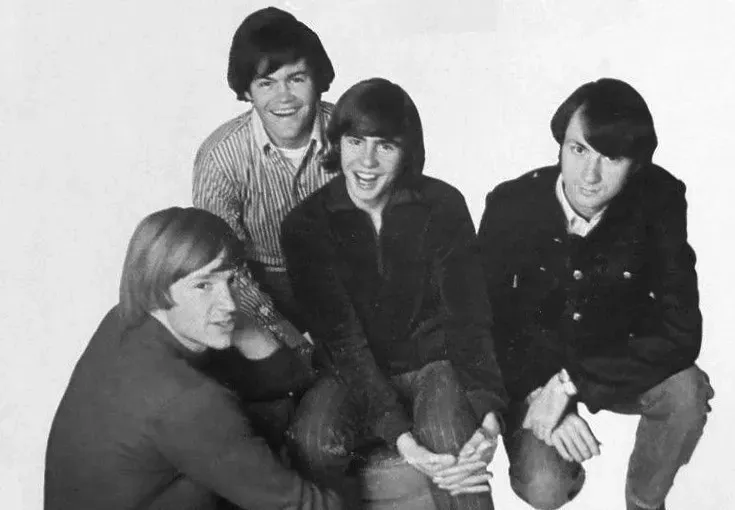
This one comes with a caveat, since accounts of exactly what happened differ depending on who’s telling the story. The widely repeated version holds that producer Don Kirshner brought a bubblegum pop song called “Sugar Sugar” to the Monkees, and that Michael Nesmith flatly rejected it as beneath the band, reportedly punching a hole in a wall out of frustration with Kirshner’s control over their material. Some who worked on the song, including its vocalist Ron Dante, have since disputed that the track was ever formally offered to the group at all, so the story sits somewhere between music industry legend and documented fact. Whatever the true sequence of events, Kirshner didn’t waste the song. He built an entirely fictional cartoon band called The Archies around it instead, and “Sugar Sugar” became the biggest selling single of 1969, knocking the Rolling Stones off the top of the charts in the process. It remains one of the strangest outcomes on this list: a song possibly turned down by a real band ended up as the definitive hit of a band that never existed at all. These nine stories share a common thread: none of the artists involved could have known which decision would matter more, the yes or the no. Some bands passed because a song didn’t fit their sound, others because they wanted creative control, and a few simply misjudged a demo that hadn’t found its final shape yet. Looking back, it’s less about bad ears and more about timing, chemistry, and the strange alchemy that turns a rejected demo into a signature hit for whoever says yes next.
Partner offer
Planning a trip to Vegas?
Compare hotel rates and show tickets on VEGAS.com.