Some of the most recognizable looks in movie history did not come from months of careful design or six-figure workshop budgets. They came from a costume designer standing in a thrift store with a few hundred dollars and a deadline, or a prop master grabbing whatever was on the nearest shelf. What’s strange is how often these rushed, cheap solutions ended up outlasting the polished, expensive alternatives that studios could have afforded instead. Looking back at these examples now, in 2026, it’s almost comforting to know that constraint and creativity so often beat out budget. Here are ten costumes that prove a tight deadline and an empty wallet can still produce something unforgettable.
Michael Myers’ mask in Halloween (1978)
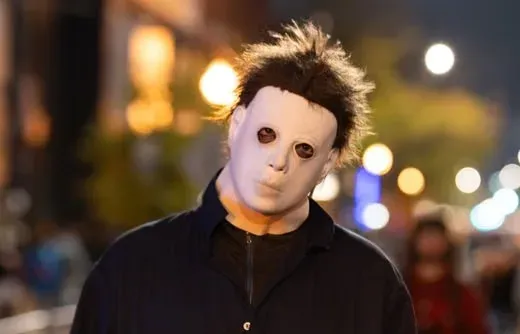
John Carpenter’s slasher classic was made for next to nothing, and the mask that became one of horror’s most enduring images reflects that reality perfectly. Carpenter made ‘Halloween’ on a budget of roughly $300,000, with a significant portion of that money going toward renting Panavision cameras, so other departments, such as costumes, props, and makeup, operated on a shoestring budget. Production designer Tommy Lee Wallace didn’t have the funds to commission anything custom.
The budget was so low that the production designer purchased a Captain Kirk mask from a local costume shop for $1.98 to create the memorable mask for Michael. The crew then modified it just enough to make it unsettling. He spraypainted it white, cut larger holes for the eyes, removed the eyebrows and sideburns and made the hair darker for his eerie look. William Shatner reportedly had no idea his own likeness had inspired horror’s blankest stare until years later.
The Dude’s cardigan and robe in The Big Lebowski (1998)
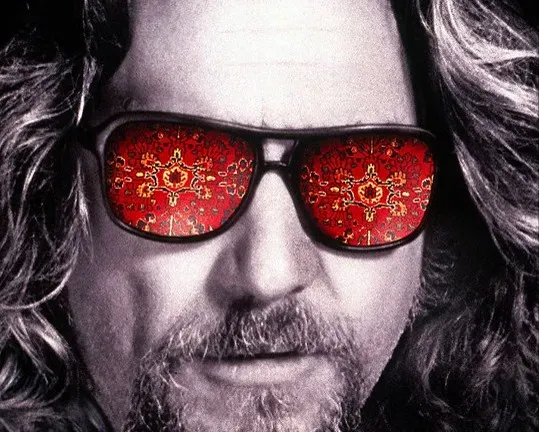
Costume designer Mary Zophres didn’t need a huge wardrobe budget for Jeff Bridges’ character because a surprising amount of it already existed in Bridges’ own closet. You could still find vintage clothing in thrift stores then, and she tried to stick to the west side and the beach for the Dude, and that’s where she found the robe he wears in the beginning at Ralphs, with a t-shirt and some old ’60s shorts. The idea was that his character had probably owned some of these pieces for decades.
The famous zip-up cardigan tells a slightly different story. One vintage sweater and three modern replicas were available for the production, but Bridges only wore the vintage model on screen as it was of the best quality and kept him in character. It was a Pendleton Westerley, an ordinary off-the-rack cardigan from 1974 that nobody thought twice about until the film turned it into a cult icon.
The black suits in Reservoir Dogs (1992)
Quentin Tarantino’s debut is often credited with making the black suit and skinny tie look cool again, but the wardrobe department had almost nothing to work with. Of the film’s relatively small budget, only $10,000 was allocated to costumes, which meant costume designer Betsy Heimann and Tarantino had to get creative. Heimann leaned into the characters’ backstories to justify the cheap solution.
Her logic was simple and practical. In her mind, these guys had been in or were just released from prison, which would leave them without many choices of clothing, so if their instruction was to wear the dark suit and tie, they could put that together easily and for very little money at a thrift store. In reality, only Harvey Keitel and Tarantino himself were actually wearing full suits, with the rest of the cast in mismatched jackets and trousers that simply photographed as black.
Ghostface’s mask in Scream (1996)
Wes Craven’s slasher revival didn’t design a new killer’s face from scratch. The now-famous white, elongated mask was already sitting on shelves in Halloween shops across the country before the film ever used it, sold as a generic novelty item rather than a piece of custom movie design. Production simply picked it because it was cheap, unsettling, and immediately available.
That off-the-shelf origin has become part of the character’s mythology rather than something the filmmakers tried to hide. It’s a rare case where a low-effort prop decision, made mostly for budget and time reasons, turned into a design so effective that it’s been copied by nearly every slasher costume sold since. The mask’s blankness, ironically, is what makes it work.
Jason Voorhees’ hockey mask in Friday the 13th Part III (1982)
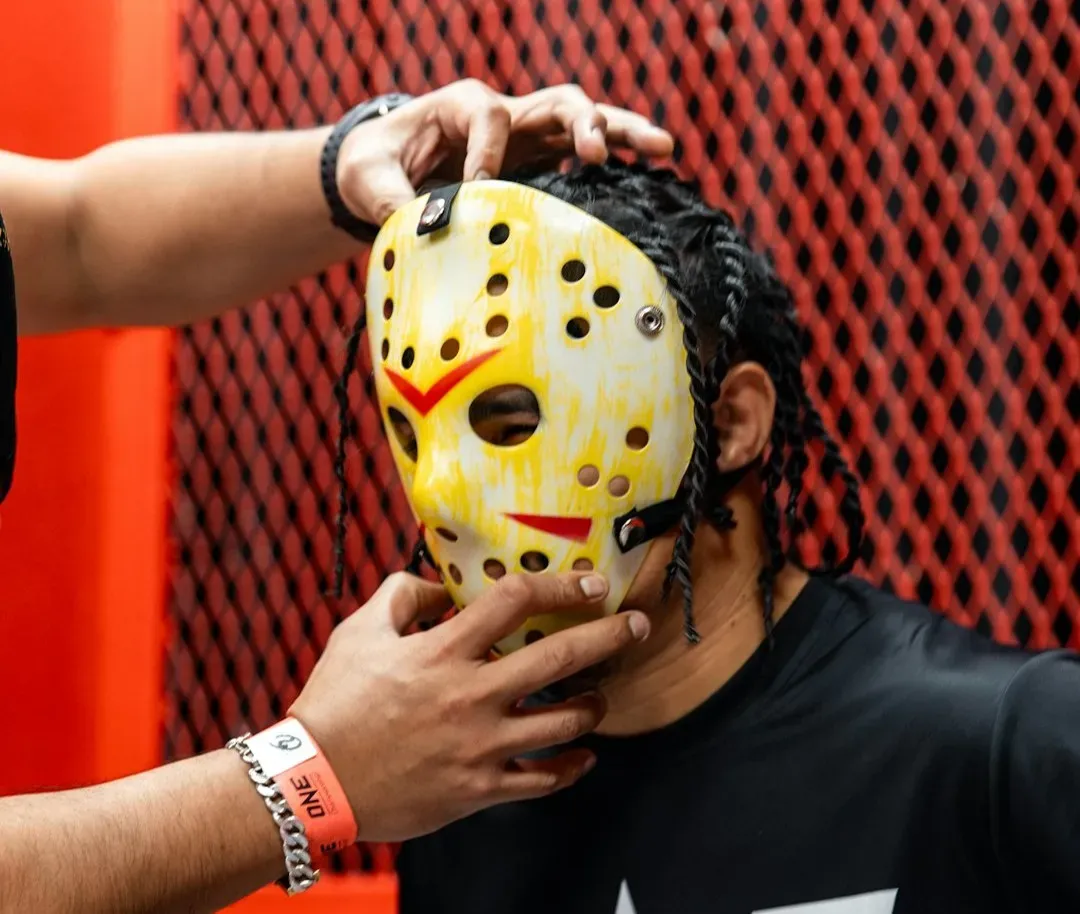
Jason didn’t wear his signature hockey mask in the first two Friday the 13th films. It was introduced in the third installment as a straightforward, inexpensive prop choice, a real sporting goods item rather than a custom horror design. The filmmakers needed something that instantly read as ominous without requiring a sculptor or a special effects budget.
The mask’s plain white surface and minimal red triangle detailing kept production costs low while giving the character an anonymous, almost industrial menace. It replaced burlap sacks and bandaged looks from earlier films with something far more marketable and far cheaper to produce at scale. Decades later, that hockey mask remains one of horror’s most reproduced images, born from a practical prop run rather than a design brief.
The alien creature suit in Alien (1979)
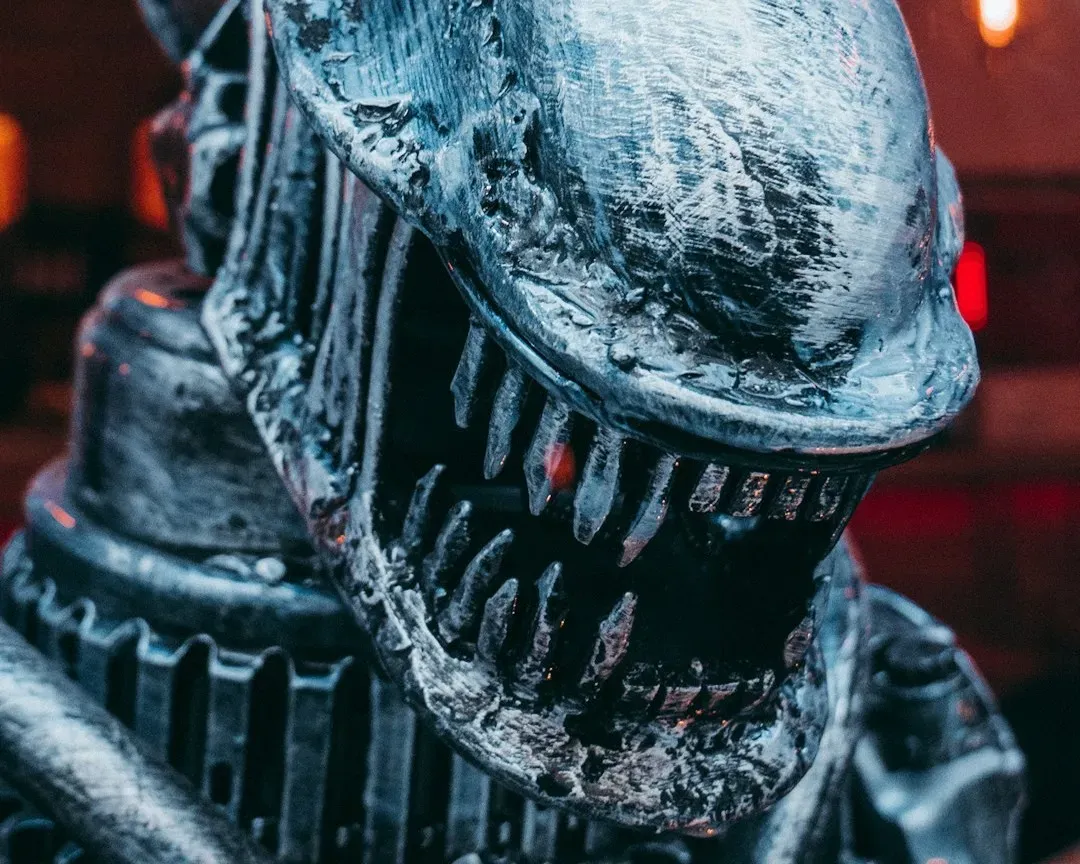
Ridley Scott’s creature was originally imagined through H.R. Giger’s elaborate biomechanical artwork, but building a wearable version on a tight production schedule required shortcuts. The suit worn by actor Bolaji Badejo incorporated real animal bones and other found materials rather than fully custom-sculpted components, a practical decision driven by both time pressure and cost. It gave the alien an organic, unsettling texture that a purely synthetic build might not have achieved as convincingly or as cheaply.
Badejo himself, a design student discovered specifically for his towering height, wore the suit for long stretches to help sell its otherworldly movement. The whole approach reflected a production that had to solve a nearly impossible creature design problem without the luxury of endless funding. The result became one of science fiction’s most studied and imitated monster designs.
The yellow tracksuit in Kill Bill: Vol. 1 (2003)
Uma Thurman’s yellow jumpsuit as The Bride is one of the most referenced costumes of the 2000s, and its origins are almost comically simple. The look was a direct homage to the tracksuit Bruce Lee wore in his unfinished film Game of Death, and rather than commissioning something elaborate, the production used an ordinary Adidas tracksuit as its base. It needed almost no alteration beyond fitting it to Thurman.
The genius of the costume wasn’t in its construction but in the reference itself, a piece of sportswear anyone could buy off a shelf transformed into a cinematic statement through context and framing. It cost far less than a custom-built action costume would have, yet it became instantly iconic, spawning countless Halloween costumes and pop culture callbacks in the years since. Sometimes the cheapest option is also the smartest one.
The thrift-store wardrobe of Napoleon Dynamite (2004)
Jared and Jerusha Hess made Napoleon Dynamite on an extremely limited budget, and the wardrobe department reflected that reality at every turn. Rather than designing period-accurate or stylized clothing, the production largely pulled outfits from thrift stores and secondhand racks, favoring awkward, ill-fitting pieces that matched the film’s deadpan tone. Napoleon’s moon boots and oversized shirts weren’t costume design in the traditional sense so much as careful thrifting done under financial pressure.
That scrappy approach became part of the film’s charm rather than a limitation audiences noticed. The clothes looked lived-in and slightly wrong in a way that expensive tailoring never could have replicated. Nearly two decades later, thrift-store style itself has become a recognizable aesthetic partly because of how naturally this film wore it.
Rocky’s gray sweatsuit in Rocky (1976)
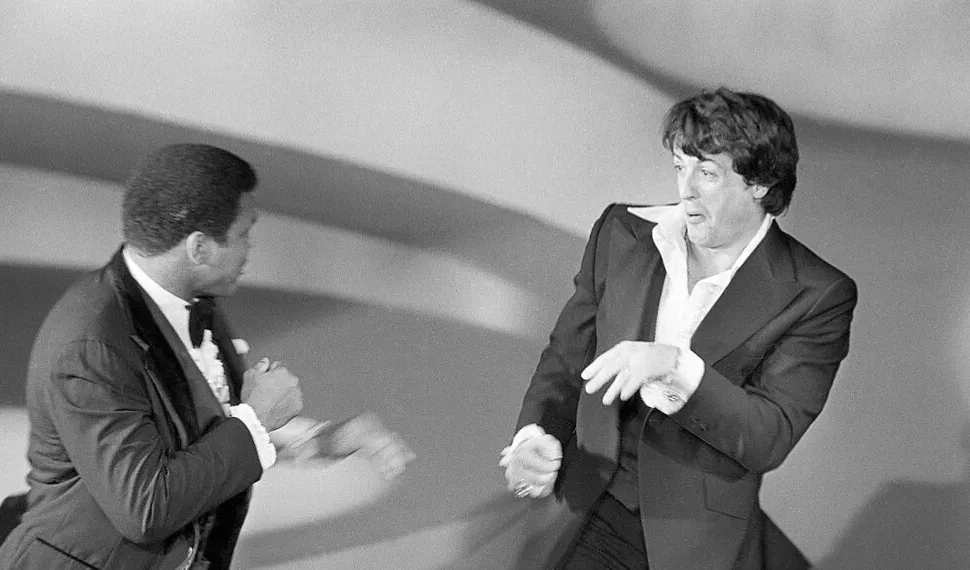
Sylvester Stallone’s breakout film was made on a modest budget, and Rocky Balboa’s now-famous training outfit reflects that scrappy production reality directly. Rather than a specially designed athletic costume, the gray sweatshirt and sweatpants were simple, ordinary gym clothes, chosen because they fit the character’s blue-collar Philadelphia life and cost almost nothing to source. There was no branding, no stylized cut, just plain sweats that looked like something a struggling boxer would actually own.
That plainness is exactly why it worked. The costume didn’t need to announce itself because the character’s determination did all the storytelling instead. Decades of gym wear and training montages in other films still echo that same gray sweatsuit silhouette, a costume choice made out of necessity rather than any grand design statement.
The leather gear in Mad Max (1979)
George Miller’s original Mad Max was shot on an extremely tight Australian budget, and its costume department leaned heavily on real, functional motorcycle gear rather than custom builds. Much of what appears on screen, particularly the leather jackets and biker attire worn by the film’s roaming gang members, was sourced from actual bikers and army surplus stores rather than built from scratch by a costume shop. It gave the film a grimy authenticity that a bigger budget production might have sanded down.
The practical, borrowed nature of the costumes matched the film’s low-fi, guerrilla filmmaking style throughout production. What started as a cost-saving necessity became a visual template for post-apocalyptic cinema that persisted through the franchise’s later, far more expensive entries. It’s a clear example of budget limitations accidentally producing a design language still copied today.
Taken together, these ten examples share a common thread: none of them were the result of a well-funded costume department carefully executing a polished vision. They were solved under pressure, on shoestring budgets, often within days or hours of shooting, using whatever was cheap, available, or already hanging in someone’s closet. That improvisation didn’t weaken these films. If anything, the limitations forced choices that felt more honest, more textured, and ultimately more memorable than a bigger budget might have allowed.