


American television is often credited as the birthplace of the modern game show, but a surprising number of the format’s biggest hits actually started somewhere else entirely. British quiz shows, Dutch reality experiments, and even a French fortress have all shaped what viewers now consider classic game show entertainment. Looking at where these formats actually came from tells a different story about how global television really works, one built on licensing deals, format exports, and a surprising amount of cross-border borrowing.
1. Who Wants to Be a Millionaire? (United Kingdom)

Long before American audiences learned to say “final answer,” the format was born in Britain. Who Wants to Be a Millionaire? is an international television game show franchise of British origin, created by David Briggs, Mike Whitehill and Steven Knight. The show has contestants answering multiple-choice general knowledge questions, winning a cash prize for each correct answer, with the prize increasing as the questions become increasingly difficult.
The premiere was a modest gamble that paid off enormously. It premiered on ITV on 4 September 1998 and ran for ten consecutive nights until 13 September 1998, with a Christmas Special following on Christmas Day 1998, hosted by Chris Tarrant. Within just days of that first run, the show’s ratings grew across its two-week run and had international production companies ringing producers to buy the format within days, which was novel because countries tended to buy formats from the USA and not the UK. The franchise has since spread to over 130 versions for different nations worldwide, with India alone having seven versions for different languages.
2. Deal or No Deal (Netherlands)

The now-familiar sight of a contestant staring down a wall of briefcases actually started with a Dutch program most Americans have never heard of. Deal or No Deal is an international game show franchise created by Dick de Rijk and John de Mol Jr. for the Dutch company Endemol. The first appearance of the game was on the Dutch game show Miljoenenjacht in 2002.
The core mechanic was simple but addictive: the player picks one of several cases or boxes to keep, each containing a sum of money, then eliminates the others from the game, the Banker then tries to buy the player’s case or box for as little money as possible, and the player then answers the titular question, deciding whether to accept the Banker’s offer or reject it and play on. Interestingly, the concept itself was not entirely original even in the Netherlands, since the Dutch show Miljoenenjacht was originally based on a German format called Die Chance deines Lebens, which was based on trivia questions and did not have the briefcase element at all. Since its debut, Deal or No Deal has been adapted by 84 countries and territories.
3. The Weakest Link (United Kingdom)

Few hosts have defined a format quite like Anne Robinson did with her icy delivery of “you are the weakest link, goodbye.” The Weakest Link was created by Fintan Coyle and Cathy Dunning in the United Kingdom. It first appeared in the United Kingdom on BBC Two on 14 August 2000.
The gameplay combined trivia with social strategy in a way few quiz shows had before. The game begins with a team of eight or nine contestants who take turns answering general knowledge questions within a time limit to create chains of correct answers, and at the end of each round, the players vote one contestant out, with the final two facing off head to head. The format traveled well beyond Britain, with adaptations reaching places as varied as Hong Kong and South Africa, and even a long-running American edition that brought Robinson herself across the Atlantic to host the original US run.
4. Big Brother (Netherlands)

Though often filed under reality television, Big Brother has always carried the structure of a competitive game show, complete with weekly eliminations, strategic alliances, and a cash prize for the last person standing. The format was created by Dutch producer John de Mol and his company Endemol, first airing in the Netherlands in 1999 before spreading to dozens of countries within just a few years. Its central premise, isolating strangers in a house under constant surveillance and letting either the public or the housemates vote people out, became a television blueprint that influenced everything from Survivor to modern competitive streaming formats.
What made Big Brother different from earlier game shows was the way it turned everyday behavior into the actual competition. There were no trivia questions or physical obstacles at its core, just people, cameras, and the slow accumulation of social pressure. That formula proved durable enough that versions of the show are still airing in multiple countries today, decades after the original Dutch season introduced the concept to television audiences.
5. Takeshi’s Castle (Japan)

Anyone who grew up watching goofy obstacle course shows on American cable in the 2000s likely has this Japanese program to thank. Takeshi’s Castle is a Japanese game show that aired between 1986 and 1990 on the Tokyo Broadcasting System. The show features the Japanese comedian Takeshi Kitano as a count who sets up difficult physical challenges that players must overcome in order to reach him in his castle.
Partner offer
Its influence stretched far beyond its original four-year run. The show became a cult television hit around the world and was highly influential in global popular culture, inspiring a genre of game shows involving physical challenges and painful entertainment. American viewers likely know it best through MXC, the redubbed and comedically re-narrated version that turned earnest Japanese contestants into unwitting comedy stars, though the original concept and physical stunts came directly from Kitano’s 1980s production.
6. Fort Boyard (France)
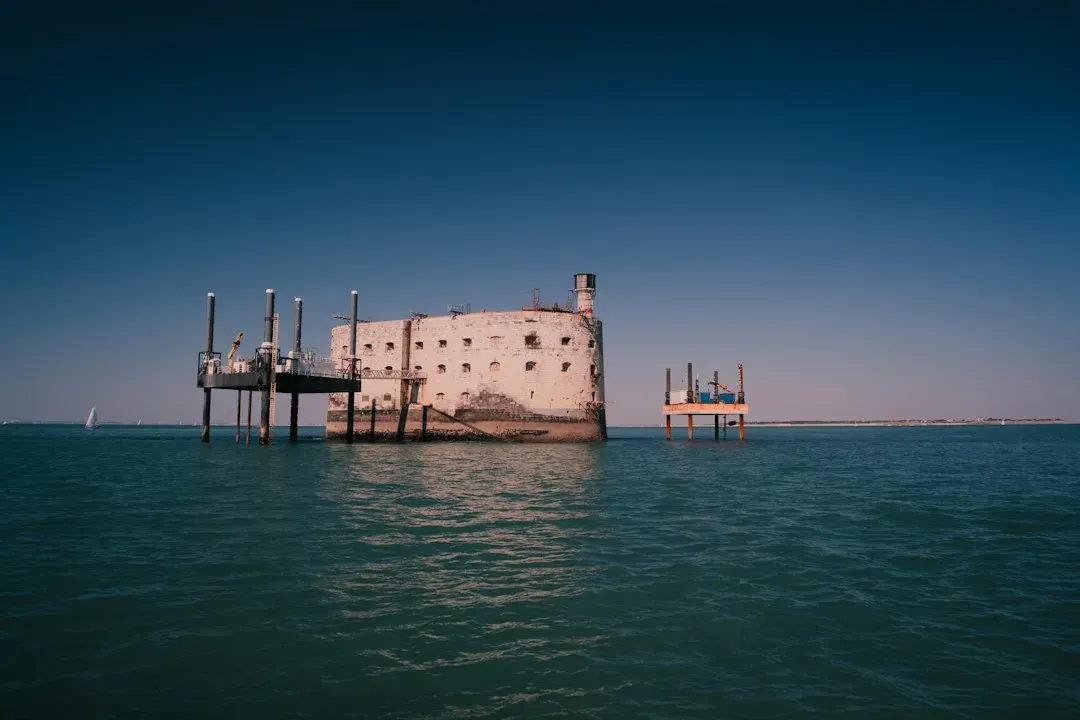
Filmed on an actual 19th-century fortress off the French coast, this show turned a real piece of military history into a game show set. Fort Boyard is a French game show developed by Jacques Antoine, that was first broadcast on 7 July 1990. The setup involves a team of players who must face timed challenges set in the various cells of the fortress, using physical and mental abilities, and by succeeding they collect keys and clue words in order to open a treasure room guarded by tigers.
Its reach has been considerable for a show built around one specific location. Many foreign versions of the show, totalling over 2,000 episodes, have aired around the world since 1990. Interestingly, the format has a close cousin: the programme appears similar to the British game show The Crystal Maze, which was created as an alternative format by Antoine for Channel 4 in the United Kingdom, after the fortress was unavailable to film in because of its then ongoing refurbishment. That means two of Europe’s most beloved obstacle-based game shows share the same creative mind, born from a scheduling problem rather than a rivalry.
7. The Chase (United Kingdom)

Before Chase became a syndicated staple on American afternoon television, it was a straightforward ITV quiz format built around one clever twist: contestants team up against a professional quizzer known as a Chaser. The British original launched in 2009 and quickly built a reputation for combining general knowledge trivia with genuine tension, since a wrong answer at the wrong moment could let the Chaser catch up and eliminate a player entirely. The show’s success in the UK led to international versions in the United States, Australia, and several other countries, each keeping the core cat-and-mouse structure largely intact.
Part of what made the format exportable was its simplicity. There is no elaborate set piece or physical stunt involved, just a table, a set of questions, and a genuinely likable villain in the Chaser role. That stripped-down format has proven remarkably durable, and the British version continues to produce new episodes well into the 2020s, still built around the same basic mechanic that made it a hit over a decade ago.
8. Survivor (Sweden)

Long before tribal councils became part of American pop culture vocabulary, a Swedish production called Expedition Robinson introduced the basic concept in 1997: strand a group of strangers, force them to vote each other off, and let cameras capture the fallout. The show’s creator, Charlie Parsons, later licensed the format internationally, and it was that same blueprint that eventually became the American version known simply as Survivor when it launched in 2000. The core mechanics, tribal alliances, immunity challenges, and a jury of eliminated players deciding the winner, all trace back to that original Swedish concept.
What is notable is how much the format has endured across markets with very different television cultures. Versions of the show have aired in dozens of countries since the late 1990s, and the American adaptation alone has produced well over 40 seasons, making it one of the longest-running reality competition formats on television. The show’s Swedish origins are often overlooked simply because the American version became so culturally dominant, but the concept itself started thousands of miles away from Hollywood.
9. American Idol (United Kingdom, as Pop Idol)

The singing competition format that launched countless music careers did not begin in the United States at all. Pop Idol premiered in Britain in 2001, created by producer Simon Fuller, and introduced the now-standard format of public auditions, a panel of judges offering blunt critiques, and viewers voting for their favorite contestants by phone. Simon Cowell, who would later become one of American television’s most recognizable judges, was part of that original British judging panel before the format crossed the Atlantic.
American Idol launched in 2002 using that same structural blueprint, and it quickly became one of the most-watched programs on American television for much of the 2000s. The format has since spawned dozens of international versions and inspired an entire genre of televised singing competitions, but the basic architecture, from the audition rounds to the judges’ table, was designed in Britain first. It is a reminder that even some of the most quintessentially American entertainment formats often have origins that trace back across the ocean.
Taken together, these nine formats show just how much of modern game show television actually began outside American studios. British producers built the trivia-based backbone of the genre, Dutch companies pioneered the psychological and reality-based hybrids, and Japanese and French productions contributed the physical obstacle course genre that still shows up in reboots today. What often gets remembered as an American entertainment tradition is, in many cases, a licensed and adapted version of something that started somewhere else entirely.Partner offer
Planning a trip to Vegas?
Compare hotel rates and show tickets on VEGAS.com.


