There’s a strange irony sitting at the heart of music video history. Some of the most expensive, effects-laden productions of the last four decades are barely remembered, while a handful of scrappy, low-budget clips shot in a day or two on a shoestring have become permanent fixtures of pop culture. The videos below prove that a compelling idea, a willing crew, and a bit of nerve can outlast any amount of money thrown at a green screen.
Beastie Boys, “Sabotage” (1994)

Spike Jonze’s homage to gritty 1970s cop shows started as a deliberately modest shoot. The Beastie Boys had grown tired of bloated video productions and specifically asked Jonze to work with a skeleton crew small enough to fit into a single van, which let them film around Los Angeles without permits and improvise as they went. The clip was shot with a small enough crew that everyone could fit in one van, which eased the band’s unease about filming big budget music videos on large sets.
The plan to keep costs down nearly worked, except Jonze ruined two rented cameras during filming, one underwater and one during a high-speed chase. Those mishaps tripled the initial budget to roughly eighty thousand dollars, a modest sum by music video standards even in 1994. Despite the accidental overspend, the video still ranks among the cheapest-looking productions ever nominated for Video of the Year at the MTV Awards.
Fatboy Slim, “Praise You” (1999)

Before he became a household name in filmmaking, Spike Jonze pulled off one of the most famous flash mobs in video history almost by accident. He and Roman Coppola gathered a group of actor friends, dubbed them the Torrance Community Dance Group, and staged an amateur dance routine outside a Los Angeles movie theater without permission from anyone.
Reports on the exact figure vary slightly, but multiple accounts place the total cost at under a thousand dollars, with one commonly cited number landing at around eight hundred. Shot guerrilla-style in a single take by Spike Jonze with Roman Coppola, the video reportedly cost a mere eight hundred dollars. The entire thing was captured on handheld cameras in one unbroken take, with most of the tiny budget reportedly going toward a replacement boombox and snacks for the group.
OK Go, “Here It Goes Again” (2006)

OK Go turned eight rented gym treadmills and a garage into one of the defining viral videos of the early YouTube era. The band’s singer, Damian Kulash, has described the project as a low-stakes experiment built on trial and error rather than a calculated marketing move. The band decided to create a dance nobody had seen before using eight treadmills rented from a gym equipment salesman, and spent ten days conjuring up a one-take video, with a budget of a mere four thousand dollars.
The choreography, worked out with help from Kulash’s sister, took seventeen attempts to nail in a single continuous shot. The clip’s homemade look was part of its charm rather than a flaw to hide, and it quickly became one of the most-watched music videos of its time, helping cement OK Go’s reputation for inventive, low-cost spectacle.
Weezer, “Undone (The Sweater Song)” (1994)
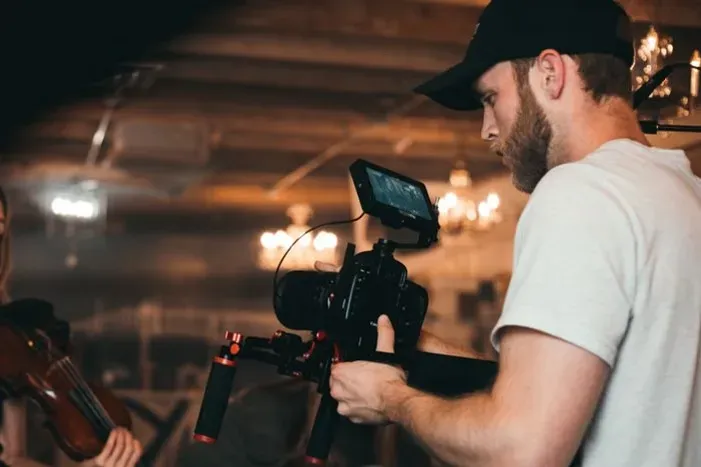
For Weezer’s very first music video, Spike Jonze pitched something almost defiantly simple: a blue room, a single continuous take, and a pack of loose dogs running wild around the band while they played. The concept won out over twenty-five other treatments, most of which leaned on sweater-related visual gags that the band had explicitly rejected.
The video’s most notable expense wasn’t the crew or the set but the animals themselves. Bassist Matt Sharp later noted that the dogs cost 10 grand, an unusually large chunk of an otherwise bare-bones production. Everything else, from the lighting to the single unbroken camera pan, was built around keeping the shoot fast and inexpensive.
The White Stripes, “Fell in Love with a Girl” (2002)

Michel Gondry’s stop-motion animation for this White Stripes single turned thousands of interlocking plastic bricks into a full narrative sequence. Rather than filming Jack and Meg White on an elaborate set, the entire video was built out of Lego-style animation, painstakingly assembled frame by frame with materials that cost a fraction of what a live-action shoot would have required.
Partner offer
The approach fit the band’s stripped-down aesthetic perfectly, trading expensive sets and lighting rigs for patience and craft. It remains one of the most instantly recognizable videos of the early 2000s, proof that a clever visual gimmick can substitute for a real production budget when the concept is strong enough to carry it.
Sinead O’Connor, “Nothing Compares 2 U” (1990)
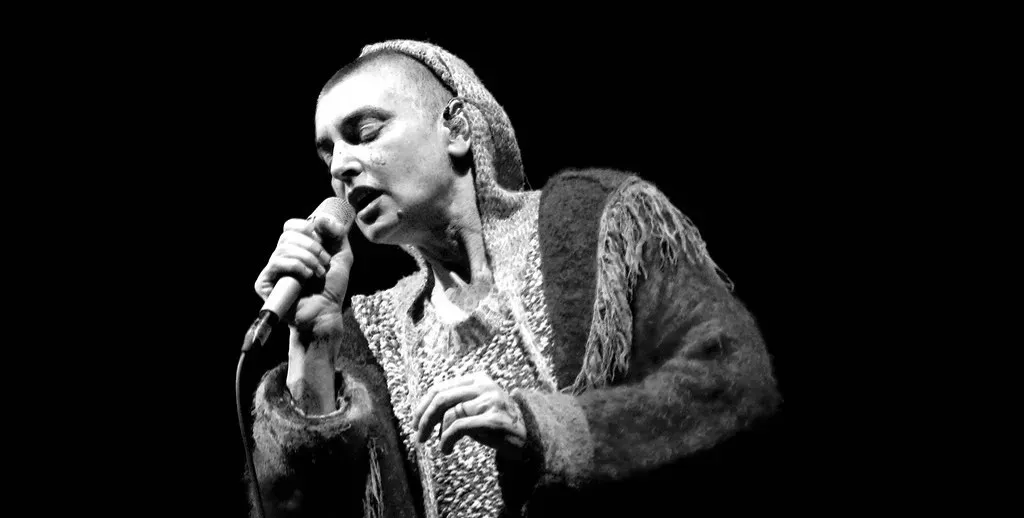
Director John Maybury built the entire video around a single idea: a static close-up shot of Sinead O’Connor’s face as she sang, with almost no cutting away and no elaborate staging. The most memorable moment, a single visible tear during the second verse, was unplanned and unscripted, yet it became the image most associated with the song for decades afterward.
There was no need for sets, props, or a large crew when the entire emotional weight of the video rested on one performer’s expression. It’s a reminder that some of the most enduring music videos succeed by stripping everything away rather than adding more, letting a single unbroken shot do all the work a bigger budget usually tries to buy.
Radiohead, “Just” (1995)
Director Jamie Thraves shot most of “Just” on an ordinary London street, using real pedestrians and passersby rather than hired extras for much of the background action. The main narrative follows a man who lies down on the pavement for no explained reason, prompting a growing crowd of onlookers, all filmed with a minimal crew and no special effects.
The video leaned entirely on concept and blocking rather than production value, which suited Radiohead’s understated visual identity at the time. Its now-famous ending, where the man finally reveals why he’s lying down, has been debated by fans for decades, yet the whole thing was achieved without a single expensive set piece.
The Prodigy, “Firestarter” (1996)

Director Walter Stern filmed Keith Flint alone in an abandoned London Underground tunnel, using tight, unsettling close-ups rather than any kind of elaborate set design. The stark, grainy lighting and claustrophobic framing did far more work than money ever could have, turning a single performer in a disused tunnel into one of the most menacing images of 1990s music television.
There was no need for dancers, choreography, or expensive locations when the entire concept hinged on Flint’s transformation into a wild-eyed, unpredictable frontman. The video was controversial enough to be pulled from some daytime programming, which only added to its notoriety without costing the band an extra pound in production value.
Sia, “Chandelier” (2014)

Sia and co-director Daniel Askill built the entire video around a single dancer moving through a series of sparse, empty rooms rather than investing in elaborate sets or visual effects. The eleven-year-old dancer at the center of it, Maddie Ziegler, learned the choreography in a single day, and the routine itself, choreographed by Ryan Heffington, became the entire spectacle without any need for expensive staging.
The video’s power came almost entirely from the performance rather than production design, which is a rarity for a major label pop release. The video has since garnered over 1.5 billion views, an enormous return relative to what was clearly a modest, performance-driven shoot compared to the typical big-budget pop video of that era.
These nine clips share a common thread despite spanning three decades of music video history. None of them needed elaborate sets, expensive visual effects, or A-list production budgets to become permanent parts of pop culture. What they had instead was a strong, simple idea executed with confidence, which turns out to matter far more than anyone in the industry likes to admit.Partner offer
Planning a trip to Vegas?
Compare hotel rates and show tickets on VEGAS.com.