Ask a room of adults which book they read in tenth grade, and you’ll usually get a few confident answers and a few sheepish ones. Some remember every chapter. Others remember a thick paperback, a deadline, and a very good plot summary found the night before.
The titles below come up again and again in American English classrooms. Keep a mental tally as you go, and be honest with yourself.
To Kill a Mockingbird by Harper Lee

Published in 1960, this novel follows young Scout Finch in the fictional town of Maycomb, Alabama, as her father, the lawyer Atticus Finch, defends a Black man falsely accused of a crime. It won the Pulitzer Prize for Fiction in 1961. For decades it has been one of the most commonly taught novels in the country.
Its place in classrooms has not gone unchallenged. Some districts have faced complaints about its racial slurs and its portrayal of race, and the American Library Association has repeatedly listed it among frequently challenged books. Lee’s long awaited second book, Go Set a Watchman, appeared in 2015 and complicated how readers see Atticus.
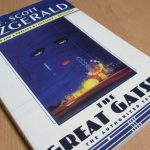
The Great Gatsby by F. Scott Fitzgerald

Fitzgerald’s 1925 novel is narrated by Nick Carraway, who watches his wealthy neighbor Jay Gatsby chase a version of the past that no longer exists. It’s short, which probably explains part of its classroom popularity. Teachers use it to talk about the American Dream, class, and the Jazz Age.
The book sold modestly during Fitzgerald’s lifetime and only gained its towering reputation after World War II. It entered the US public domain in 2021, which led to a wave of new editions and adaptations. If you only remember the green light at the end of the dock, you’ve at least absorbed the symbol everyone talks about.
Of Mice and Men by John Steinbeck

This 1937 novella tells the story of George and Lennie, two migrant ranch workers in California during the Great Depression. Its brevity makes it a staple of middle and high school reading lists. The story is built around a simple dream of owning a small piece of land.
Steinbeck later received the Nobel Prize in Literature, in 1962. Like several books on this list, Of Mice and Men has appeared on lists of frequently challenged titles because of its language and its heavy themes. Many students finish it in a single weekend, which may be why so many people say they actually did.
Romeo and Juliet by William Shakespeare

Most American students meet Shakespeare in ninth grade, and this play is the usual introduction. Written in the mid 1590s, it follows two teenagers from feuding families in Verona. It’s a tragedy, although the first half has plenty of jokes and wordplay.
The play is a classroom favorite partly because its main characters are close to the age of the students reading them. Teachers often pair the text with Baz Luhrmann’s 1996 film or the 1968 Franco Zeffirelli version. Reading it aloud in class, with everyone stumbling over the verse, is a memory many people share.
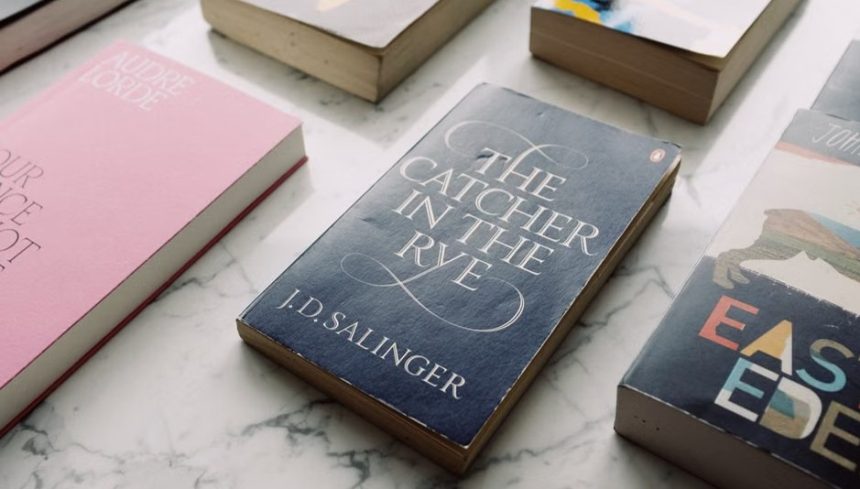
The Catcher in the Rye by J. D. Salinger
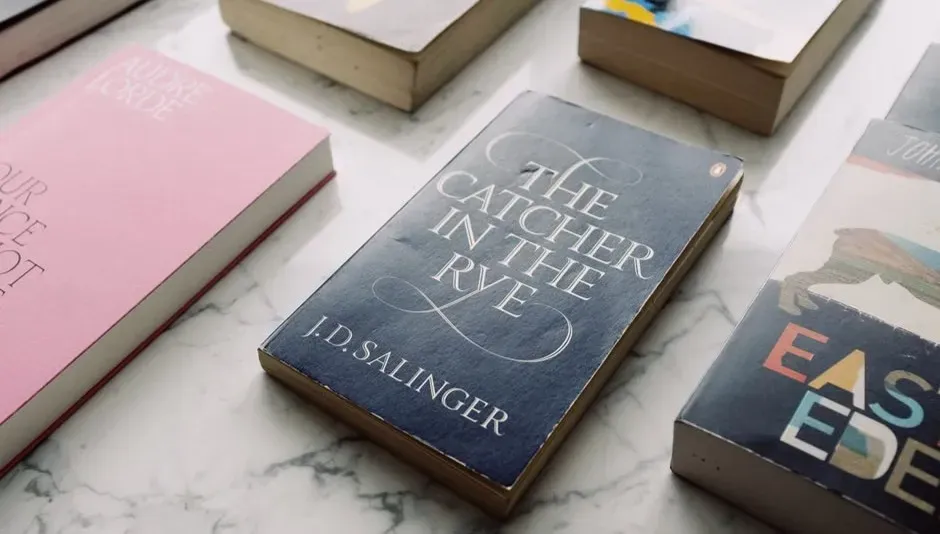
Salinger’s 1951 novel is narrated by Holden Caulfield, a teenager wandering New York City after being expelled from his prep school. His voice is cynical, restless, and oddly tender. The book is often described as a defining story of teenage alienation.
It has a long history of controversy. Parents and school boards have challenged it for decades over language and subject matter, and it has often appeared on lists of frequently challenged books. Readers tend to either connect with Holden immediately or find him exhausting, and there isn’t much middle ground.
Lord of the Flies by William Golding

Golding’s 1954 debut imagines a group of British schoolboys stranded on an uninhabited island after a plane crash. Without adults, they try to organize themselves, and the effort slowly falls apart. Teachers often use it to discuss power, fear, and the fragility of social order.
Golding received the Nobel Prize in Literature in 1983. The novel was not an instant bestseller, but it grew into a fixture of school curricula in both the United States and the United Kingdom. Plenty of students remember the conch shell and Piggy’s glasses even if the rest has faded.
1984 by George Orwell
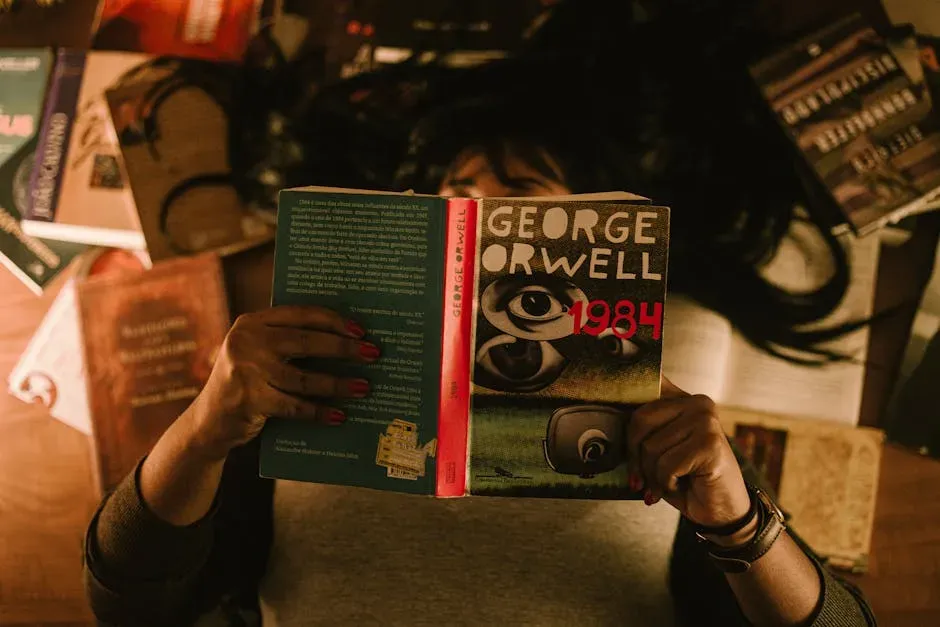
Orwell published this novel in 1949, depicting a totalitarian state ruled by Big Brother, where Winston Smith works rewriting historical records. It introduced terms such as doublethink and thoughtcrime into everyday English. High school teachers often assign it alongside units on propaganda, surveillance, and government power.
The book has returned to bestseller lists during various political moments over the years, which says something about how readers use it. Its influence reaches far beyond the classroom. Whether or not you finished it, you’ve almost certainly heard the word Orwellian.
Adventures of Huckleberry Finn by Mark Twain
Twain’s novel was published in the United States in 1885, after its 1884 British release. It follows Huck, a boy escaping his abusive father, as he travels down the Mississippi River with Jim, a man who has escaped slavery. Many critics place it among the most important American novels ever written.
It is also among the most debated in schools. The book uses a racial slur many times, and some districts have removed it from required reading while others keep teaching it with careful context. At its length and in its dialect, it’s a harder read than many on this list, so plenty of students admit they skimmed.
The Scarlet Letter by Nathaniel Hawthorne

Hawthorne’s 1850 novel is set in Puritan Boston and centers on Hester Prynne, who is forced to wear a scarlet A after having a child outside marriage. It’s a staple of American literature courses because of its themes of guilt, shame, and public judgment. The prose is dense and the pace deliberate.
That style is why it has a reputation as the book students dread. Still, its symbolism gives teachers a lot to work with, from the letter itself to the forest and the scaffold. Finishing it, for many readers, felt like an accomplishment on its own.
The Crucible by Arthur Miller

Miller’s play premiered in 1953 and dramatizes the Salem witch trials of 1692. He wrote it as an allegory for McCarthyism, the Cold War era hunt for suspected communists in the United States. It won the Tony Award for Best Play in its first Broadway run.
Because it’s a play, many classes read it aloud, assigning parts to different students. That tends to make it stick better than a novel read alone at home. The courtroom scenes, with accusations spreading through a frightened town, are the part most readers remember.