
Some endings send you out of the theater grinning, ready to talk about the movie for weeks. Others leave you sitting in silence, staring at the credits, wondering if you’re okay. The best film endings tend to live somewhere on that spectrum, and part of the fun is arguing about exactly where. Here’s a look at eight endings that span the emotional range, from the kind that wraps everything up in a warm bow to the kind that guts you and doesn’t apologize for it.
1. The Shawshank Redemption

Few endings in cinema history land with the same warmth as the reunion on that Mexican beach. Andy Dufresne’s decades-long tunnel escape pays off in a way that feels earned rather than convenient, since the film spent so much time building his patience and quiet resolve. Red’s voiceover as he travels to find his friend turns the final scene into a release of tension that had been building since the wrongful conviction at the start.
What makes it satisfying isn’t just the freedom itself but the friendship at the center of it. Audiences don’t just want Andy to escape prison, they want him to have someone to share the outside world with. The film delivers that without excess sentimentality, which is part of why it consistently ranks among the most beloved endings ever put on screen.
2. La La Land
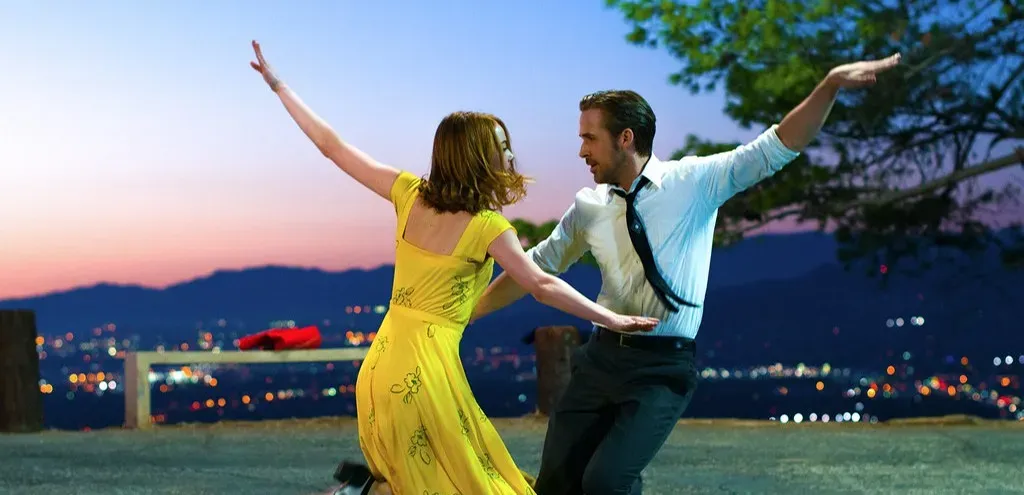
This one sits right in the middle of the satisfying-to-devastating scale because it’s technically both. Mia and Sebastian achieve everything they set out to do professionally, but the imagined “what if” sequence near the end shows the relationship they never got to have. It’s a bittersweet gut punch dressed up as a happy ending.
The final look between the two characters, a small nod across a crowded jazz club, says more than dialogue could. Audiences leave with mixed feelings, proud of what these characters accomplished yet mourning what they lost along the way. That emotional split is exactly why the ending has stuck with people since the film’s 2016 release.
3. Inception

Christopher Nolan built an entire finale around a single spinning top, and the ambiguity still generates debate. Does Cobb wake up in reality, or is he still trapped in a dream with his children? Nolan has deliberately avoided giving a definitive answer in interviews over the years, which keeps the ending alive in conversation long after the movie ends.
What tips this toward satisfying rather than frustrating is that Cobb himself seems to stop caring about the answer. He walks away from the top to be with his kids, suggesting emotional resolution even if the metaphysical question stays open. That choice to prioritize feeling over certainty is what makes the ending memorable instead of just clever.
4. Whiplash

The closing drum solo in Damien Chazelle’s 2014 film is one of the most intense sequences in modern cinema, built entirely on the tension between a student and the teacher who nearly broke him. Andrew’s extended performance at the end isn’t a clean redemption arc, it’s something closer to obsession being validated. The final shared look between Andrew and Fletcher suggests mutual respect built on genuinely toxic terms.
It’s satisfying in a visceral, adrenaline-soaked way, but it doesn’t offer moral comfort. Viewers leave impressed by the musicianship on display while still unsettled by what it cost to get there. That tension is exactly why the ending has remained a talking point among film fans and musicians alike.
5. Gone Girl

David Fincher’s 2014 adaptation ends with Amy Dunne fully back in control, having manipulated her way out of consequences and back into a marriage built on mutual fear. Nick stays with her not out of love but because leaving seems more dangerous than staying. It’s a bleak note to end on, made worse by how calmly Amy delivers her final lines.
There’s no justice here, no comeuppance, just two people trapped in a life neither of them wanted but both accepted. The ending leans toward devastating because it denies the audience the moral resolution that most thrillers eventually offer. It’s a deliberate choice, and one that mirrors the source novel’s own uncompromising finale.
6. Manchester by the Sea

Kenneth Lonergan’s 2016 drama doesn’t offer a dramatic climax so much as a quiet acceptance that grief doesn’t always resolve. Lee Chandler admits near the end that he can’t move past the tragedy that defines his life, and the film respects that honesty instead of forcing a breakthrough. Casey Affleck’s performance in these final scenes carries the weight of a man who has simply learned to keep functioning rather than heal.
This ending sits closer to devastating because it refuses false comfort. There’s no dramatic catharsis, just small gestures, like Lee agreeing to keep his late brother’s boat, that suggest life continuing without necessarily getting better. It’s an ending built on restraint, which is part of why critics singled it out as one of the more honest character studies of its decade.
7. Requiem for a Dream

Darren Aronofsky’s 2000 film builds toward one of the most punishing final sequences in modern film, cross cutting between four characters as their addictions destroy them simultaneously. Each storyline ends in a different kind of ruin, from institutionalization to physical harm, scored by Clint Mansell’s now iconic music that turns despair into something almost operatic. There is no survivor’s relief here, only the sense that every choice made earlier in the film has led inevitably to this point.
It ranks near the devastating end of the scale because it offers no redemption arc, no lesson learned in time to matter. The final image of each character curled up, alone with the consequences of their choices, is designed to sit with the viewer long after the credits roll. Few endings commit as fully to bleakness without any narrative escape hatch.
8. Hereditary

Ari Aster’s 2018 horror film ends with a ritual completed rather than thwarted, flipping the usual horror movie structure where the protagonists survive against the odds. Peter’s transformation into a vessel for a demonic king, surrounded by a cult that has been manipulating his family for generations, offers no last minute rescue. The film commits fully to its dread, refusing to give audiences the relief that genre conventions usually promise.
This lands firmly on the devastating side of the scale because it inverts expectations rather than fulfilling them. There’s a certain admiration horror fans have for endings that refuse to blink, and Hereditary’s finale has become a reference point for how far a film can commit to hopelessness. It’s not an ending that leaves you satisfied in the traditional sense, but it is one that’s hard to shake.
Ranking endings like these always comes down to personal taste, since what feels devastating to one viewer might feel oddly satisfying to another who values ambiguity or bleakness as its own kind of honesty. Still, lining them up side by side shows just how much range filmmakers have used to close out a story, whether that means warmth, heartbreak, or outright dread.