Casting directors spend years training their ears to spot something special in a voice. Yet every so often, the very thing that makes an actor unforgettable is also the thing that almost gets them passed over: a voice that sounds too much like a real person and not enough like a “performance.” It sounds like a contradiction, but it happens more often than most people realize, and the history of animation and voiceover work is full of near misses that only make sense once you understand what studios were actually listening for at the time.
This piece looks at several real, documented cases where an actor’s plain, unaffected way of speaking created doubt in the casting room, sometimes right up until the final decision. Some of these actors kept the role anyway. Others lost it to someone whose voice fit the character on paper, only for the story to twist in unexpected directions later on.
The Bias Toward Big, Theatrical Voices in Animation’s Early Years
For decades, animation casting leaned heavily on performers who could stretch, twist, and exaggerate their voices into something clearly larger than life. The template was set by veterans like Mel Blanc, whose entire career was built on inventing distinct, cartoonish voices for dozens of characters rather than relying on his own natural speaking tone. That approach shaped audience expectations for what a “cartoon voice” was supposed to sound like.
Against that backdrop, a normal-sounding voice could seem like a liability rather than an asset. If a character’s voice didn’t announce itself as obviously theatrical, some casting teams worried it would get lost against louder, more stylized co-stars. That bias took a long time to fade, and traces of it still show up in how certain roles get cast today.
Ellen DeGeneres and the Line Between Ordinary and Perfect for Dory
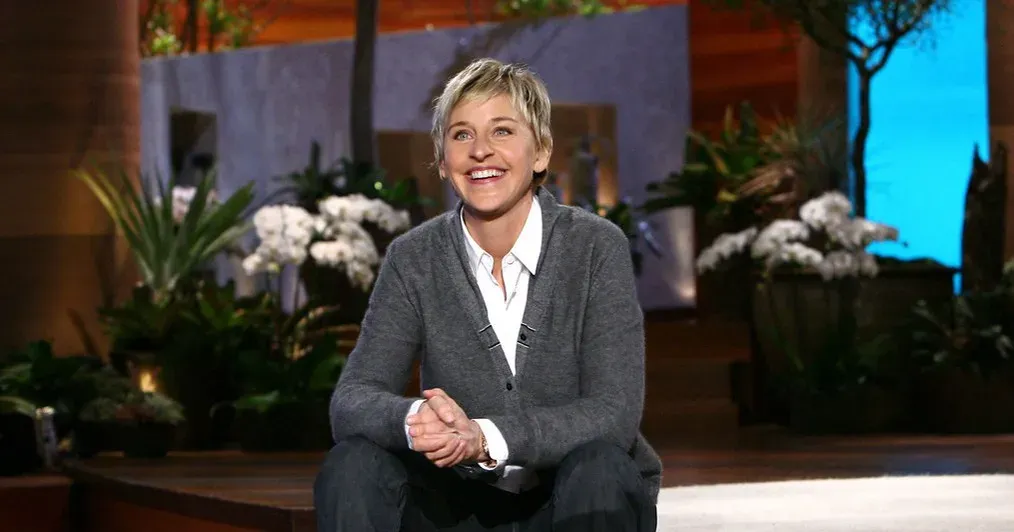
When Pixar was developing Finding Nemo, writer-director Andrew Stanton paired Albert Brooks’ anxious Marlin with Ellen DeGeneres as Dory, the forgetful blue tang. For his bubbly fish story, writer-director Andrew Stanton paired Albert Brooks’ depressive Marlin with DeGeneres as the perky, amnesiac Dory. DeGeneres wasn’t doing a cartoon voice in the traditional sense. She was essentially being herself, stumbling through sentences and trailing off mid-thought.
The comedienne’s stumbling speech pattern means her dialogue sounds true to herself and Dory. That quality, an ordinary conversational rhythm rather than a constructed character voice, is exactly what makes Dory feel real onscreen. It’s a useful reminder that “normal” and “forgettable” are not the same thing, even though early instincts in a casting room can sometimes confuse the two.
When Paddington Needed a Voice, Not a Movie Star
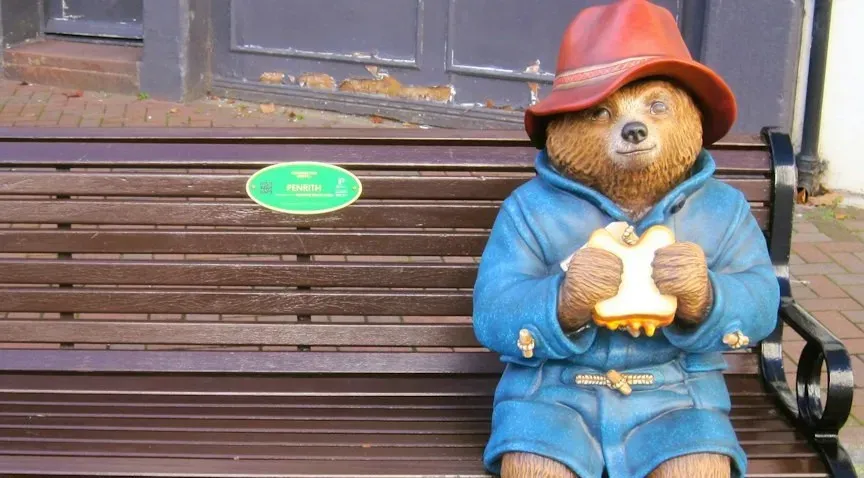
Before Ben Whishaw ever spoke a line as Paddington Bear, Colin Firth had already recorded significant material in the role. The production ultimately decided his voice, however accomplished, carried too much of his own recognizable screen presence for a small, polite bear from Peru. “It slowly just became clear that Paddington does not have the voice of a very handsome older man,” said director Paul King, and it was a “sad realisation that he simply doesn’t have my voice,” said Firth.
Whishaw’s replacement voice worked precisely because it didn’t carry the same weight of movie-star polish. Ben Whishaw, conversely, fitted like a snug duffle coat. The lesson from Paddington runs almost opposite to the usual “too normal” complaint. Here, a voice needed to sound more unassuming and less like a known leading man, proving that the standard for “right” can shift entirely depending on the character.
HAL 9000’s First Voice Was Too Human, Not Human Enough
Stanley Kubrick’s 2001: A Space Odyssey went through its own quiet recasting drama behind the scenes. Nigel Davenport was the first to voice murderous computer HAL 9000. His performance was competent, but something about it kept pulling attention in the wrong direction.
After a few weeks the ever-exacting Stanley Kubrick found his English accent too distracting and severed Davenport’s proverbial oxygen hose, and Canadian actor Douglas Rain was flown to Borehamwood for post-production. Rain’s flatter, more neutral delivery ended up defining one of cinema’s most chilling artificial voices. It is a striking example of how a voice that sounds too much like an actual person, with a placeable accent and personality, can undercut a character meant to feel unsettlingly blank.
Bob Belcher’s Voice Was Almost Too Familiar for Its Own Show
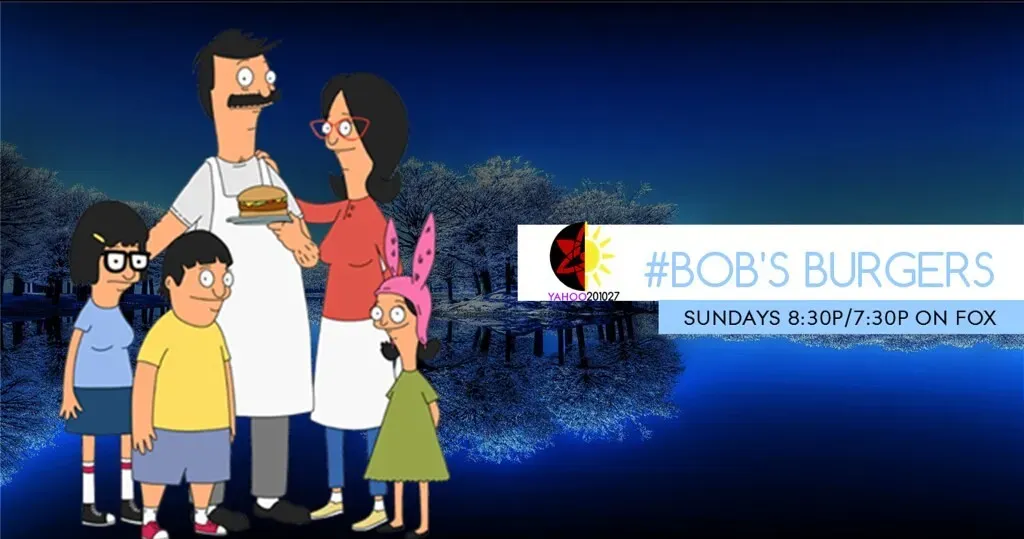
H. Jon Benjamin built his reputation on a distinctive deadpan baritone, first through Dr. Katz and Home Movies, then through Archer and Bob’s Burgers. The trouble was that both title characters, a globe-trotting secret agent and a mild-mannered burger shop owner, came out of the same mouth in almost the same register. Critics have praised the voice work and character of Bob, although many critics have compared him to Benjamin’s work in FX’s Archer, calling it distracting.
Rather than treating that overlap as a flaw to disguise, Benjamin has openly discussed leaning into it over the years. Benjamin admits he didn’t always sound like Bob, saying, “I didn’t sound like this at all 15 years ago. Now I talk like Bob.” The character eventually reshaped the performer’s own everyday speech, which says something interesting about how “normal” voices and long-running roles can blur into each other over time.
What Casting Directors Really Listen For Today
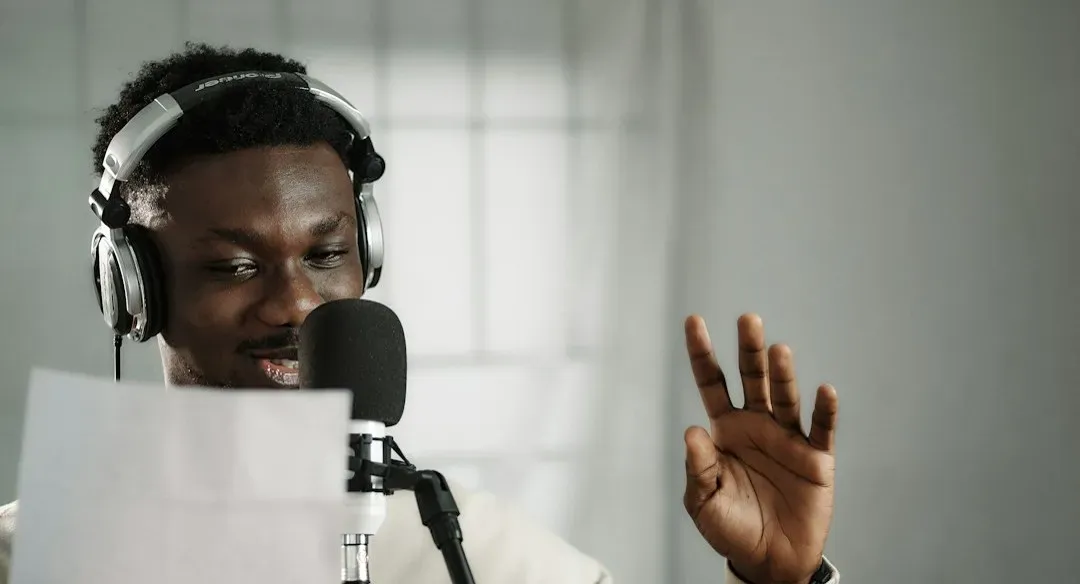
Industry professionals increasingly push back against the idea that a normal voice is a weak voice. David Goldberg, discussing casting standards on the Voices.com podcast, described authenticity as the real baseline for most commercial and narrative work. One of those things is when a voice actor is making sure that a voice actor sounds real, that they sound genuine, and with the exception of a few genres like animated work, character work and promos, typically casting directors are looking for voice actors who just sound authentic.
Goldberg went further, framing an unforced, natural delivery as the actual skill rather than a shortcoming. Casting directors are listening for voice actors who sound natural, authentic, and genuine, who don’t stretch their voices, don’t try to sound like everything to everyone, and are just themselves, because when someone sounds like themselves, it’s more believable to the listener. That framing flips the old assumption on its head. A “normal” sound, in this view, is not a lack of range; it is often the hardest thing to fake convincingly.
The Rise of “Girl Next Door” and “Guy Next Door” Casting
Part of what makes normal-sounding voices harder to place is that they used to be treated as a niche category rather than a mainstream preference. That has changed noticeably in commercial voiceover work, where relatable, everyday-sounding talent is now actively sought out rather than seen as a fallback option. That read, that real person sounding like you’re normal, the guy next door, has been around for a long time as a trend.
Advertisers, in particular, have leaned into this shift because audiences respond better to voices that don’t feel like a sales pitch. A performer who sounds like someone from the neighborhood, rather than a polished announcer, tends to build trust faster in a thirty-second spot. That trend has slowly filtered into animation and narrative work as well, narrowing the gap between what counts as a “commercial voice” and a “character voice.”
Disney’s Quiet Rule Against Manufactured Voices
Feature animation studios, once famous for prizing exaggerated vocal performances, have shifted their internal casting philosophy in recent years. Marci Liroff, a longtime producer and casting director, has described a preference at Disney for voices that stay close to an actor’s own natural sound. I cannot speak for other studios because I have only worked in animation at Disney, but I almost never hire someone to do a voice that is not their own or some slight variation thereof.
Jamie Sparer Roberts, the casting director behind Moana and Frozen, has echoed a similar standard for what feature animation auditions are actually judging. The casting directors who fill out the ensembles of these films look for potential in an actor’s normal speaking voice, and it takes more than just a robust voiceover résumé to catch their ear. That single sentence quietly overturns decades of assumptions about what makes someone castable in a cartoon.
Takako Sasuga and the Opposite Problem
Not every voice actor’s struggle runs in the direction of sounding too plain. Japanese voice actress Takako Sasuga built her early career largely on her natural speaking voice, which led to a different kind of doubt from industry insiders. Because most of these roles were performed with her natural voice, a recording staff member once told her, “You can’t play adult roles,” which troubled her for a time, but this became an opportunity for her to master such roles.
Sasuga has also spoken candidly about her own uncertainty over how her voice comes across. In 2012, she said in a conversation, “My voice is weird. The truth is, I am not good at listening to my voice, but I am responsible for the work I perform in and I always check them out.” Her career shows that being told your voice is “wrong” for a category, whether too young, too plain, or too distinct, is rarely the end of the story. It often just means the right role hasn’t come along yet.
Why Normal Is Becoming the Industry’s New Standard
Taken together, these cases point to a genuine shift rather than a handful of isolated anecdotes. Streaming animation, video game narrative design, and advertising have all moved toward grounded, conversational performances over broad theatrical ones, partly because modern audiences consume so much unscripted, casual audio content that anything too polished can feel artificial by comparison. Casting directors now often describe their job less as searching for the loudest voice in the room and more as finding the one that disappears convincingly into a character.
That doesn’t mean big, stylized performances are going away. Character work, animated comedy, and promo voiceover still reward range and exaggeration, and always will. Still, the idea that a “normal” voice is somehow less castable has clearly softened, replaced by a recognition that authenticity is its own difficult skill, one that many performers spend years learning to trust rather than disguise.
A Closing Thought
The stories collected here share a common thread: the voices that almost got dismissed as too ordinary often turned out to be the ones audiences remembered longest. Whether it was Dory’s unscripted-sounding rambles, Whishaw’s understated warmth in a duffle coat, or a performer whose real speaking voice slowly reshaped itself into a beloved television character, the pattern keeps repeating. Sounding normal, it turns out, might be one of the hardest and most valuable things a voice actor can do.