Hollywood loves a good comeback story, but it rarely talks about the flip side: the actors who showed up, ready to work, and were gone before the sun set. Some of these firings happened because of costumes that didn’t fit the vision, some because of physical transformations nobody approved, and one because a director simply looked at his star and thought, not quite right.
What follows are seven documented cases where the axe fell almost immediately after cameras started rolling. Some of these stories reshaped entire franchises. Others just became strange footnotes that actors still get asked about decades later.
1. Stuart Townsend, The Lord of the Rings: The Fellowship of the Ring

Stuart Townsend spent two months preparing for the role of Aragorn, training and rehearsing before heading to New Zealand for what he thought would be the start of a defining role. “I was there rehearsing and training for two months, then was fired the day before filming began,” Townsend told Entertainment Weekly. Director Peter Jackson had apparently grown concerned that Townsend looked too young for the weathered, battle-worn ranger the story needed.
Jackson moved fast, reaching out to Viggo Mortensen, who initially turned the role down before changing his mind. The actor was replaced by Viggo Mortensen, who flew to the set almost immediately to take over the iconic role. It’s one of the more famous recastings in film history, if only because it’s hard to picture anyone else wearing that cloak now.
2. Jean-Claude Van Damme, Predator

Before he became a martial arts headliner, Jean-Claude Van Damme was hired to play the creature stalking Arnold Schwarzenegger’s team in Predator. The action star was hired to play the titular creature in the science fiction movie Predator alongside Arnold Schwarzenegger, and he spent his first day on set in a heavy red suit that was used for early visual effects tests. The costume wasn’t just uncomfortable, it was, by his own account, humiliating.
Van Damme reportedly hated the costume and complained that he looked like a lobster rather than a lethal hunter. Beyond his complaints, the production had a practical problem on its hands. The production team also realized they needed a much taller performer to make the alien look imposing against the muscular cast, and he was fired within the first few days and replaced by Kevin Peter Hall.
3. Frank Sinatra, Carousel
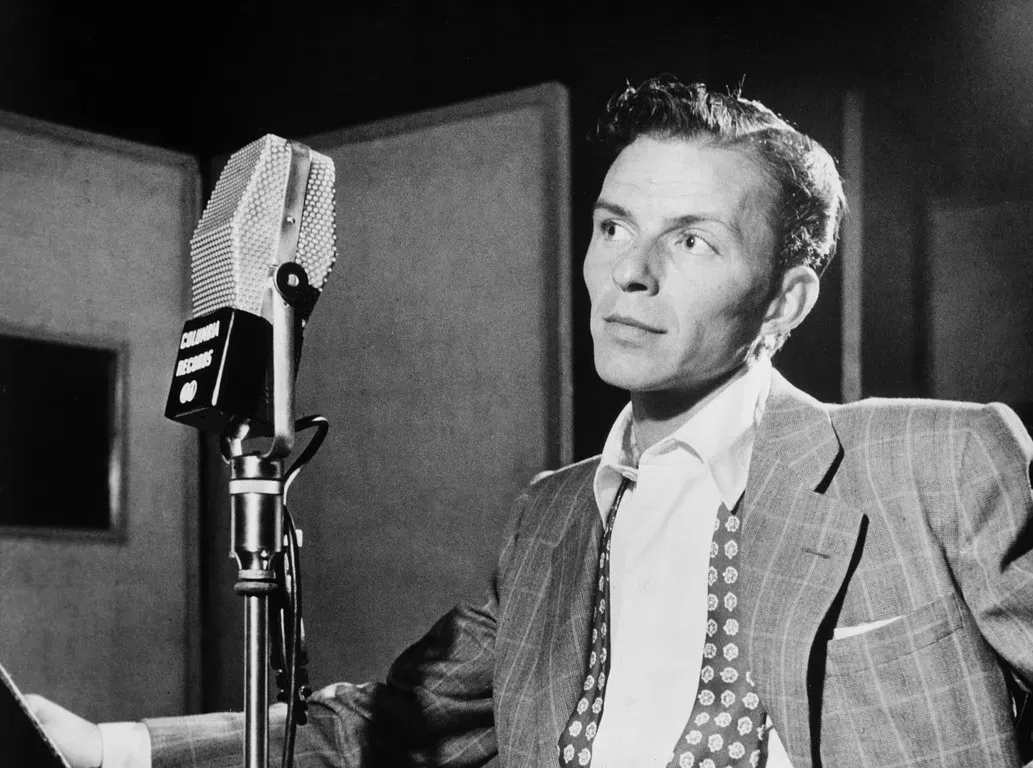
Frank Sinatra had rehearsed for months, pre-recorded his songs, and seemed genuinely excited about playing Billy Bigelow in the 1956 musical Carousel. Then he arrived on location in Maine for the actual shoot and discovered something he hadn’t planned for. The cast and crew had whiplash when Sinatra walked off the set the first day of filming on location in Maine, because due to the new Cinemascope 55 process, every scene was filmed twice, and he said it was like making two films.
Co-star Shirley Jones ended up on a payphone tracking down a replacement. Jones was asked to call Gordon MacRae, who was doing a nightclub act in Las Vegas, and she got him on the phone and told him the story, asking, “Gordon, would you like to play Billy Bigelow?” He said, “Give me a week.” There’s long been speculation that the real reason Sinatra bolted had more to do with his marriage to Ava Gardner than with camera setups, but either way, he never shot a single scene.
4. Ryan Gosling, The Lovely Bones
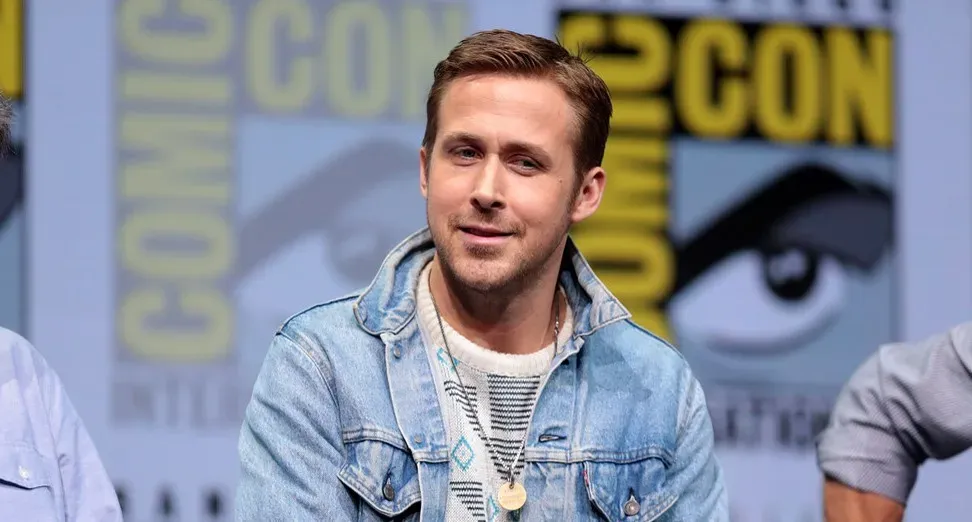
Ryan Gosling’s exit from Peter Jackson’s The Lovely Bones is one of those stories that sounds almost too specific to be invented. In preparation for his role as Jack Salmon, Gosling decided that the character should be overweight and bearded, and he gained 60 pounds by drinking melted ice cream, but he did not consult director Peter Jackson about this drastic physical transformation. Nobody signed off on the change, and it showed.
When Gosling walked onto set, the reaction was immediate. Jackson was reportedly unhappy with the actor’s appearance and creative choices, and Gosling was promptly fired from the project and replaced by Mark Wahlberg. Gosling later chalked it up to a simple mismatch in vision rather than any lasting grudge, which is a fairly generous way to describe losing a role on day one.
5. Harvey Keitel, Apocalypse Now

Harvey Keitel was Francis Ford Coppola’s original choice to play Captain Willard in Apocalypse Now, a role that would eventually define Martin Sheen’s career instead. The turnaround was startling by any Hollywood standard. The American actor was cast as the now famous character Benjamin Willard but didn’t make it through the first week of production.
Accounts differ slightly on the exact reasoning, ranging from a contract dispute to simple dissatisfaction with the performance. An April 2019 report states that the actor officially left the movie because of a “contract dispute,” along with the fact that Coppola halted production for three months to accommodate Brando. Whatever the true cause, Keitel was gone almost as fast as he’d arrived, and the film that resulted looked nothing like the one that was originally planned.
6. James Remar, Aliens

James Remar had already started filming key scenes as Corporal Hicks in James Cameron’s Aliens when his run on the project came to an abrupt halt. James Remar was cast as Corporal Hicks in the sci-fi sequel Aliens and had already begun filming several key scenes before he was fired by director James Cameron after just a few days of production following an arrest for drug possession. It wasn’t a creative disagreement or a costume issue this time, it was a legal problem that made continuing impossible.
Cameron needed a fast fix, and he found one close to home. The production had to quickly find a replacement to avoid costly delays in the high-budget shooting schedule, and Michael Biehn, who had worked with Cameron on The Terminator, was brought in to take over the role immediately. Interestingly, some of Remar’s original footage still exists in the finished film, tucked into wide shots where his face never comes into focus.
7. Thora Birch, Election

Before Reese Witherspoon became synonymous with Tracy Flick in Election, the role briefly belonged to Thora Birch. Director Alexander Payne apparently sensed early on that the casting wasn’t working the way he’d hoped. Thora Birch was the original choice to play the role of Tracy Flick in the satirical comedy Election, and director Alexander Payne decided to let her go after just three days of production because he felt she was not the right fit for the role.
Three days is a short window by most production standards, but it was long enough for Payne to know he wanted a different energy for the character. Witherspoon stepped in and delivered a performance that’s now widely considered one of the sharpest comedic turns of her early career. It’s a reminder that even a near-instant firing can, occasionally, lead to a much stronger final film.
These stories share a common thread: filmmaking decisions often get made faster and more bluntly than outsiders assume, and a role that looks secure on paper can vanish within hours of the cameras turning on. For every actor who lost a part this quickly, there was usually a replacement waiting just offstage, sometimes reluctantly, sometimes gratefully, who ended up shaping the film we actually remember today.