
Some records land the moment they’re released. Others sit quietly for years, ignored or misunderstood, until a new generation of listeners stumbles onto them and wonders how anyone missed the point the first time around. The albums below all shared that fate: dismissed, overlooked, or outright rejected on arrival, they eventually earned the devotion that now defines their legacy.
1. The Velvet Underground & Nico (1967)
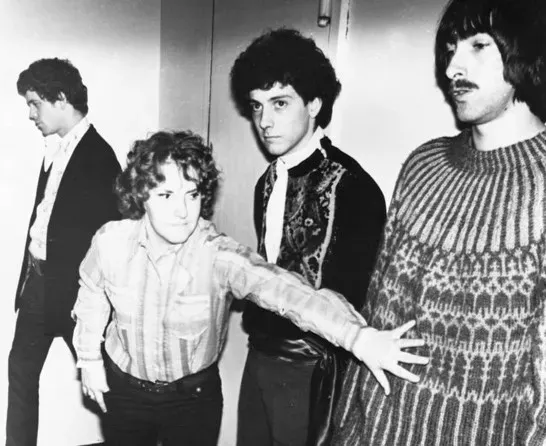
When The Velvet Underground & Nico came out in March 1967, almost nobody wanted it. Few people heard the record when it was released, and it would take years before anyone really paid attention to it. The album’s frank subject matter didn’t help its chances either, since its experimental performance sensibilities and controversial lyrical topics, including drug abuse, prostitution, sadomasochism and sexual deviancy, meant it sold poorly and was mostly ignored by contemporary critics.
The turnaround, when it finally came, was staggering. Brian Eno famously noted in a 1982 interview that the album sold only 30,000 copies in its first five years, but “everyone who bought one of those 30,000 copies started a band.” Decades later, the album is now considered one of the most influential rock albums of all time, receiving critical acclaim and eventually achieving platinum status in the UK.
2. Pet Sounds by The Beach Boys (1966)

Brian Wilson poured everything he had into Pet Sounds, hoping to make a statement that would rival what The Beatles were doing across the Atlantic. Instead, American audiences shrugged. The album initially received a lukewarm critical and commercial response in the United States, peaking at only number 10 on the Billboard 200. Things got worse when Capitol released a cheap cash-in compilation right after it, since the label found more commercial success with the Best of the Beach Boys compilation, which outsold Pet Sounds upon its release.
Britain saw it differently from the start, and the rest of the world eventually caught up. In the United Kingdom, the album was highly acclaimed by the music press and achieved immediate commercial success, reaching number 2 on the UK Top 40 Albums Chart. By the time critics revisited it decades later, the shift was total, with Rolling Stone calling it the second-greatest album of all time in 2012.
3. Pink Moon by Nick Drake (1972)

Nick Drake’s final studio album arrived with almost no fanfare, and Drake himself seemed to want it that way. Pink Moon, like Drake’s previous studio albums, did not sell well during his lifetime, and its stripped back, intimate sound received a mixed response from critics. The label wasn’t even confident it would find an audience, admitting in its own press materials that “his first two albums haven’t sold a shit,” while hoping someone authoritative would eventually stop and listen.
That someone eventually showed up, just not while Drake was alive to see it. Years after his death in 1974, a wider audience discovered the record, and long after his death, people took notice and Pink Moon posthumously went platinum. A television commercial helped seal the shift, since the title track was featured on the first Volkswagen commercial to appear on the internet, resulting in Nick Drake charting on the Billboard Hot 100 for the first time in 1999.
4. Radio City by Big Star (1974)

Big Star built a reputation as one of rock’s great might-have-beens, a band whose songwriting was never matched by its sales figures. Creative tensions, haphazard distribution, and marketplace indifference conspired to ensure Big Star’s brief existence and commercial failure, though the group’s three studio albums nevertheless remain unqualified classics. Radio City, the second of those albums, suffered the same distribution problems that had already sunk its predecessor, leaving a genuinely strong record stranded with almost no way to reach listeners.
What Big Star lacked in radio play, it eventually made up for in influence. Musicians who came up in the decades after kept citing the band as a touchstone, and that slow trickle of word of mouth is largely how Big Star remains one of the most mythic and influential cult acts in all of rock and roll. The commercial failure that once looked like the end of the story turned into the very thing that made the band’s catalog feel like a discovery worth passing along.
5. Pinkerton by Weezer (1996)

Few reversals of fortune in rock history are as dramatic as this one. When Pinkerton dropped in 1996, following the massive success of Weezer’s self-titled debut, the anticipation and hype reached a fever pitch, Pinkerton finally came out, and everybody hated it, since the band had made a bold departure from the clean, power-pop sound of its first record to a much rawer, more emotional feel, and it hadn’t paid off. The commercial numbers backed up the cold reception, with the record debuting at number 19 on the US Billboard 200, failing to meet sales expectations. Rolling Stone’s own readers didn’t hold back either, voting it the third worst album of 1996.
The reassessment took years to build but eventually became one of the more complete critical reversals in modern music writing. The album was vindicated in the end, coming to be a cult favorite and now frequently touted as their best album, with even Rolling Stone magazine retracting and rewriting their review eight years after the album’s release. Certifications followed the changed reputation too, since Pinkerton went on to be certified gold in 2001 and platinum in 2016.
6. Loveless by My Bloody Valentine (1991)

Loveless is as famous for its production saga as for its music, and both stories deserve attention. Kevin Shields spent roughly two years chasing a sound nobody else had made before, and the album’s development pushed Creation Records to the brink, since though the costly album was received well by critics, it didn’t do well commercially, and Creation dropped the band from the label, contributing to the financial woes that the company was suffering from at the time. Working through seventeen producers from 1989 to 1991 only added to the sense that this was an album built through sheer stubbornness rather than any clear commercial plan.
What emerged from that chaos eventually reshaped an entire genre. Original pressings became prized collector’s items, and the LP became a cult album, with original copies of Loveless going for hundreds online until renewed interest in the album and genre led to Domino repressing it in 2021. Its fingerprints are still audible in guitar music made today, since the album is now considered the genre’s seminal release, heavily influencing the alternative music that followed, from Radiohead to Bdrmm.
7. In the Aeroplane Over the Sea by Neutral Milk Hotel (1998)

Neutral Milk Hotel’s second album didn’t flop outright when it came out in 1998, but it also didn’t make much noise beyond a small circle of listeners. Contemporary reviews were moderately positive, and over time the album developed a cult following. Frontman Jeff Mangum struggled with the attention that eventually did arrive, and as the band became more well known and started touring more, it negatively affected Mangum, whose mental health began to deteriorate, and he eventually withdrew from touring, sending Neutral Milk Hotel into hiatus shortly after.
The band’s absence, paradoxically, only fed the album’s mystique in the years that followed. File sharing and word of mouth carried it to listeners who’d never had the chance to hear it on release, and it steadily climbed best-of lists it had no shot at making back in 1998. Today it’s routinely described as a landmark album for indie rock and one of the best records of its era, a reputation built almost entirely after the fact. Taken together, these seven records make a quiet case against trusting first impressions too much. Commercial charts and initial reviews capture a moment, not a legacy, and sometimes it takes years, or even a death, a viral commercial, or a changing genre, for an album to find the audience it was actually made for. That’s not really a flaw in how music gets made. It’s just a reminder that greatness doesn’t always announce itself on schedule.