There was a time when a movie studio could take a calculated gamble on something genuinely new. A story nobody had heard, a director with a wild idea, a cast of unknowns. Sometimes those bets paid off spectacularly. Today, the calculus has shifted in a very different direction, and the results are visible on every multiplex marquee in the country.
The modern Hollywood formula is no longer a secret. It runs on established intellectual property, franchise extensions, data analytics, and a deep institutional fear of the genuinely unfamiliar. Some of this makes rational sense. Some of it is quietly hollowing out the kind of cinema that made the industry worth caring about in the first place.
The IP Machine: When Familiar Sells Better Than New
Between 50 and 70 percent of movies from the six major studios, Universal, Disney, Warner Bros., Paramount, Sony, and Lionsgate, are now tied to existing intellectual property. That figure has been growing steadily for years, and it reflects a simple but powerful logic: audiences gravitate toward names they already trust.
As consumers have become more discerning about how they spend their disposable income, studios have leaned heavily into sequels, prequels, and remakes. This has been particularly pronounced in animation, with recent examples including Inside Out 2, Despicable Me 4, and Kung Fu Panda 4. The movie industry is firmly entrenched in a franchise-driven model, with a clear strategic pivot toward leveraging established intellectual property to ensure box office success and audience engagement.
The Numbers Behind the Strategy

In 2019, 58 franchise films earned nearly $23 billion at the worldwide box office, more than four times what 80 non-franchise films brought in. Franchise releases, representing roughly 42 percent of wide releases, captured about 82 and a half percent of total worldwide box office revenue. The financial case for repetition is, on paper, essentially airtight.
Successful franchise films average a return of about three times production investment, compared to roughly 1.8 times for original films. Major franchise films typically cost more than $200 million to produce and an additional $150 to $250 million for global marketing. When those numbers are on the table, studio executives reach for the familiar almost by reflex.
Franchise Fatigue Is Now a Real Problem

For a decade, critics and industry observers asked when the superhero bubble would burst. In 2025, it didn’t exactly burst, but it slowly deflated. The year made painfully clear that complex multiverse storylines have alienated general audiences who are tired of doing homework before buying a ticket.
More worrisome for theater owners and studio chiefs is the reality that many of the movie business’s biggest franchises are now showing signs of oversaturation or fatigue. Films like Avatar: Fire and Ash, Wicked: For Good, and Jurassic World Rebirth all ranked among the top earners of 2025, yet each failed to match the revenues of previous installments in their respective series. The theatrical industry clearly cannot thrive on sequels and spinoffs alone.
The Box Office Still Hasn’t Fully Recovered
Rather than heralding a dramatic return to moviegoing, 2025 ran neck-and-neck with the middling 2024 box office, falling far short of the nine billion dollars in domestic ticket sales most analysts expected the industry to easily clear. Prior to the pandemic, North American revenues regularly hit between ten and eleven billion dollars. The 2025 results were, by any honest measure, a massive disappointment.
The box office is recovering from the pandemic and the labor strikes, but slowly. The domestic box office finished 2025 down roughly 23 percent from pre-pandemic levels. The domestic box office reached $8.6 billion in 2025, with projections pointing toward $9.8 billion in 2026. The global box office is projected to surpass $35 billion in 2026, with international markets playing an increasingly important role.
The Global Shift: International Markets Are Rewriting the Rules
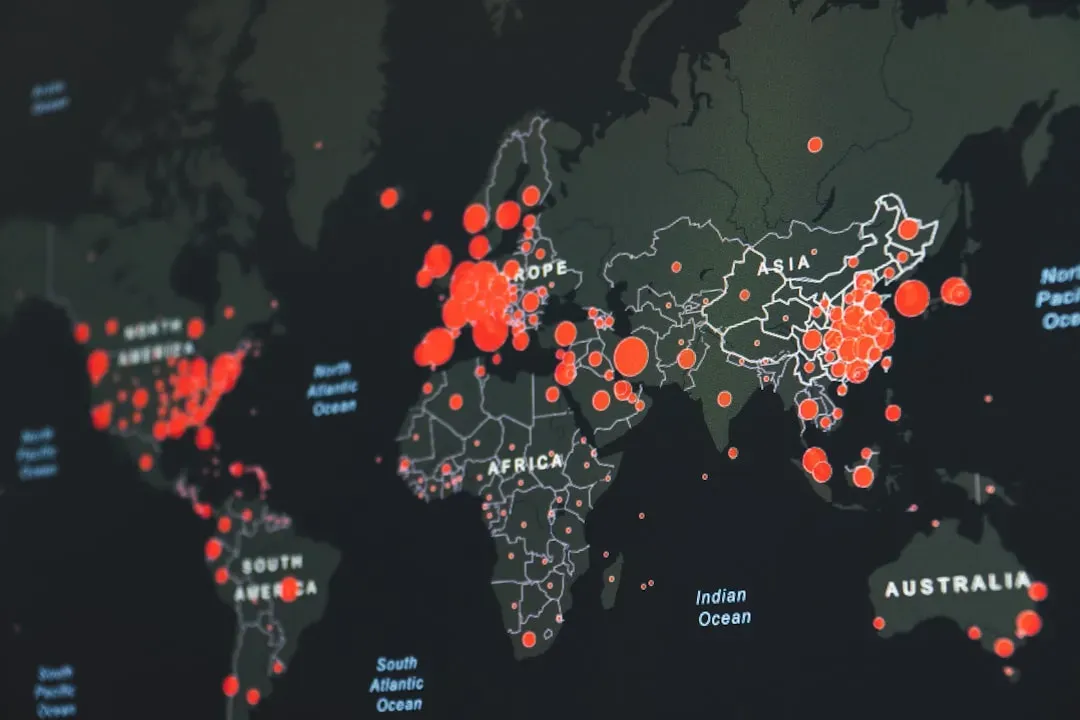
The year’s most extraordinary story belonged to Ne Zha II, a Chinese animated sequel that released on the first day of the Lunar New Year. Virtually on the strength of the Chinese market alone, it catapulted past the $2 billion mark by early March, becoming the first animated film, the first non-Hollywood film, and only the second film since 2020 to do so.
Studios are increasingly concentrating their financial stakes in massive, established IP rather than new discoveries. China has largely collapsed as a reliable foreign market for American films, while other developing countries have continued to grow and replaced much of China’s earlier contribution. The global map of cinema is being redrawn, and Hollywood no longer controls all the key territories.
The Algorithm Has Entered the Writer’s Room

Studios have begun using AI to evaluate scripts and predict a project’s success. Warner Bros., for example, partnered with Cinelytic’s AI platform to forecast box office performance and support decisions about which movies to greenlight. These systems analyze historical data and audience trends to offer data-driven guidance on what stories might resonate.
Studios are increasingly using AI to analyze scripts, predict audience reactions, and even suggest narrative adjustments. Writers’ rooms across Hollywood now experiment with AI-powered tools that scan millions of storylines to forecast which themes resonate globally. This reliance on data-driven storytelling has raised concerns about predictable plotlines. Critics have labeled many resulting films as derivative, and audiences have begun to feel they are watching variations of the same story.
The Vanishing Middle: What Happens to Original Films
The middle market is shrinking rapidly, as films must now be either massive spectacles or highly targeted niche hits to survive. Streaming hasn’t killed cinema, but it has redefined it. Many moviegoers now reserve trips to the theater for films that feel communal, spectacular, or emotionally event-driven. That means mid-budget adult dramas, comedies, and original genre pieces face a steeper uphill climb than ever before, regardless of quality.
Smaller, more adult-oriented films have continued to suffer from limited marketing support and audience hesitation. In many cases, these films find second lives on streaming platforms, but their theatrical struggles raise serious questions about whether cinemas can remain a home for mid-budget storytelling. While franchise films dominate, there are still notable original films from acclaimed filmmakers scheduled each year, though dramas and comedies continue to struggle with a few exceptions.
When Originals Break Through, It Still Matters

The occasional filmmaker-driven original can still surprise everyone. Ryan Coogler’s Sinners and Zach Cregger’s Weapons emerged as the most exciting original horror films of 2025, while established fright franchises like Final Destination Bloodlines delivered series highs at the box office. The lesson seems to be that voice and vision can still cut through the noise, just not as reliably or as often as they once did.
Horror films have experienced a remarkable renaissance, consistently overperforming with modest budgets and strong word-of-mouth. Original science fiction concepts are attracting the creative talent that might once have been absorbed into superhero franchises. Biographical dramas and musical adaptations are also seeing renewed interest from both filmmakers and audiences. The genre is diversifying in small but meaningful ways, even as the largest budgets remain tied to existing brands.
The Theater Experience Is Evolving, Whether Studios Like It or Not
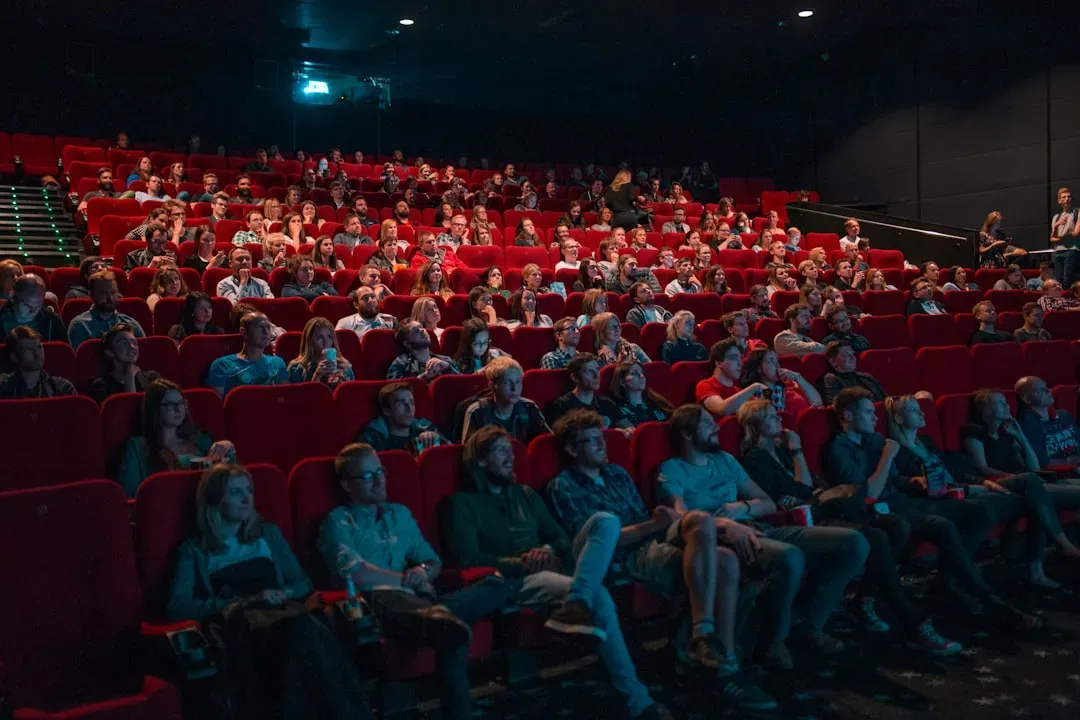
Consumers are visiting theaters less frequently but spending more per visit on the total experience, including premium formats like IMAX and large-format screenings. The average theatrical-to-streaming window for major releases sat at 45 days in 2025. That compressed gap has reshaped when and why people choose to leave the house for a film at all.
What has theater owners and some studio chiefs most concerned is what the future holds if Netflix secures government approval for its deal to acquire Warner Bros. Netflix co-CEO Ted Sarandos has already hinted that theatrical windows are too long. For cinemas, that scenario amounts to nothing short of an existential threat.
Hollywood’s Workforce Is Paying the Price
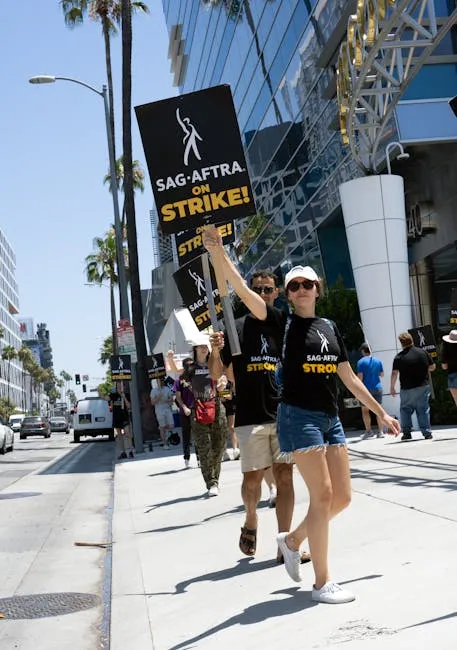
With roughly 17,000 industry jobs lost in 2025 alone, a barely-rescued box office result, and a looming merger between Netflix and Warner Bros., the structural changes are difficult to ignore. The rise of streaming media and the impact of the pandemic significantly changed the film landscape in the 2020s, with analysts still disagreeing about whether decreased cinema attendance will make Hollywood more reliant on blockbusters or will instead favor smaller films.
After the 2023 to 2024 strikes, SAG-AFTRA introduced provisions requiring consent and compensation for AI-generated likenesses. Job displacement remains a primary concern, necessitating robust labor protections and retraining initiatives for roles vulnerable to automation. The workforce that builds these blockbusters is being asked to adapt at a pace that few industries have ever demanded of their workers.
What Comes Next: A Formula Still Looking for Its Future
The lessons of the current era are increasingly clear to those inside the industry: budgets must come down, and intellectual property alone is not a safety net. As the industry prepares for the next wave of releases, it is leaner, more cautious, and perhaps finally ready to innovate again.
Films like Avengers: Doomsday could either re-ignite Marvel’s box office dominance or confirm that the era of guaranteed billion-dollar superhero hits is over. Their performance will likely act as a referendum on franchise fatigue and audience trust. Studios are spacing out releases, investing in better scripts, and allowing filmmakers more creative freedom. This shift benefits both creators and audiences, opening doors for original stories that might have been overlooked during the peak franchise years.
The blockbuster formula isn’t broken, exactly. It still generates enormous sums of money and still fills seats when the conditions are right. What it can no longer do is guarantee those outcomes with anything like the certainty studios once assumed. That uncertainty, quietly spreading through every production meeting and greenlight conversation in town, may end up being the most consequential development in Hollywood in a generation.