Every casino in Las Vegas is designed without clocks or windows. You’re not meant to know what time it is. Instagram works the same way. The feed never ends, the lighting is always flattering, and someone is always having more fun than you are. That manufactured atmosphere, the illusion that life elsewhere is perpetually glamorous, has become one of the defining psychological tensions of our time. Social comparison isn’t new. Humans have always measured themselves against others. What’s new is the scale, the speed, and the extraordinary polish of the content doing the comparing for us.
The Feed That Never Sleeps: How Instagram Became a Comparison Machine
Instagram now boasts over 2.3 billion active users. At that volume, the platform doesn’t just reflect culture; it reshapes it. Every scroll is an implicit ranking exercise, a silent appraisal of who’s traveling where, whose body looks how, and whose life seems fuller.
One key mechanism through which social networking sites may affect wellbeing is social comparison. The term has its roots in a 1954 theory by psychologist Leon Festinger, who argued that humans have a fundamental drive to evaluate themselves relative to others. Instagram didn’t invent this impulse. It simply industrialized it.
Image-centric platforms such as Instagram have been identified as particularly detrimental, linked to feelings of inadequacy, anxiety, and fear of missing out (FOMO). The constant stream of curated content creates a kind of ambient pressure that’s difficult to name but easy to feel.
Upward vs. Downward: The Direction of the Comparison Matters

One mental health outcome frequently linked to social network use is self-esteem. The suspected effect of social media on self-esteem may stem from the myriad opportunities for upward social comparisons, comparing oneself to someone perceived as superior, that these platforms offer to users. This is the “Vegas effect”: a highlight reel sold as everyday life.
Research showed that self-esteem and body-esteem scores significantly increased after downward comparison, with no change following a neutral condition. Body-esteem scores significantly decreased after upward comparison, while self-esteem scores did not. The direction of comparison, in other words, is far more consequential than the mere act of comparing.
Results revealed that upward comparisons mediated the association between Instagram use and lower global self-esteem. What you’re looking at matters as much as how long you’re looking at it.
The “Instagram vs. Reality” Phenomenon: When Exposure Goes Both Ways
One recent trend on Instagram consists of posting “Instagram vs. reality” images containing side-by-side photographs of the same woman, one an idealized depiction and the other a more natural depiction. These posts emerged partly as a counterculture response to the relentless parade of perfection on the platform.
Viewing “Instagram vs. reality” and real images resulted in decreased body dissatisfaction relative to the ideal images. Furthermore, the detrimental effects of appearance comparison were much less marked for the “Instagram vs. reality” and real images than for the ideal images. Transparency, it turns out, has a measurable protective effect.
It was concluded that “Instagram vs. reality” and real posts have the potential to bolster women’s body satisfaction, but more research is needed to assess their longer-term impact. The short-term benefits are real, even if durability remains an open question.
Body Image Under the Filter: What the Research Actually Shows
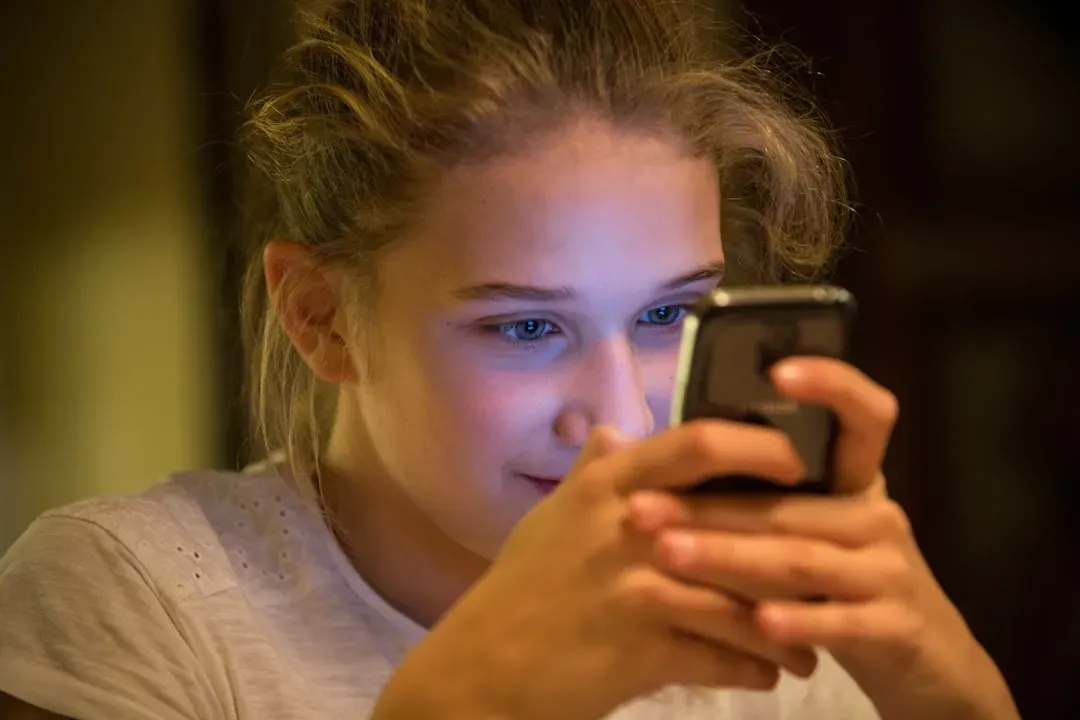
Research from 2025 shows that nearly half of teen girls say social media makes them feel worse about their body image. For boys, that number is roughly a third, but it’s rising. These aren’t abstract statistics. They represent millions of young people forming their sense of self through a heavily curated lens.
Internal research from Meta, leaked in the “Facebook Files,” showed that roughly a third of teen girls said Instagram made them feel worse about their bodies, and the company knew it. The platform had internal evidence of harm and continued operating as designed.
It was found that visual platforms such as Instagram were more dysfunctional for body image than more textual platforms such as Facebook. The image-first architecture of the platform isn’t incidental to this problem. It is the problem.
Passive Scrolling vs. Active Posting: A Distinction Worth Making

Passive social network use is essentially browsing large amounts of “positively biased” information from social networks. During browsing, a large amount of information inevitably triggers users to engage in upward social comparison behaviors, leading to negative and depressive emotions. Scrolling through someone else’s highlight reel without interacting is a uniquely one-sided experience.
Research has found that when jealousy and upward social comparison are introduced as sequential mediators, passive social media use has a significant positive impact on depression levels. The sequence matters: you see something, you feel behind, you feel envious, and the mood follows.
Research found that a high frequency of posting on social media was associated with increased mental health problems a year later. However, there was no similar association based on the frequency of viewing social media content. This provides evidence that some types of active social media use, such as posting, have a stronger link to mental health outcomes than some types of passive viewing. The picture is more complicated than a simple “less is more” prescription.
Partner offer
The Influencer Economy and the Business of Aspiration
The influencer marketing industry is set to grow to $22.2 billion in 2025, and the global creator economy is projected to grow from $191 billion in 2025 to over $528 billion by 2030. The scale of this industry means that aspirational content isn’t a side effect of social media. It’s the core product.
An influencer curates an image of themselves and their lifestyle to sell products or services or build brand loyalty. The Vegas analogy holds up here too: every post is a performance with a financial incentive behind it, carefully designed to look effortless.
Only about 2 million people work as full-time creators globally, and just roughly 4 percent earn more than $100,000 per year. The lavish lifestyles presented to hundreds of millions of followers represent a genuinely tiny minority of those who even attempt to build an audience. Most of the “Vegas” is theater.
Teenagers in the Algorithm: A Particularly Vulnerable Audience

Roughly 95 percent of teens use social media, with 1 in 5 saying they’re on it “almost constantly.” Teens who spend more than 3 hours daily on social platforms have double the risk of experiencing mental health problems like anxiety and depression. The sheer time exposure is part of what makes this developmental period so consequential.
Back in 2015, about a quarter of teens said they were online “almost constantly.” By 2025, that number jumped to 35 percent. The intensity of engagement has shifted substantially even while raw usage numbers have plateaued.
The accessibility of social media to teens is a large contributor to the development of body image issues because the exposure to unrealistic content is seen as reality by teens’ developing brains. That’s the crux of the problem. These are not simply aesthetic preferences. They’re foundational beliefs formed during a critical window.
The Context-Dependency Problem: Why Simple Answers Don’t Fit
Recent work suggests that the relationship between social network use and wellbeing is highly context-dependent and may vary based on user motivations, content type, and platform engagement styles. The question “is Instagram bad for you?” turns out to depend enormously on who you are, what you’re watching, and why you’re there.
While the effects of social network use are unlikely to be entirely negative, a substantial body of research suggests a strong association with poorer mental health outcomes. The nuance here is real. Dismissing all concern as moral panic is wrong, but so is treating every scroll as a clinical risk.
Contrary to what much of the prior literature suggests, some research has found that frequency of Instagram use was a significant positive predictor of both global and physical self-esteem. The science is still evolving, and honest uncertainty is a more accurate position than a tidy verdict.
The Body Positivity Counter-Movement: Partial Progress

A meta-analysis found that body-positive content improves body satisfaction and emotional well-being immediately, especially when highlighting diverse representations and self-acceptance. Longitudinal studies reported sustained improvements in body satisfaction with consistent exposure. The counter-movement is producing real, measurable effects, even if mainstream content still skews heavily toward idealized imagery.
A 2022 study on the effects of body-positive Instagram posts found that adult women exposed to body-positive content on social media experienced an overall increase in body appreciation and satisfaction. The study followed more than 200 women as they interacted with body-positive, neutral, or thin-ideal content. Those exposed to body-positive messaging demonstrated overall positive shifts in their body image and beliefs about their appearance.
Visual platforms reinforce unrealistic beauty standards, contributing to body dissatisfaction and mental health issues such as anxiety and eating disorders. Movements like body positivity advocate for diverse body acceptance and challenge these ideals, yet questions remain about its long-term efficacy in reshaping body image perceptions. Progress and persistence of harm appear to be happening simultaneously.
What You Can Actually Do About It: Evidence-Based Responses
A 2024 JAMA Pediatrics study found that reducing usage to 30 minutes daily decreased depression symptoms within three weeks. That’s a notably short intervention window for a measurable shift, and it suggests the psychological effects of heavy use are more reversible than they might feel in the moment.
Research from the UK ranked Instagram as the worst platform for young people’s mental health, primarily due to its focus on appearance and lifestyle comparisons. Being intentional about which platform you’re on and what you’re there for is not a trivial decision, particularly for younger users.
Findings suggest that algorithmic, visually curated feeds coupled with upward comparison may elevate anxiety. Implications include integrating brief social media comparison checks into clinical encounters, and culturally tailored media-literacy efforts to reduce exposure to highly idealized content. Structural awareness, knowing the game being played, is a genuine protective factor.
Conclusion: The Gap Between the Feed and the Floor

Partner offer
Planning a trip to Vegas?
Compare hotel rates and show tickets on VEGAS.com.