Most people who own vinyl records think of them as music. A few think of them as nostalgia. Collectors, on the other hand, know that the right pressing of the right album is something closer to a financial asset – one that can quietly appreciate in a crate for decades without anyone noticing.
Vinyl records have become legitimate collectibles, with rare pressings routinely selling for thousands of dollars at auction. In 2025, vinyl sales in the United States exceeded $1.2 billion for the fourth consecutive year, and the market for rare and vintage pressings has never been stronger. The question worth asking isn’t whether your collection has value. It’s whether you know how to look for it.
The Beatles “Yesterday and Today” – The Butcher Cover
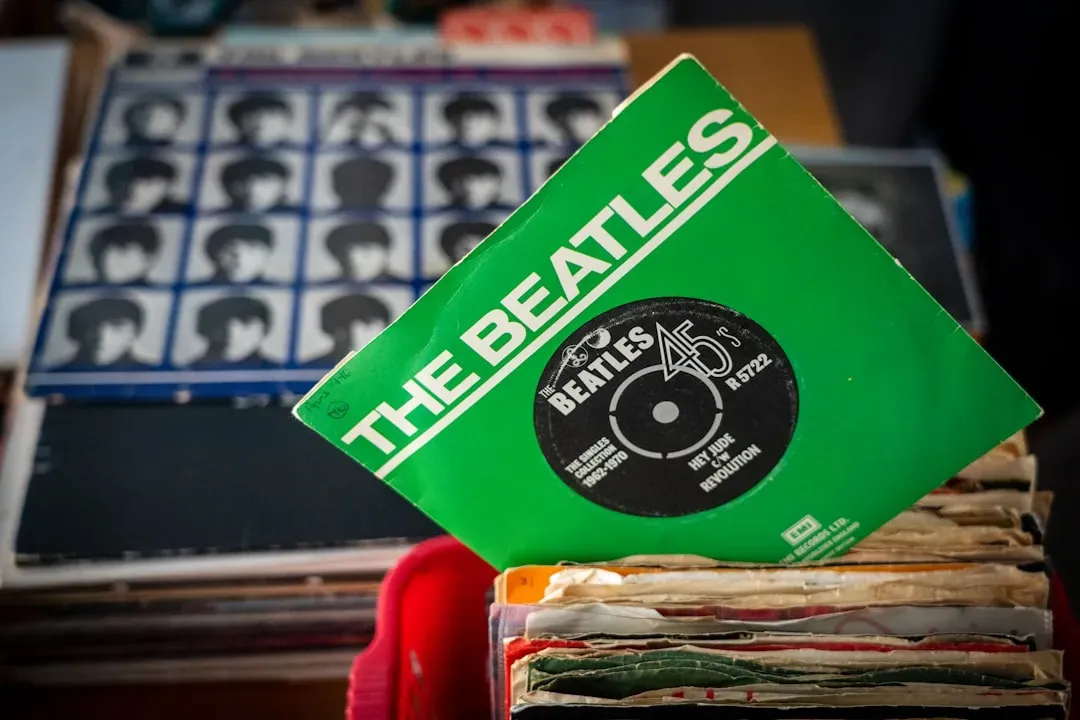
Yesterday and Today is remembered primarily for the controversy surrounding its original cover image, nicknamed the “butcher cover,” which depicted the band wearing white butcher smocks and covered with decapitated baby dolls and pieces of raw meat. This imagery caused an immediate backlash, and Capitol Records quickly recalled the album and replaced the cover with a more conventional image of the band around a trunk.
The original issues of Yesterday and Today, which never had the trunk slick pasted over them, are among the most valuable and sought-out albums in all of record collecting. While 750,000 of them were printed, most were either destroyed or had trunk cover slicks pasted over them. In the end, only a few hundred examples of these first issues survive today. Among collectors, this version is known as a “First State” issue. Original first-state mono copies remain the most sought-after Beatles collectible, with sealed copies selling for over $125,000. Even peeled copies, where the paste-over was removed, command between $10,000 and $25,000.
Authentic copies will have the correct Capitol Records labels and catalog numbers – T 2553 for mono, ST 2553 for stereo – and genuine pressings will have unique serial numbers etched into the run-out grooves. Only one out of every ten pressings of Yesterday and Today was a stereo pressing, making them worth more than twice as much as their mono counterparts. The stereo pressings have a banner across the top of the front cover slick that reads “New Improved Full Dimensional Stereo.”
Prince – The Black Album (Original 1987 Pressing)
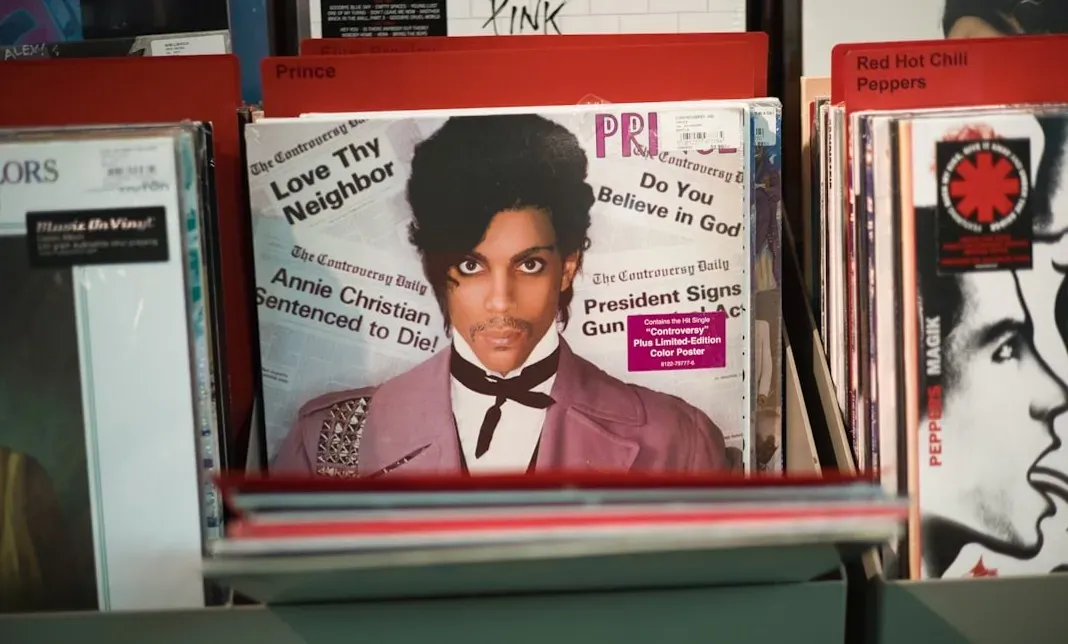
Prince attempted to reclaim and destroy all 500,000 copies of The Black Album back in 1987, just days before its scheduled release. Today, original copies of The Black Album are among the rarest vinyl records you can find, and it’s not even known how many copies are still out there. Almost all that have been sold were promo copies that had already been sent to journalists and radio stations.
Only one non-promo copy has ever been sold. It was saved by a rogue employee at the Canadian pressing plant, making it the only non-promo and Canadian copy known to exist. A sealed copy of The Black Album has sold for $27,500. The Black Album was eventually re-released on vinyl when Prince himself put it out on CD and cassette in 1994, but that hasn’t made original pressings any less valuable.
Led Zeppelin – Self-Titled Debut with Turquoise Lettering

The first pressing of Led Zeppelin’s 1969 debut on Atlantic Records featured turquoise lettering on the cover instead of the more common orange. Turquoise-lettered copies in excellent condition sell for $2,000 to $8,000. The distinction is easy to miss at a glance, which is exactly how these copies end up in unsorted collections and second-hand bins without anyone realizing what they’re holding.
The mastering engineer for Led Zeppelin II, Robert Ludwig, created a limited pressing on the first batch of albums. These “RL” copies – with the initials found in the dead wax – are superior in every sense. A Led Zeppelin II with “RL” in the dead wax is known as the “hot mix” and is one of the most sought-after rock records in existence. So if you own either of the first two Zeppelin albums, it’s worth pulling them out and checking both the cover lettering and the dead wax before assuming they’re ordinary.
Blue Note Jazz Records – First Pressings with the Deep Groove Label
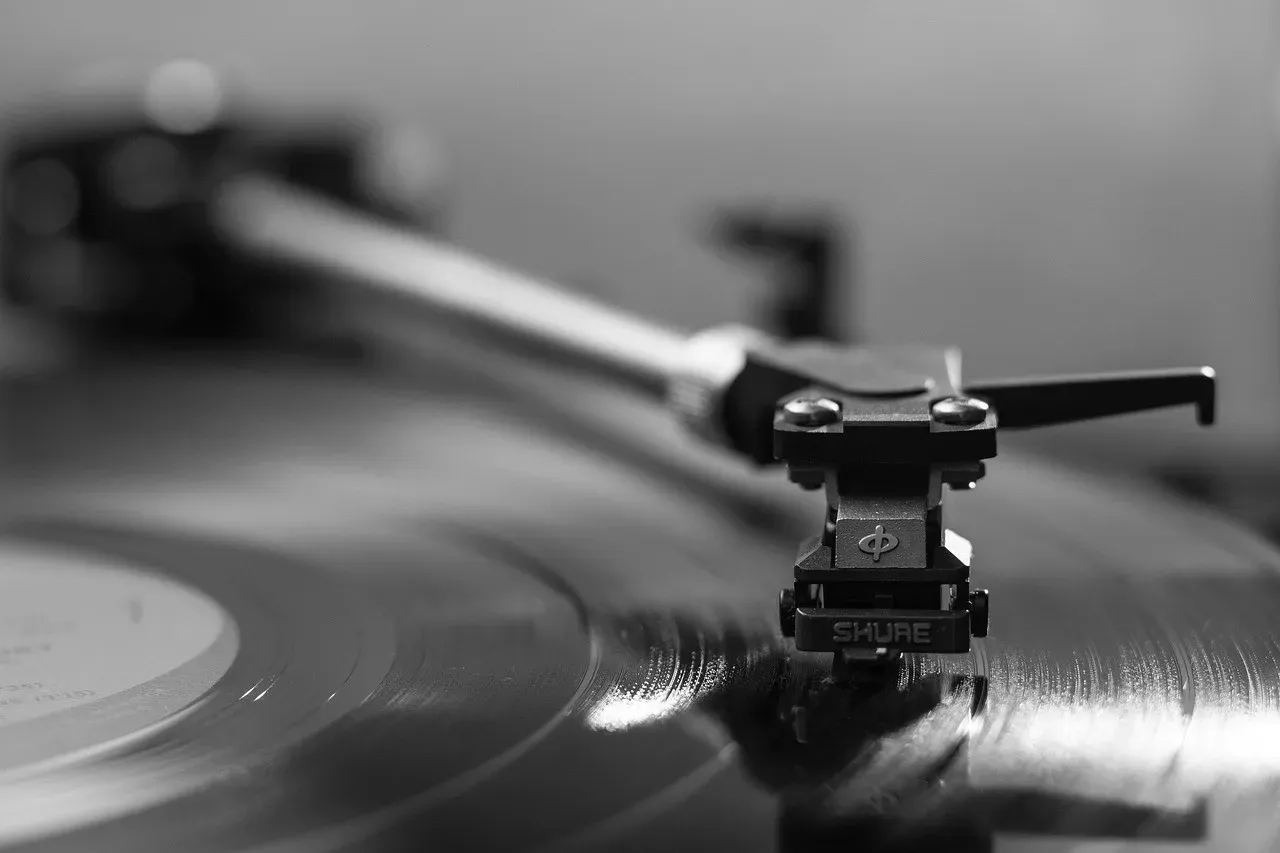
Original jazz and blues pressings from the 1950s and 1960s represent some of the most consistently valuable records across all genres. Blue Note first pressings with the famous “deep groove” label design and ear-shaped Van Gelder stamp in the dead wax are highly prized by audiophiles and collectors alike. These aren’t always the flashiest records in a collection, but they tend to be among the most financially significant.
A first pressing of John Coltrane’s “Blue Train” (BLP 1577) in Near Mint condition can fetch $3,000 to $5,000. A small cursive “P” – sometimes looking like an ear – on Blue Note jazz records indicates the Plastylite plant, which is a major value signal for collectors. Mastering initials like RVG, short for Rudy Van Gelder, are equally important to look for. Blue Note records with “47 West 63rd NYC” on the label are earlier and more valuable than those bearing “New York USA” or “Liberty Records.”
The Sex Pistols – “God Save the Queen” on A&M Records (1977)
A&M Records signed the Sex Pistols outside Buckingham Palace in March 1977 and pressed 25,000 copies of “God Save the Queen.” Six days later, after multiple band incidents at the A&M offices, the label dropped them and destroyed the entire pressing – except for approximately nine copies that survived as test pressings, promos, and smuggled-out singles. Each one carries the A&M label and matrix codes that distinguish it from the Virgin reissue.
A near-mint copy has sold for approximately $20,000. The critical thing to understand is that “first pressing” alone is not enough – it has to be a rare first pressing with specific matrix codes. If you happen to own a copy of this single and it has the A&M label rather than Virgin, it deserves immediate professional verification. The difference between the two labels is the difference between a curiosity and a collector’s holy grail.
How to Check What You Actually Have – Reading the Dead Wax
The dead wax – also called the runout groove – is the smooth, ungrooved area between the final track and the record label. This section contains etched or stamped information added during manufacturing, and collectors often call it a record’s “fingerprint” because it uniquely identifies that exact pressing. It’s easy to locate once you know where to look: hold the record under good light and look at the smooth area just before the label. You should see small letters or numbers etched or stamped into the vinyl, and tilting the record slightly can make faint markings easier to read.
First or early cuts often feature patterns like A1/B1, 1A/1B, or -1/-1 on each side, while later recuts move to higher letters or numbers. When examining the dead wax, look for extra marks including mastering engineer initials such as RL, BG, or PORKY, which must match what is listed for a particular pressing. Verifying authenticity means avoiding counterfeits by comparing prices across Discogs, Popsike, and eBay using completed sales rather than active listings. The most valuable records combine three factors: cultural significance, scarcity, and condition – and the record itself, not the sleeve, is the only reliable source for confirming which pressing you have.