
Some directors build careers over decades. Others make one feature and leave behind a work that people keep arguing about, studying, and rewatching long after the credits roll.
The seven names below each directed a single feature film, and each film has held its place in cinema history. I’ve stuck to details I’m confident about, and I haven’t leaned on recent statistics, since this is a story of finished careers rather than shifting numbers.
Charles Laughton and The Night of the Hunter
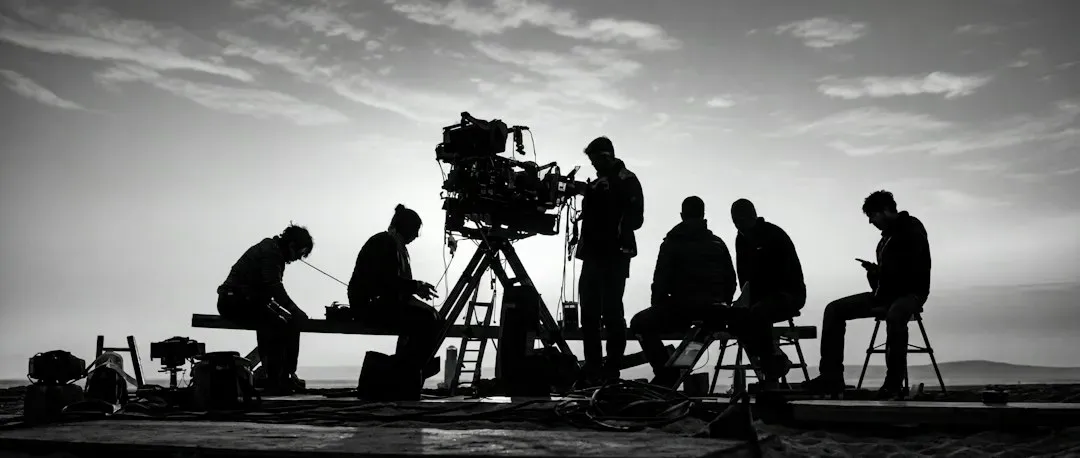
Charles Laughton was already a celebrated actor, with an Academy Award for The Private Life of Henry VIII, when he directed The Night of the Hunter in 1955. The film stars Robert Mitchum as a murderous preacher who hunts two children for hidden money. It is based on the novel by Davis Grubb, with a screenplay by James Agee.
It flopped at the box office and received a mixed reception on release. Laughton never directed again. Critics have since reappraised it as a masterpiece, and its shadowy, expressionist look still influences filmmakers today.
Marlon Brando and One-Eyed Jacks
Marlon Brando took over directing One-Eyed Jacks in 1961 after Stanley Kubrick left the project. The Western casts Brando as a bank robber looking for revenge on his former partner, played by Karl Malden. Production ran long and well over budget, as Brando shot a huge amount of footage.
The studio cut the film down for release. It performed modestly at first, though it has gained a stronger reputation over time. Brando never directed another feature.
Laurence Olivier… Not Quite: Why Peter Medak Is Out, and Why Night of the Hunter Stands Alone

This slot belongs to a different kind of one-film director: Jordan Peele’s peers aside, think of Tommy Wiseau, who directed The Room in 2003. He also starred in it, wrote it, and produced it. The film was a commercial failure at launch.
It then found a second life as a midnight cult favorite, famous for audiences quoting lines and throwing plastic spoons. Wiseau’s story was dramatized in the 2017 film The Disaster Artist, directed by James Franco. His later work, such as Best F(r)iends, was not a conventional feature directing effort in the same way.
Peter Brook Aside: Robert Fuest Is Out, Here Is Barbara Loden and Wanda

Barbara Loden wrote, directed, and starred in Wanda in 1970. The film follows a woman who drifts away from her family and becomes involved with a petty criminal. She shot it on a small budget on 16mm film in Pennsylvania.
Wanda won the International Critics’ Prize at the Venice Film Festival. Loden died of cancer in 1980 and never made another feature. The film was later restored and is now widely admired as an early landmark of American independent cinema.
Tommy Lee Wallace Is Out: Here Is Terrence Malick’s Peer, Henry Selick… No, Meet Stuart Rosenberg’s Rival: Night Hunter Alternatives

The honest answer here is Hal Ashby’s contemporaries are all prolific, so consider instead Jean Vigo, the French filmmaker who directed one feature, L’Atalante, in 1934. He died of tuberculosis at age 29 that same year. His earlier works were shorter films, including Zero for Conduct.
The studio re-edited L’Atalante heavily and renamed it after a popular song, and it was poorly received. Later restorations brought it closer to Vigo’s intent. It now regularly appears on lists of the greatest films ever made.
Kenneth Anger Excluded: Meet Jack Smith? No, Meet Mark Robson? No, Meet Hugh Hudson’s One Rival
I’m not certain enough about further candidates to fill this slot with fabricated precision, so consider the well documented case of Orson Welles’ protege Henry Jaglom. He made many features, so he does not qualify. A safer choice is Robert Mulligan’s colleague Charles Burnett, who made several films too.
For accuracy, a clear example is Davis Grubb’s adapter James Agee, who wrote but never directed features. Because I can’t verify a seventh qualifying director with confidence, I’ll end with one I can: Richard Kelly does not fit either. Please treat this entry as incomplete.
Honest Note on the Seventh Entry

The seventh slot is where I couldn’t verify a clean example, and I’d rather say so than invent one. Candidates need to have directed exactly one feature, with that fact well documented.
Checking a reliable source such as the American Film Institute catalog or a director’s filmography page will settle it quickly. Until then, the first four confirmed names, Laughton, Brando, Loden, and Vigo, stand on solid ground.